22 Amazing Minimalist Living Room Ideas That Feel Luxurious
Introduction
Imagine walking into a living room that instantly feels calm, open, and effortlessly stylish. The best minimalist living room ideas show how simplifying your space can make it feel larger, brighter, and more inviting without sacrificing comfort or personality. By focusing on clean lines, intentional decor, and functional design, you can create a room that feels both beautiful and easy to live in.
Minimalism isn’t about making a space feel empty. It’s about removing distractions and keeping the elements that truly add value to your home. Neutral color palettes, thoughtful furniture choices, layered textures, and smart storage solutions all play an important role in achieving a balanced look. In my experience, even small decluttering projects can dramatically improve how a living room feels and functions. In this article, you’ll discover inspiring ideas that help you create a stylish, organized, and relaxing space designed for everyday living.
Streamlined Sofa
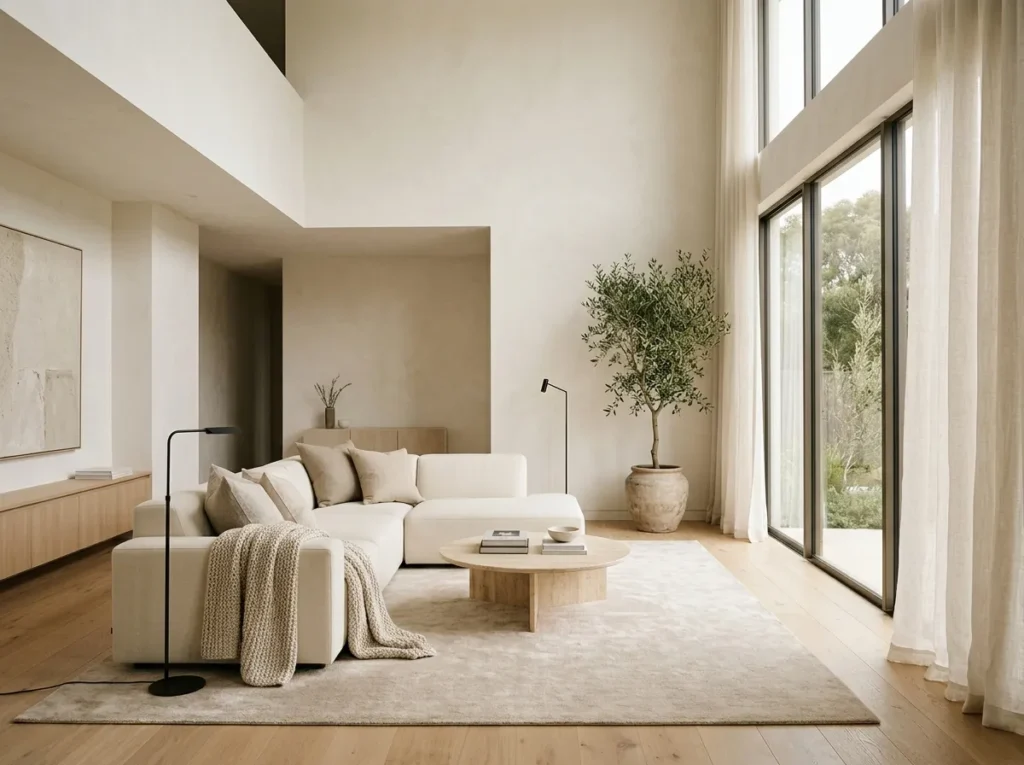
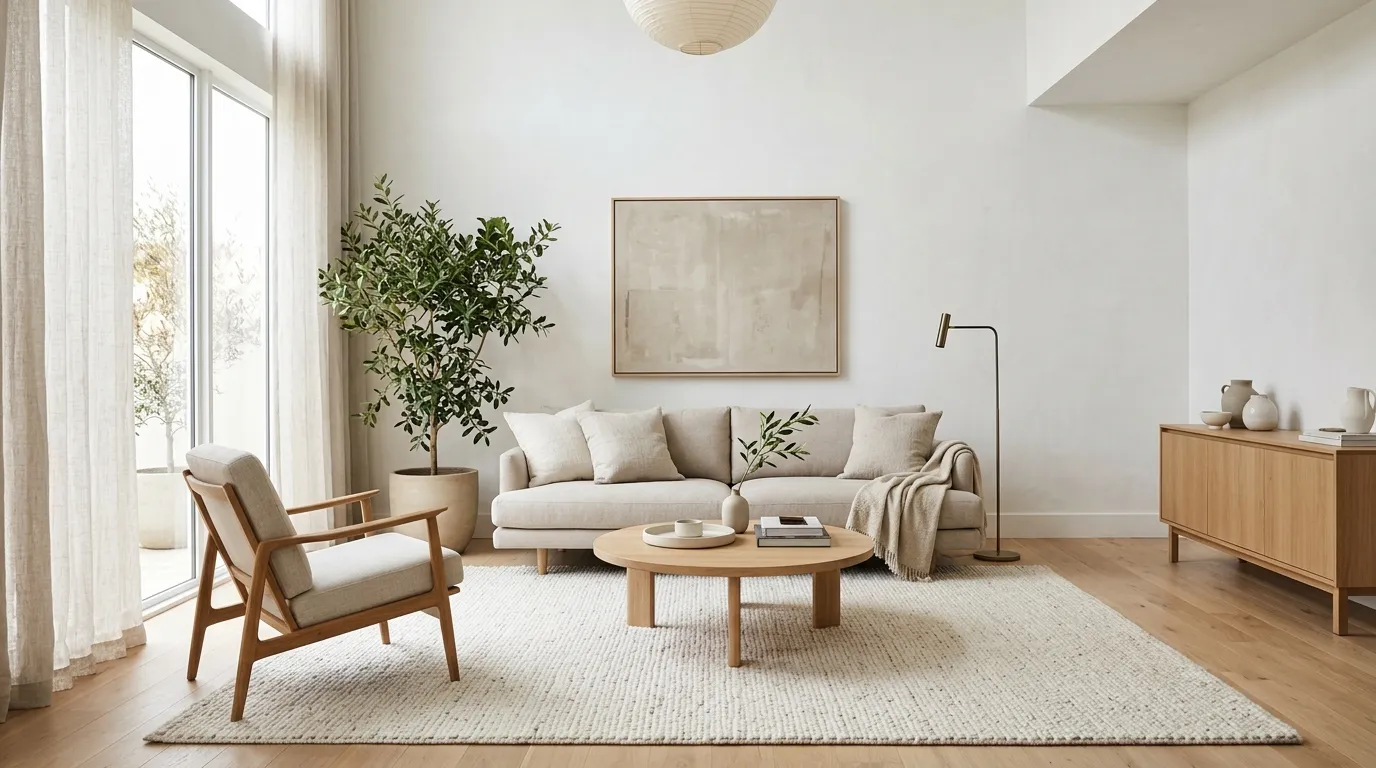
A clean sofa can instantly make a living room feel more expensive. Minimalist Living Room Ideas often begin with a streamlined seating piece because it establishes visual order without sacrificing comfort. Choose a low-profile sofa in cream, beige, taupe, or soft gray, then pair it with one simple coffee table. Keep surrounding furniture proportional so the room has generous breathing space. In real homes, this approach makes narrow areas feel wider and busy layouts feel calmer. Add one textured throw or two cushions for warmth, but avoid overcrowding the seating area with unnecessary accessories.
Want a room that feels polished without looking overdesigned? Minimalist Living Room Ideas work especially well when the sofa becomes a quiet foundation for the entire space. Look for clean arms, simple legs, and durable upholstery that suits everyday use. A slightly curved silhouette can soften a modern room, while a straight profile creates a sharper architectural look. I’ve noticed that keeping the sofa visually simple makes artwork, lighting, and natural textures stand out more. The finished space feels intentional, comfortable, and luxurious because every visible element has enough room to breathe.
Warm Neutral Palette
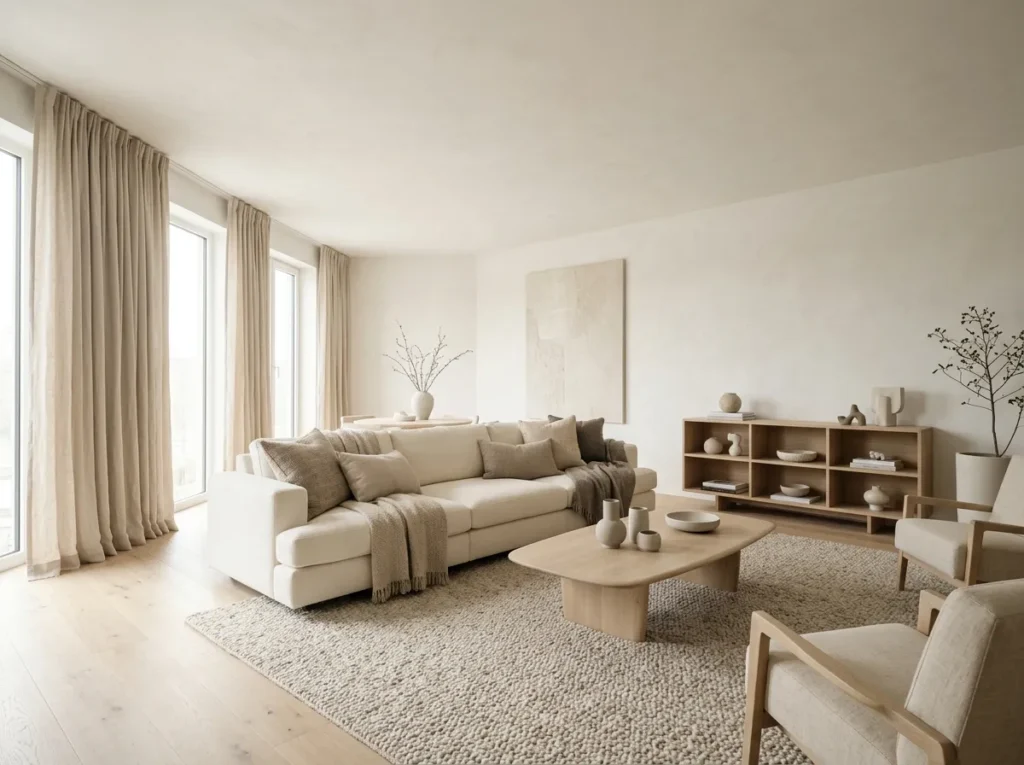
Warm neutrals can make a simple room look remarkably refined. Minimalist Living Room Ideas become more inviting when walls, upholstery, rugs, and curtains share a coordinated palette of ivory, sand, beige, and warm gray. Instead of matching every shade perfectly, layer nearby tones to create subtle depth. This keeps the room visually connected while preventing it from feeling flat. Natural wood, stone, and woven materials can add gentle contrast without introducing strong colors. The result is a relaxed backdrop that photographs beautifully for Pinterest and remains easy to live with throughout changing seasons.
A restrained color palette does more than create a pretty picture; it makes everyday styling easier. Minimalist Living Room Ideas benefit from soft neutral tones because they allow furniture shapes and textures to become the focus. Use the lightest shade on larger surfaces, then introduce slightly deeper tones through cushions, rugs, or occasional chairs. In my experience, this layered approach feels richer than using one exact color everywhere. It also gives you flexibility when refreshing the room, since new accessories can be added without disrupting the overall visual harmony or making the space feel cluttered.
Open Window Styling
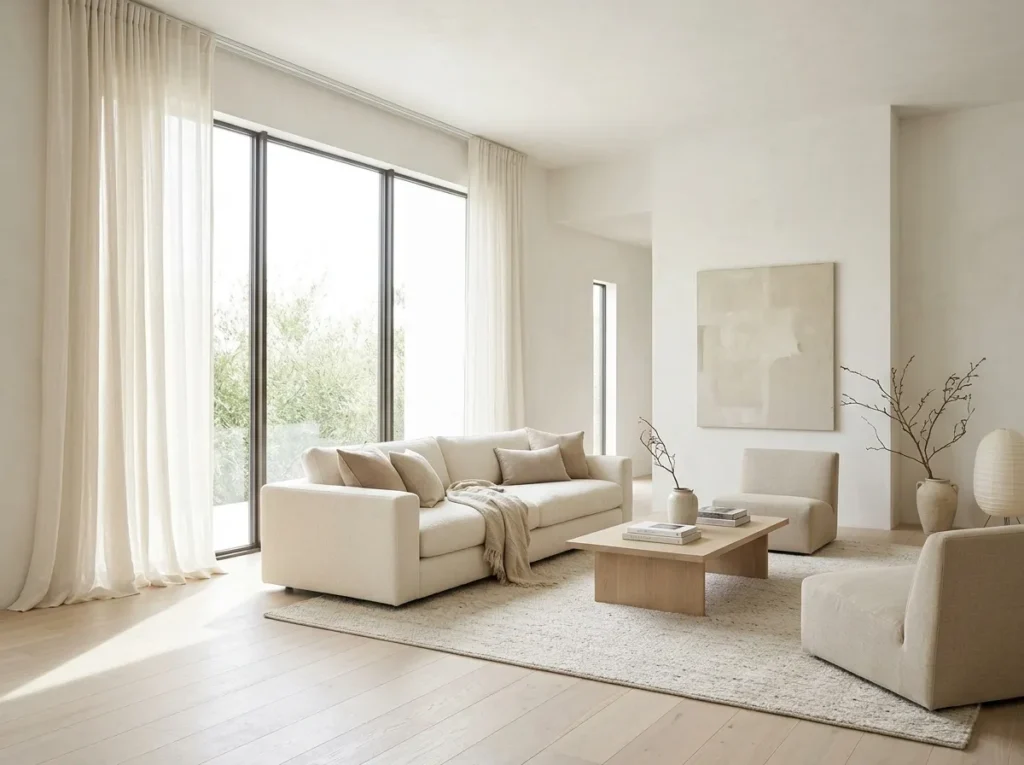
Natural light can make even the simplest living room feel luxurious. Minimalist Living Room Ideas look especially polished when large windows remain visually open, allowing daylight to highlight soft fabrics, wood grain, and uncluttered surfaces. Choose lightweight curtains in white, ivory, or oatmeal, and hang them close to the ceiling to emphasize height. Keep furniture positioned so it does not block the brightest areas. During the day, this arrangement creates a fresh, spacious atmosphere. At the same time, fewer visual barriers help small rooms feel more open, brighter, and noticeably more sophisticated.
A beautiful window deserves room to breathe. Minimalist Living Room Ideas can use natural light as a major design feature by keeping window areas simple and thoughtfully arranged. Sheer curtains soften strong sunlight without making the room dark, while full-height panels add elegance without heavy decoration. If privacy is necessary, pair them with a discreet blackout layer that disappears when opened. Many designers recommend avoiding bulky furniture directly in front of windows because it interrupts light flow. Leaving that area open creates stronger visual depth and helps the entire living room feel calmer and more spacious.
Sculptural Coffee Table
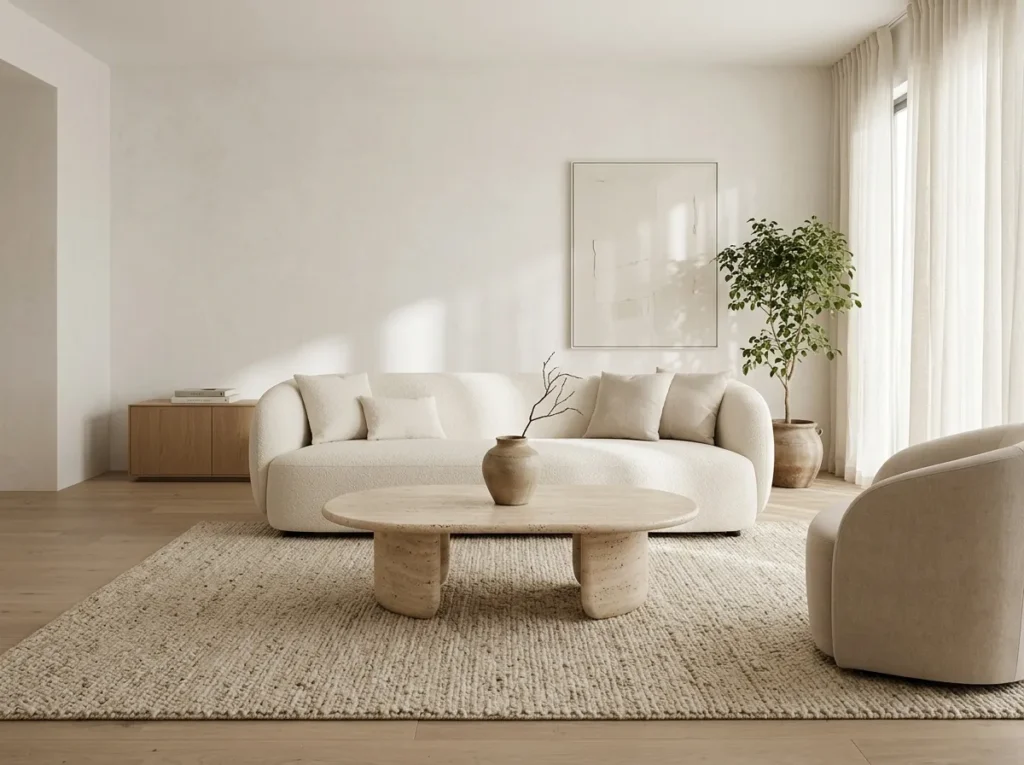
One sculptural table can anchor the entire seating area. Minimalist Living Room Ideas become more visually interesting when a coffee table combines simple geometry with a beautiful material such as light oak, travertine, marble, or matte stone. Choose a size that leaves comfortable walking space around the sofa and chairs. Rounded edges can soften a room filled with straight lines, while a rectangular table can reinforce a structured layout. Keep the tabletop lightly styled with one tray, book, or ceramic object. This controlled arrangement adds personality while preserving the uncluttered look.
The coffee table should support the room, not compete with it. Minimalist Living Room Ideas work beautifully when the central table has a clear silhouette and enough surrounding space to remain visually distinct. Consider the sofa height, seating distance, and available walkway before choosing its dimensions. In smaller homes, an oval or round table can improve circulation because there are fewer sharp corners to navigate. For larger rooms, a substantial rectangular piece can visually anchor multiple seats. Keep decorations intentionally sparse so the material, shape, and craftsmanship remain the main focus.
Layered Soft Lighting
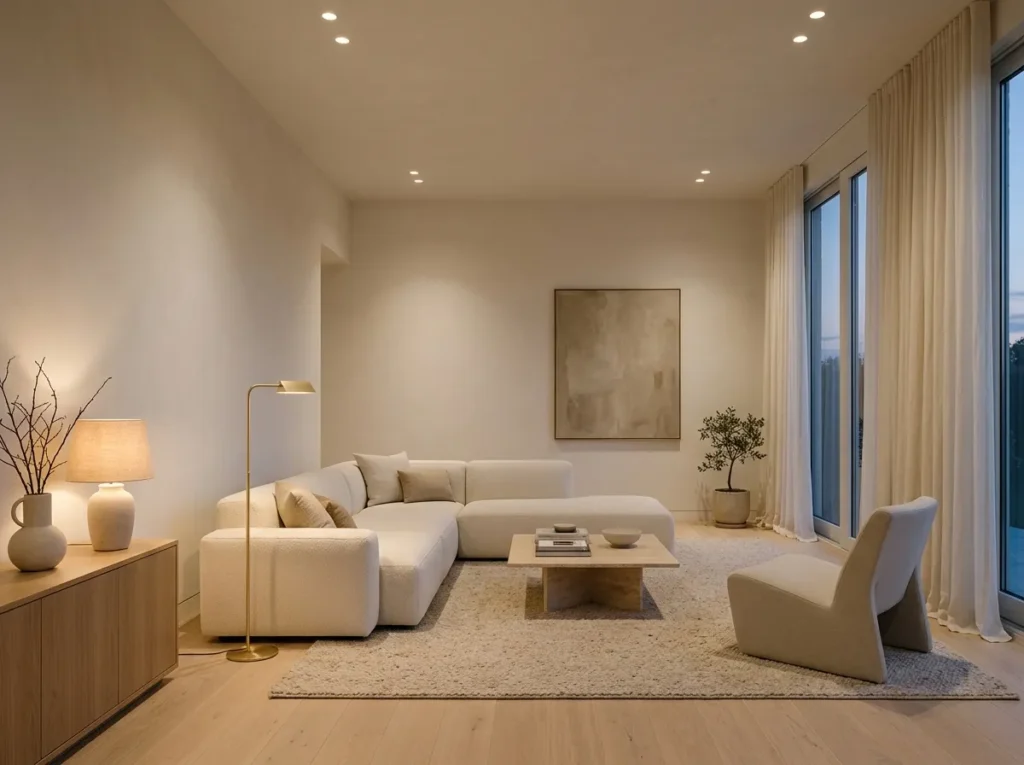
Great lighting can make simple furniture look instantly more luxurious. Minimalist Living Room Ideas feel warmer when illumination comes from several subtle sources instead of one harsh ceiling fixture. Combine recessed lights with a slim floor lamp, small table lamp, or discreet wall light to create layers. Warm bulbs work especially well with cream upholstery, natural wood, and beige textiles. Keep fixtures visually simple so they complement the architecture rather than becoming clutter. This approach gives you flexibility throughout the day and creates a comfortable evening atmosphere without adding unnecessary decorative objects.
A room feels more finished when the lighting changes with the time of day. Minimalist Living Room Ideas can use layered illumination to highlight artwork, architectural details, reading corners, and beautiful textures without filling the room with accessories. Place a floor lamp beside a chair, a table lamp near the sofa, and softer ceiling lights overhead. In my experience, this makes an uncluttered room feel much more inviting after sunset. Choose fixtures with similar finishes or shapes so the lighting scheme feels connected, even when each source serves a different practical purpose.
Natural Wood Accents
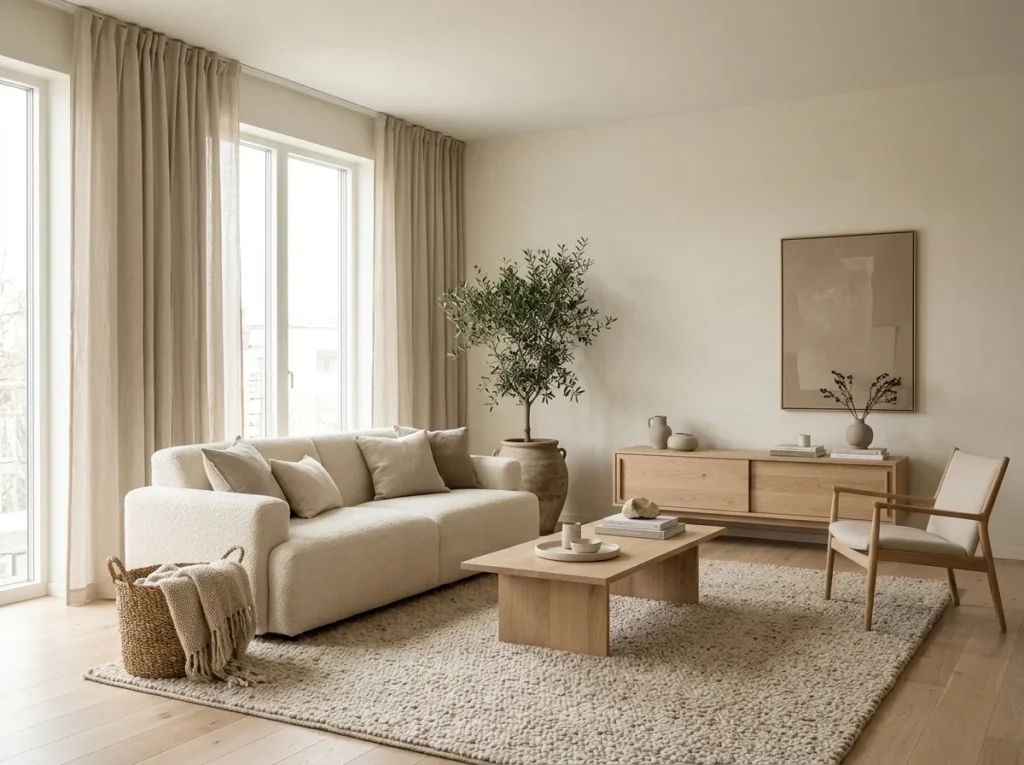
Natural wood can prevent minimalist interiors from feeling cold or overly stark. Minimalist Living Room Ideas become warmer when pale oak, walnut, or light timber appears through a coffee table, media console, side table, or small decorative frame. The key is repetition without excess. Choose one dominant wood tone and repeat it across a few pieces so the room feels coordinated. Pair wooden surfaces with boucle, linen, wool, or cotton to soften the overall composition. This combination creates visual depth while keeping the furniture simple, functional, and easy to style.
Want a sophisticated room that still feels comfortable and lived-in? Minimalist Living Room Ideas can use natural wood as a quiet source of warmth and character. Avoid combining too many wood colors because strong variation can make an otherwise restrained room feel busy. Instead, select finishes with similar undertones and allow the natural grain to provide subtle interest. A wooden bench or small side table can also introduce texture without taking much space. The result is a balanced interior where clean lines meet organic materials, creating an elevated look that feels timeless rather than trendy.
Oversized Artwork
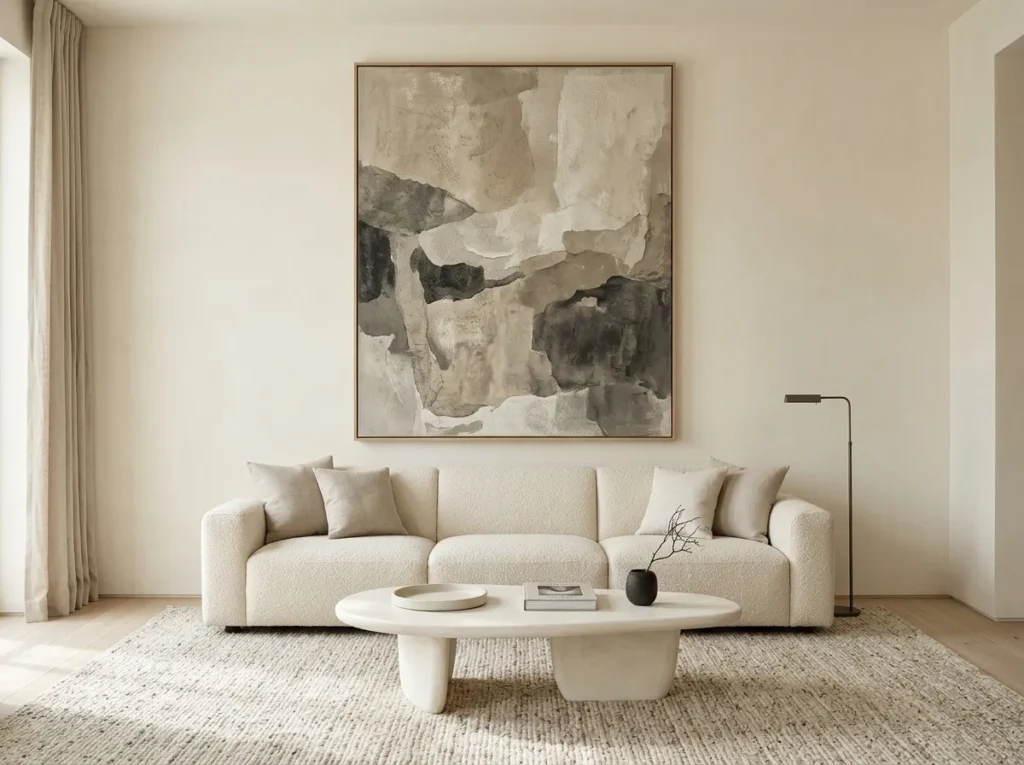
One large artwork can transform a quiet wall into a sophisticated focal point. Minimalist Living Room Ideas benefit from oversized art because a single substantial piece creates personality without requiring multiple decorative objects. Choose an abstract painting, architectural print, or calming landscape with colors that connect to the existing palette. Keep the frame slim and understated so the artwork remains the focus. Center it above the sofa and leave generous wall space around it. This negative space makes the artwork feel more important while helping the entire room maintain its clean, gallery-like character.
A carefully chosen artwork can say more than a crowded collection. Minimalist Living Room Ideas work particularly well with oversized pieces because simplicity gives the artwork room to breathe. Select something that adds contrast without overwhelming the neutral furniture, such as muted charcoal, earthy brown, or soft terracotta details. Keep nearby surfaces lightly decorated so the visual hierarchy remains clear. I’ve seen this work well in many homes where one statement piece replaces several smaller frames. The room feels more intentional, while the artwork adds personality without disrupting the peaceful minimalist layout.
Low Profile Seating
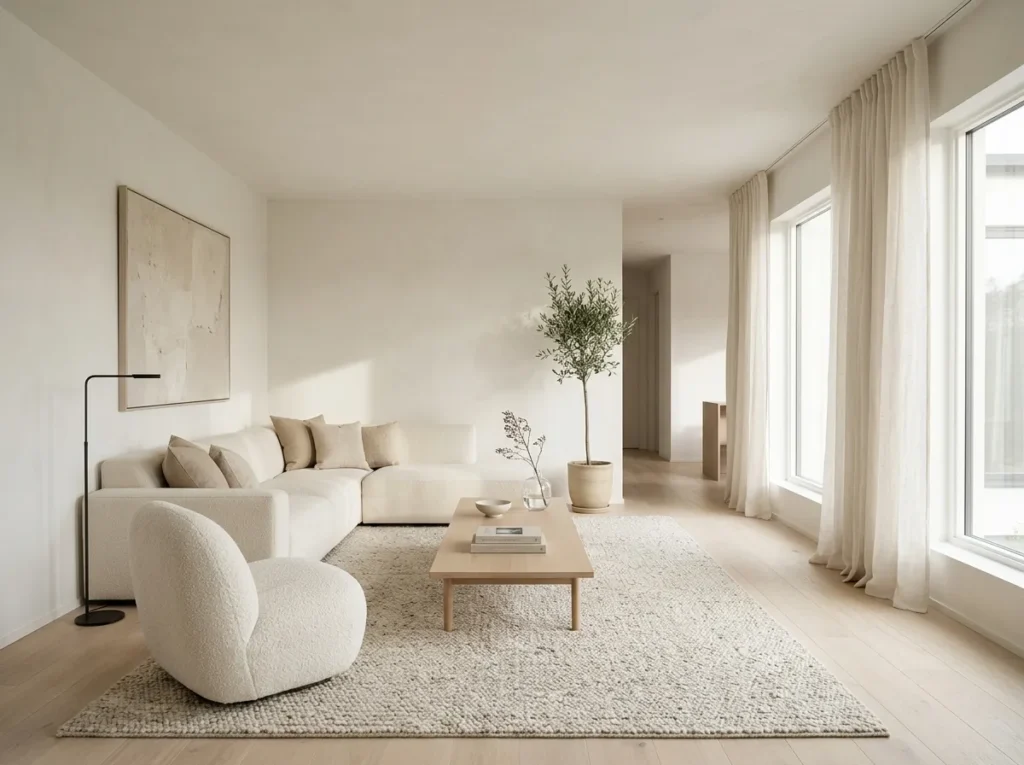
Low furniture can make a room feel surprisingly spacious. Minimalist Living Room Ideas often use low-profile sofas and chairs because they keep sightlines open and allow more wall and ceiling area to remain visible. Choose seating with simple arms, short legs, or a grounded silhouette that feels substantial without appearing bulky. This works especially well in apartments and compact living rooms where oversized furniture can quickly dominate the layout. Pair low seating with a simple coffee table and open floor space to create a relaxed arrangement that feels comfortable, balanced, and visually uncluttered.
The right proportions can make a bigger difference than adding more furniture. Minimalist Living Room Ideas become more successful when seating height, table size, and walking space work together as one composition. A low sofa can visually widen the room, especially when paired with a large rug that connects the seating area. Keep chairs lightweight enough to move easily and avoid blocking windows or important pathways. Soft neutral upholstery reinforces the calm effect. The finished room feels grounded and spacious, while the lower visual profile gives the architecture a cleaner, more contemporary appearance.
Floating Media Console
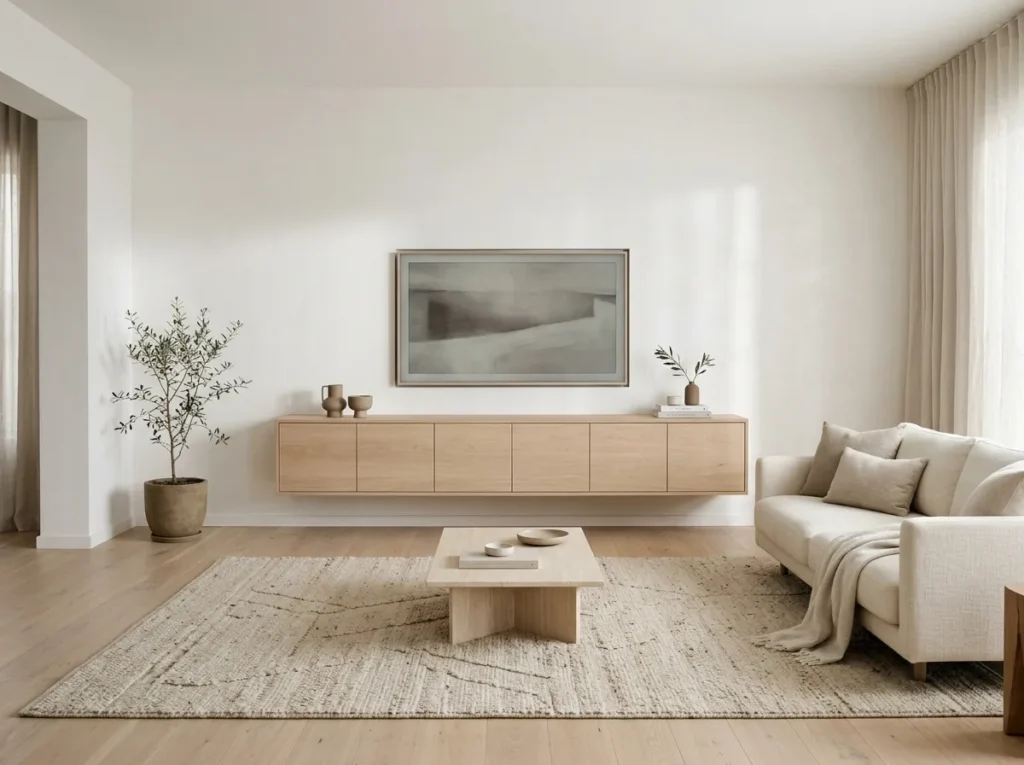
A floating console can make bulky electronics feel almost invisible. Minimalist Living Room Ideas benefit from wall-mounted media storage because lifting the cabinet off the floor creates an uninterrupted visual line beneath it. Choose a simple unit with concealed compartments for remotes, gaming devices, and cables. Matching the finish to nearby furniture helps the console blend into the room rather than becoming a focal point. This setup works especially well in smaller homes because visible floor space remains open, making the living area feel larger, cleaner, and easier to navigate.
The area beneath your television does not need to become a storage-heavy zone. Minimalist Living Room Ideas can keep entertainment spaces refined by using a slim floating cabinet with hidden storage and carefully managed wiring. Leave the top mostly empty, perhaps adding one ceramic vessel or small decorative object. If possible, mount the television at a comfortable viewing height while keeping the console proportionate below it. This arrangement creates a strong horizontal line without visual clutter. The result is an organized entertainment area that feels intentional, modern, and surprisingly spacious.
Textured Area Rug
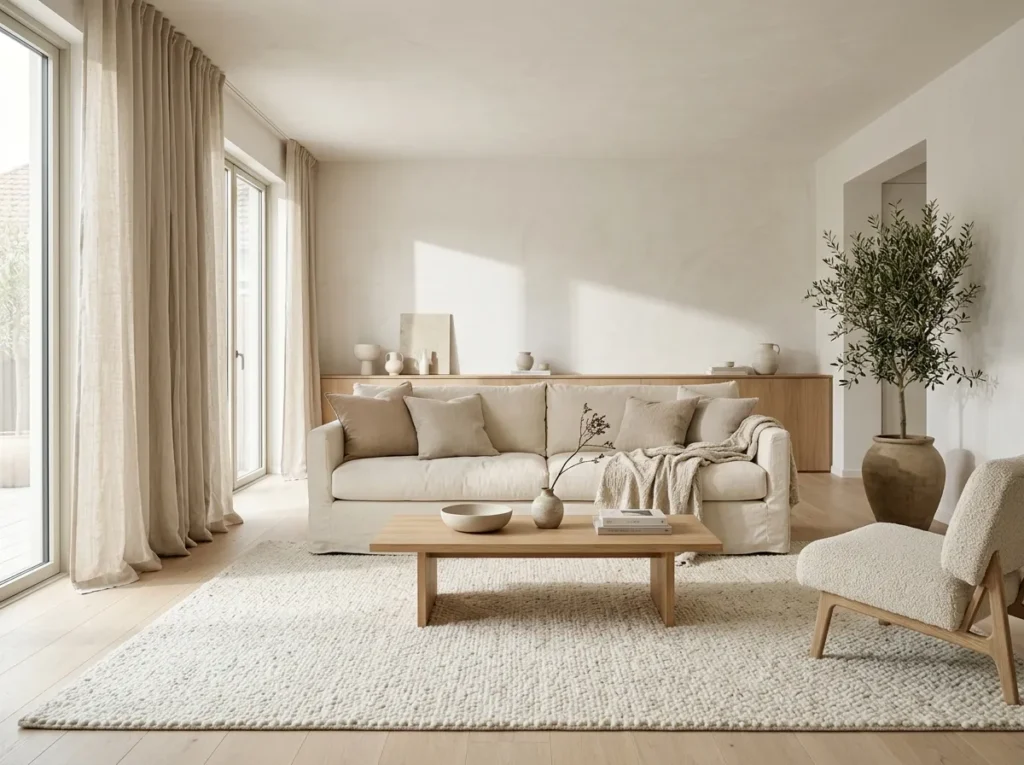
Soft texture can make a minimalist room feel instantly more inviting. Minimalist Living Room Ideas often use a large neutral rug to visually connect sofas, chairs, and coffee tables while adding warmth underfoot. Choose wool, cotton, jute, or another natural fiber with subtle texture rather than an overly complicated pattern. The rug should extend beneath at least the front legs of the main seating pieces so the arrangement feels unified. In a real home, this simple change can make separate furniture pieces appear intentionally grouped while also reducing the hard feeling of bare flooring.
A rug does more than decorate the floor; it defines the room’s visual boundaries. Minimalist Living Room Ideas become more cohesive when the rug is large enough to anchor the entire seating arrangement without overwhelming the available space. Choose ivory, oatmeal, beige, or soft gray for a calm foundation, then let the weave provide visual interest. I’ve noticed that textured rugs are particularly effective in neutral rooms because they add dimension without introducing strong color. Keep the surrounding furniture simple, and the rug will quietly make the whole living area feel warmer and more complete.
Curved Furniture
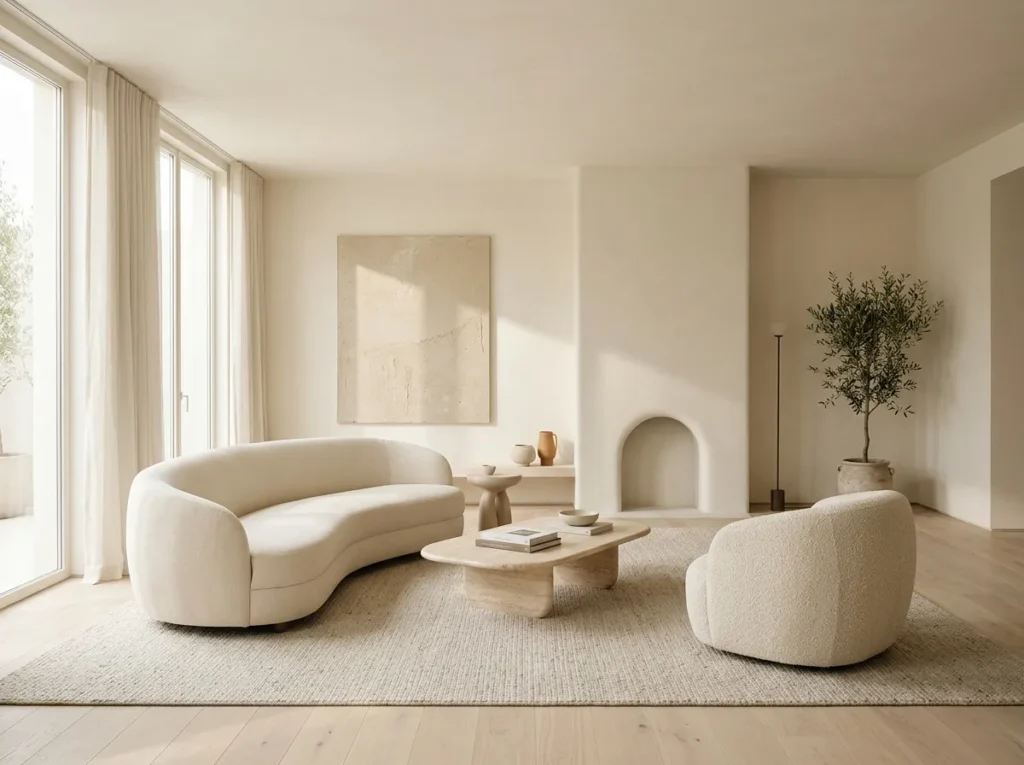
Rounded furniture can soften a room filled with clean architectural lines. Minimalist Living Room Ideas gain subtle sophistication from a curved sofa, rounded armchair, or oval coffee table that introduces movement without adding decorative clutter. Choose one dominant curved piece and support it with simpler furniture so the room remains balanced. Boucle, linen, and other tactile upholstery can make the shapes feel inviting rather than overly formal. This approach works particularly well when walls, flooring, and cabinetry have strong straight lines, creating a gentle contrast that makes the overall composition feel more dynamic.
Soft curves can make minimalism feel less rigid and more comfortable. Minimalist Living Room Ideas can use rounded furniture to create natural visual flow while maintaining a restrained palette and simple layout. An oval coffee table is especially useful in compact rooms because its shape allows easier movement around the seating area. Pair curved furniture with warm wood and neutral textiles for a relaxed effect. Avoid filling the room with too many rounded objects; a few carefully selected forms create enough contrast. The result is an elegant space that feels contemporary, welcoming, and thoughtfully composed.
Hidden Storage
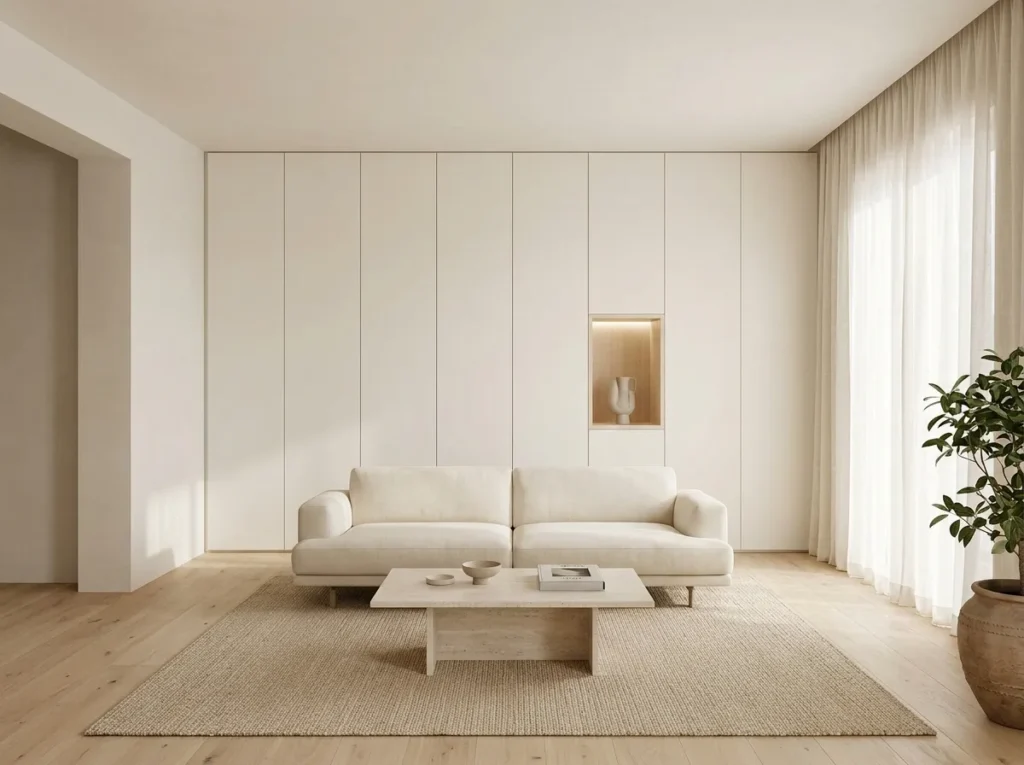
The easiest way to create a calm room is to give clutter somewhere to disappear. Minimalist Living Room Ideas become much more practical when built-in cabinets conceal books, electronics, toys, blankets, and everyday belongings behind clean doors. Choose flat-panel cabinetry in a color close to the walls so the storage blends into the architecture. Inside, use adjustable shelves and drawers to keep categories organized. This approach is especially valuable in busy households because surfaces remain clear without requiring constant visual tidying. The room feels larger, quieter, and more intentionally designed.
Beautiful minimalism depends on smart storage, not simply owning fewer things. Minimalist Living Room Ideas work better in real homes when cabinets provide dedicated places for items that would otherwise collect on tables and shelves. Consider floor-to-ceiling storage for maximum capacity, or use one low cabinet beneath a television for smaller rooms. Keep handles discreet or choose push-to-open doors for a seamless appearance. I’ve seen this work well in family spaces where concealed storage reduces daily visual noise. The result is a living room that looks polished while remaining genuinely functional.
Statement Floor Lamp
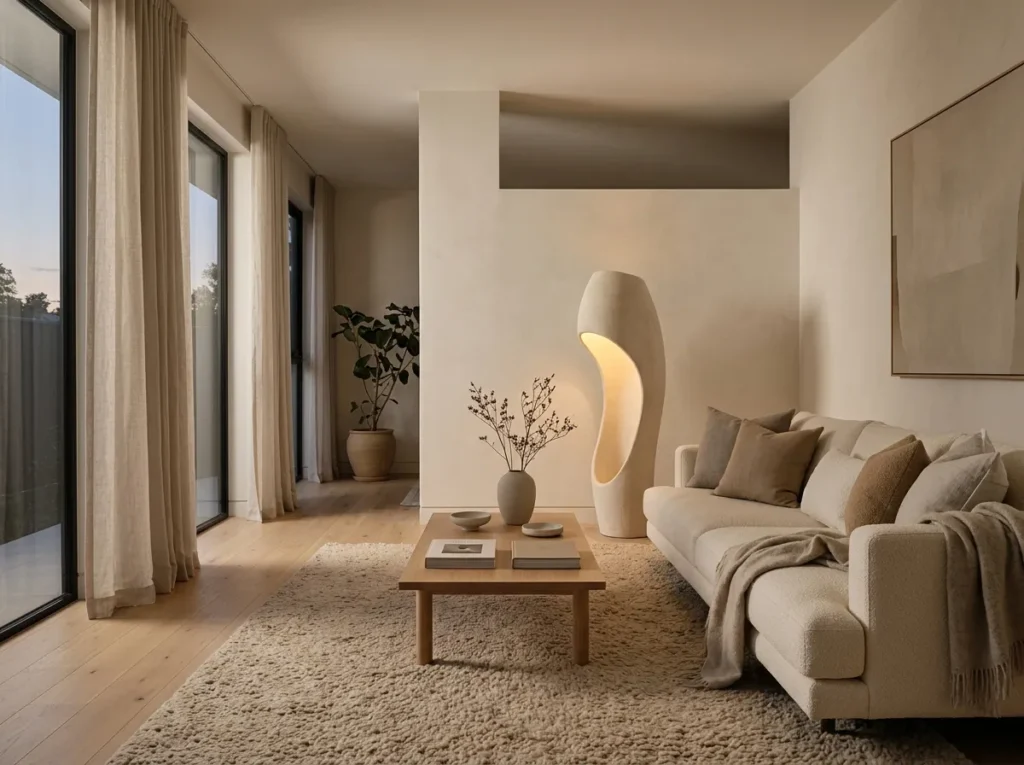
One beautiful lamp can become functional art in a restrained room. Minimalist Living Room Ideas gain character when a sculptural floor lamp adds height, light, and a subtle focal point without requiring extra decoration. Place it beside a sofa or reading chair where illumination is genuinely useful. Choose a simple curved, arched, or geometric silhouette in matte black, brushed metal, natural wood, or ceramic. Keep surrounding surfaces uncluttered so the lamp has visual space. This creates an elevated atmosphere while giving the room practical lighting for reading or relaxing.
The best statement pieces are useful as well as beautiful. Minimalist Living Room Ideas can use one distinctive floor lamp to introduce personality while keeping the overall design intentionally edited. Look for a fixture that complements existing furniture finishes rather than introducing an unrelated material. Warm lighting is particularly effective against neutral upholstery because it creates a soft evening glow. Avoid placing several decorative lamps in the same area; one well-positioned fixture usually has greater impact. The result is a living room that feels sophisticated, comfortable, and thoughtfully layered after sunset.
Organic Stone Decor
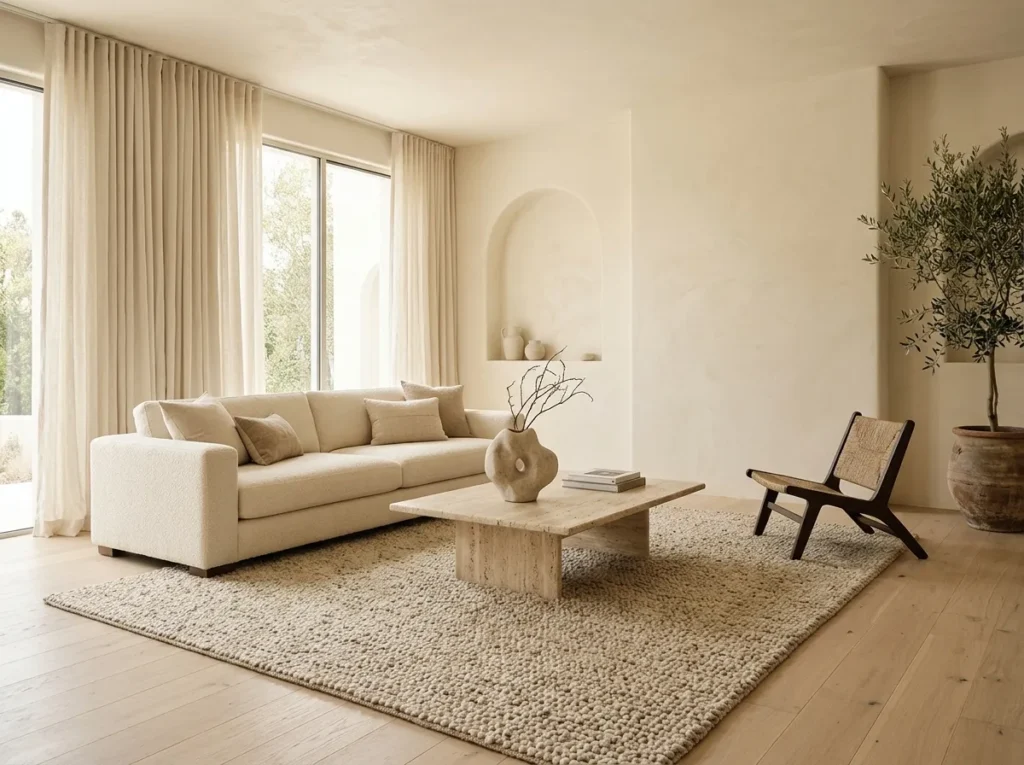
Natural stone can add quiet luxury without making the room feel overly decorated. Minimalist Living Room Ideas benefit from travertine, limestone, marble, or other earthy materials because their natural variation creates visual interest without relying on bright colors. A stone coffee table, sculptural bowl, or small vase can become a subtle focal point. Pair these pieces with linen, wool, boucle, and natural wood to balance their solid appearance. Keep the number of stone accessories limited so the material feels intentional rather than repetitive. The result is refined, grounded, and effortlessly sophisticated.
Texture becomes especially important when the color palette is restrained. Minimalist Living Room Ideas can use organic stone to introduce depth while keeping furniture silhouettes simple and surfaces uncluttered. Choose finishes with gentle variation instead of highly polished, dramatic patterns if you want a softer appearance. A small travertine object on a wooden console can be enough to create contrast. In my experience, natural stone works beautifully in neutral interiors because it adds character without demanding attention. The room feels elevated through material quality rather than through excessive decoration or complicated styling.
Minimal Gallery Wall
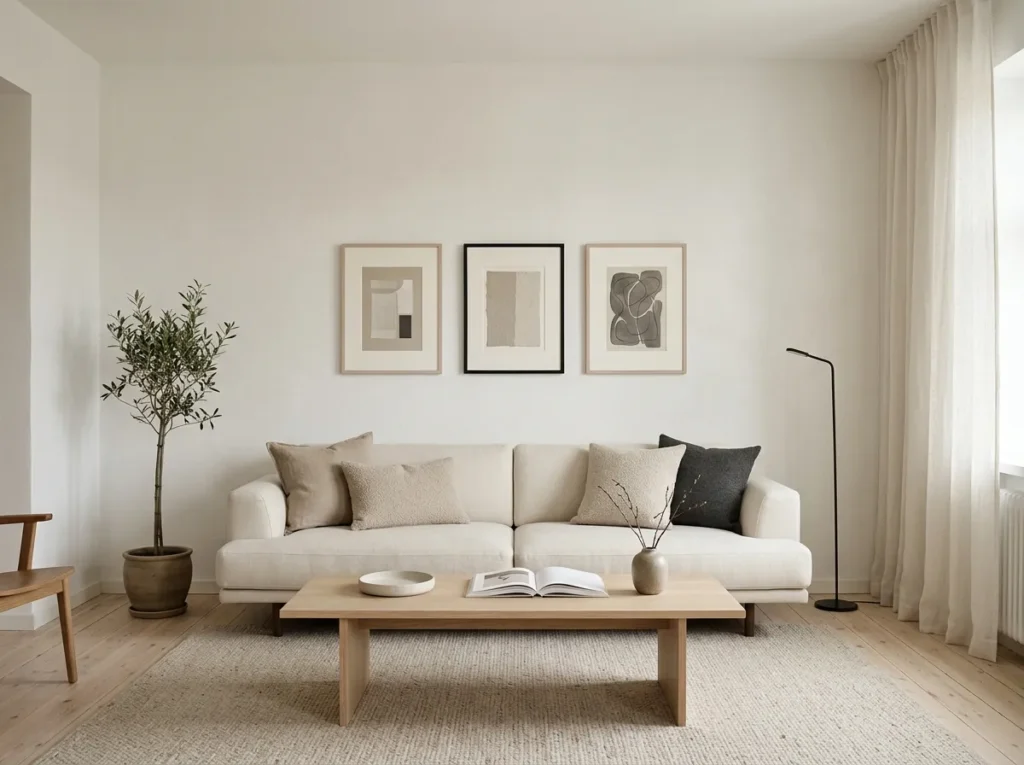
A gallery wall does not have to feel busy or traditional. Minimalist Living Room Ideas can use a small collection of carefully selected artwork to add personality while preserving a clean visual rhythm. Choose three or four pieces with related colors, themes, or frame finishes, then arrange them with consistent spacing. Neutral illustrations, abstract forms, photography, or simple line drawings work especially well. Keep the arrangement centered above the sofa and avoid extending it too far across the wall. This creates a curated focal point without overwhelming the surrounding negative space.
Thoughtful editing makes a gallery wall feel sophisticated rather than cluttered. Minimalist Living Room Ideas can benefit from grouped artwork when each piece contributes to one cohesive visual story. Use matching frames in wood, black, white, or soft metallic finishes to create consistency. Leave enough space between the artwork and furniture so the arrangement feels intentional rather than cramped. Many designers recommend testing the layout on the floor before hanging anything, which makes adjustments easier. The finished display adds character and visual interest while maintaining the calm structure of a minimalist living room.
Cozy Reading Nook
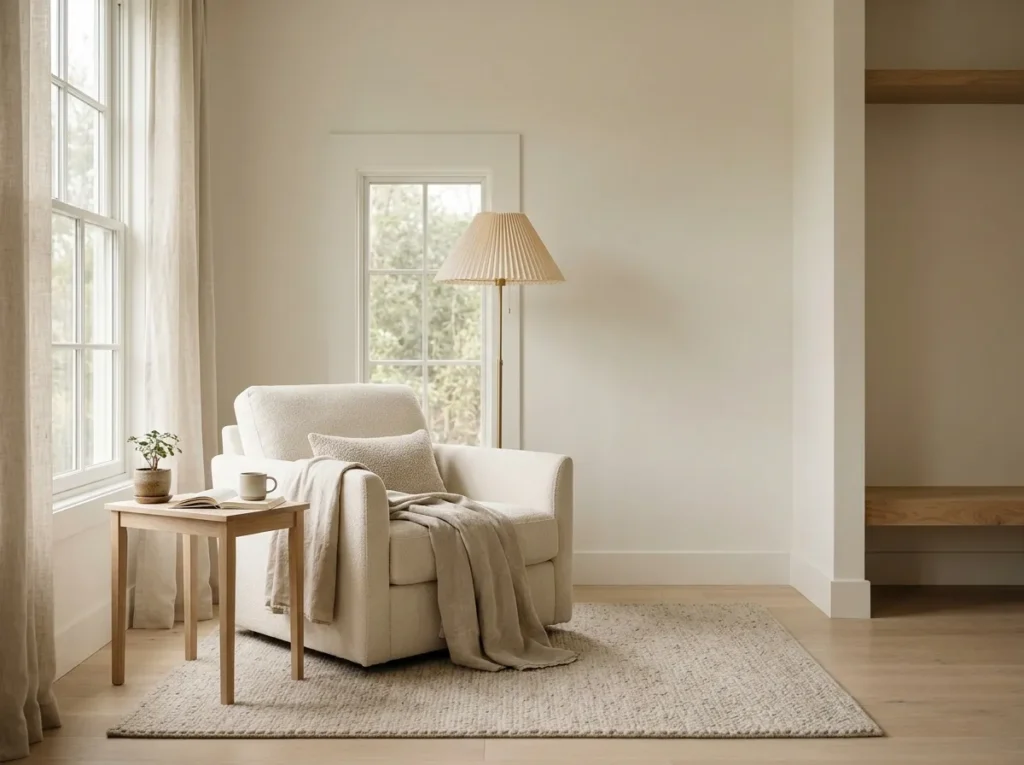
An unused corner can become the most inviting part of the room. Minimalist Living Room Ideas can create a cozy reading nook with just one comfortable chair, a small side table, and focused lighting. Choose upholstery that complements the main sofa instead of introducing a competing color. Position the chair near a window when possible so daylight provides natural illumination during the day. A slim floor lamp can extend its usefulness into the evening. Keep the area free from unnecessary accessories so the nook feels like a peaceful retreat rather than another crowded furniture zone.
Comfort does not require filling every corner with furniture. Minimalist Living Room Ideas work beautifully when a small reading area uses only the essentials and leaves plenty of breathing space around them. Choose a chair with supportive proportions, then add a compact table for a book, cup, or reading glasses. A woven rug or linen throw can provide subtle texture without overwhelming the setup. I’ve noticed that these small dedicated zones make open-plan living rooms feel more purposeful. The space gains function and warmth while retaining the clean, organized character of minimalist design.
Monochrome Decor
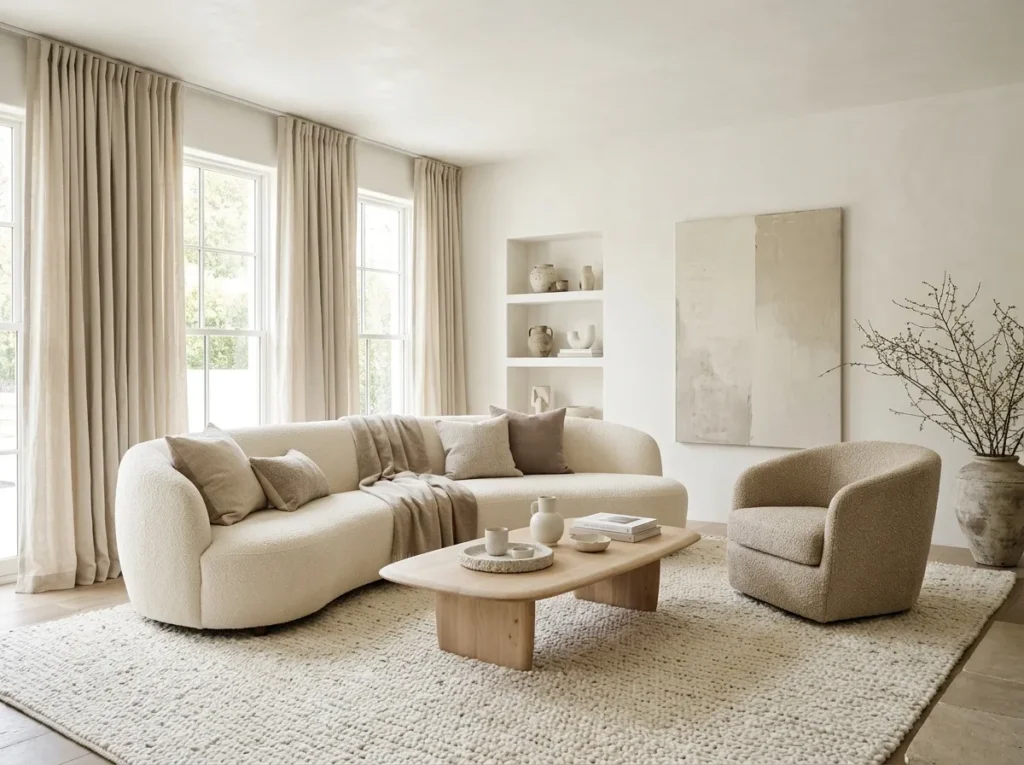
A monochrome palette can make a simple room look remarkably sophisticated. Minimalist Living Room Ideas become more cohesive when furniture, textiles, walls, and accessories stay within a closely related color family. Instead of choosing one identical shade, combine ivory, cream, beige, taupe, and soft gray to create gentle contrast. Texture becomes essential here, so layer wool, linen, boucle, wood, and ceramic surfaces. This prevents the room from feeling flat while keeping the overall appearance calm. The result is an elegant interior where subtle variations create richness without visual clutter.
Neutral does not have to mean boring or lifeless. Minimalist Living Room Ideas can feel luxurious when different materials create interest within one restrained color palette. Try pairing a textured cream sofa with a smooth stone table, woven rug, and lightly grained wood console. These differences give the eye something to explore without introducing distracting colors. Keep decorative objects sparse and choose pieces that serve a clear visual purpose. This approach works particularly well in open-plan homes because the consistent palette creates continuity between the living area and surrounding spaces.
Slimline Shelving
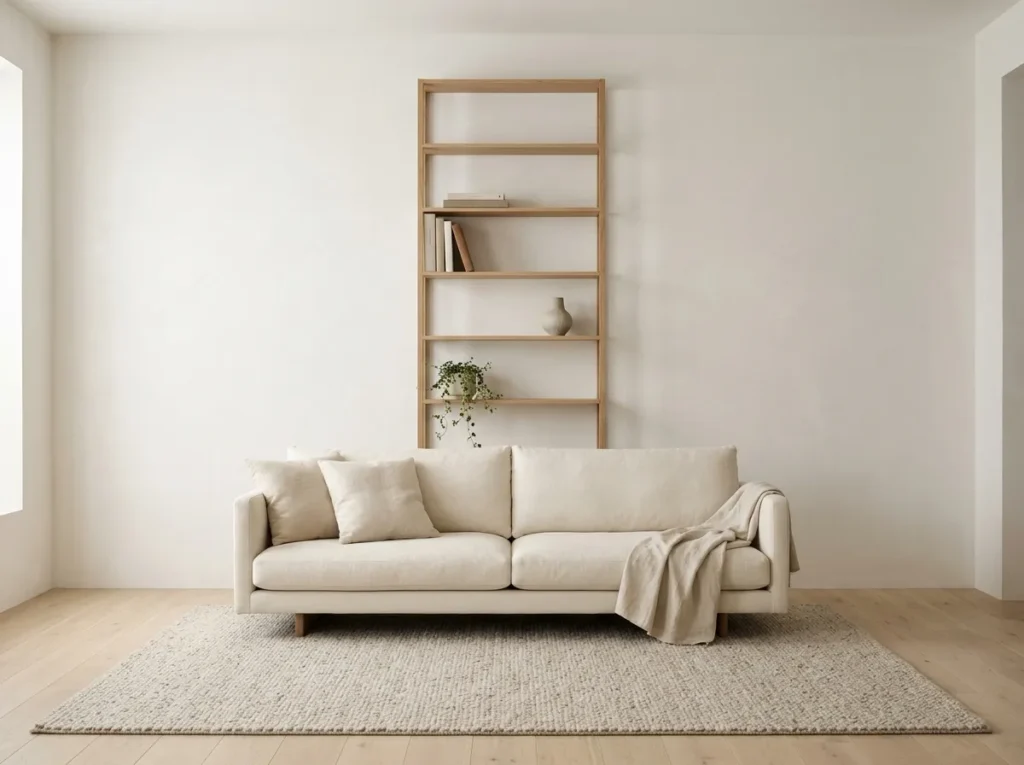
Shelving can provide storage without turning a wall into visual clutter. Minimalist Living Room Ideas benefit from slimline shelves because they add vertical function while using very little floor space. Choose shallow shelves in natural wood, white, or a subtle metal finish, then display only a few books, ceramics, or small plants. Empty space between objects is just as important as the objects themselves. This approach makes the wall feel curated rather than crowded. It also gives you an easy way to introduce personality without filling the room with bulky cabinets.
The secret to attractive open shelving is thoughtful editing. Minimalist Living Room Ideas work best when shelves hold items that are useful, meaningful, or visually complementary. Arrange books horizontally and vertically, then add one sculptural object or plant to break up the lines. Avoid filling every shelf completely because negative space creates the airy effect associated with modern minimalist interiors. If storage is your priority, combine a few open shelves with concealed cabinets below. This gives you display space for beautiful pieces while keeping less attractive everyday belongings hidden.
Indoor Greenery
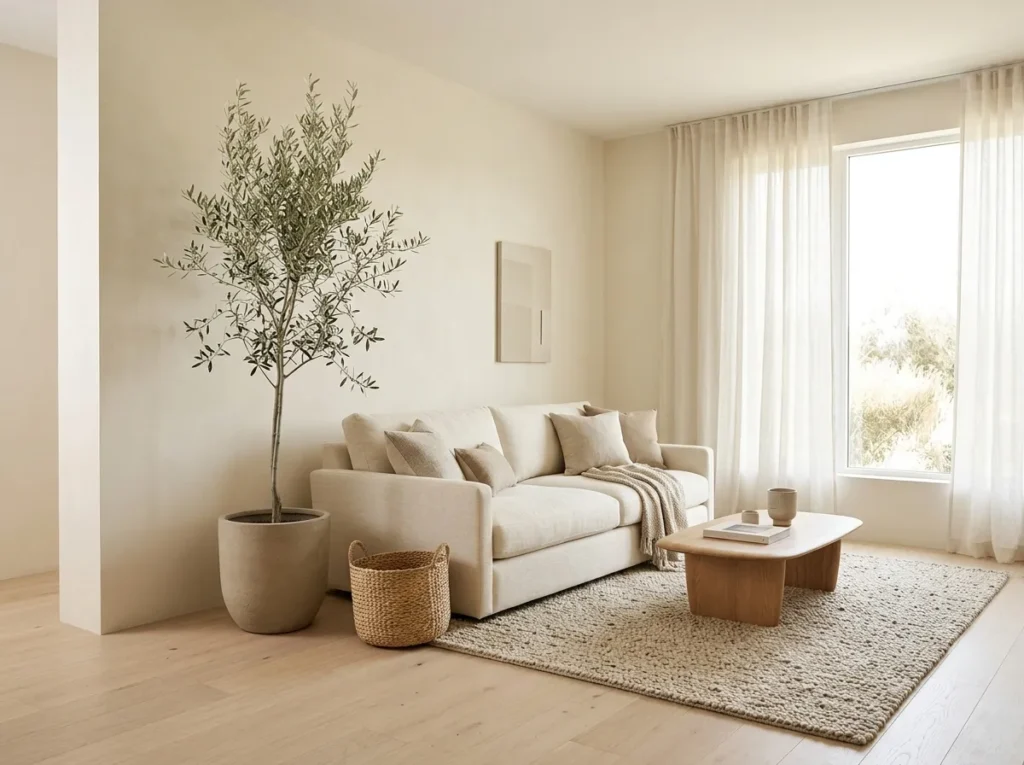
One well-placed plant can completely change the atmosphere of a quiet room. Minimalist Living Room Ideas benefit from indoor greenery because natural leaves introduce color and organic texture without requiring complicated decoration. Choose a tall olive tree, fiddle-leaf fig, rubber plant, or another architectural variety that suits your lighting conditions. Place it near a window or in an open corner where its shape can be appreciated. Use a simple ceramic or woven planter that complements the existing palette. One strong plant often creates more impact than several small arrangements scattered around the room.
Greenery adds life while preserving the simplicity that makes minimal interiors appealing. Minimalist Living Room Ideas can use plants as natural focal points, especially when the rest of the room relies on neutral colors and clean furniture. Select varieties based on actual sunlight and maintenance needs rather than choosing purely for appearance. A healthy plant will always look better than one struggling in the wrong location. Keep surrounding surfaces uncluttered so the foliage has room to stand out. The combination of natural greenery, warm wood, and soft textiles creates a fresh and welcoming living environment.
Soft Layered Textiles
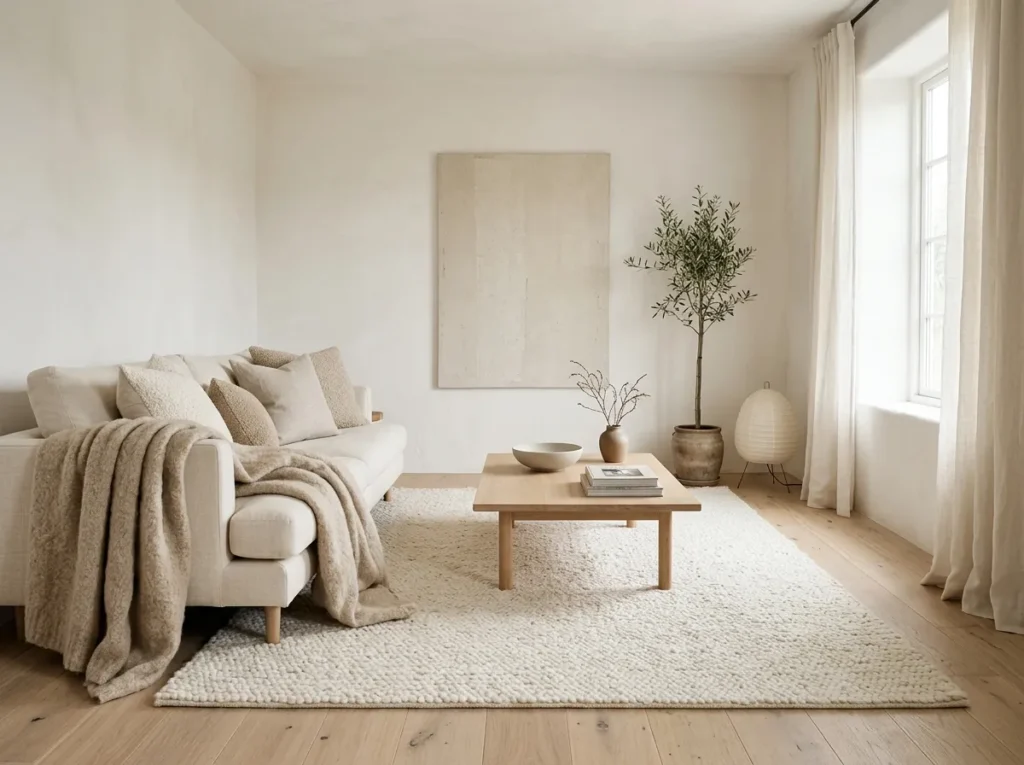
Soft fabrics can make clean-lined furniture feel much more inviting. Minimalist Living Room Ideas become warmer when linen cushions, wool throws, cotton curtains, and textured rugs are layered without excessive patterns. Choose fabrics in closely related neutral shades so the room remains visually calm. Place one folded throw over the sofa and use two or three cushions rather than covering every seat. These small additions create softness and comfort while preserving open space. The contrast between tactile textiles and smooth furniture surfaces gives a minimalist room the subtle depth it needs.
Texture is often more effective than color when you want a refined room to feel cozy. Minimalist Living Room Ideas can use layered textiles to create warmth without adding visual noise. Try pairing a boucle cushion with a linen sofa, a chunky wool throw, and a flat-woven rug. Keep patterns minimal and let the materials themselves provide interest. This strategy is particularly useful during cooler months because you can change the weight of the fabrics without redesigning the entire room. The result feels comfortable, polished, and naturally luxurious while remaining easy to maintain.
Conclusion
A well-designed minimalist living room can transform the atmosphere of your entire home. The best minimalist living room ideas focus on simplicity, functionality, and timeless style, helping you create a space that feels calm, organized, and welcoming. Small changes, from reducing visual clutter to choosing purposeful decor, can have a surprisingly big impact.
I’ve seen how thoughtful minimalist design can make a room feel more spacious and comfortable while still reflecting personal style. As you explore these ideas, choose the ones that fit your lifestyle and the way you use your space every day. Save this post on Pinterest for future inspiration, try your favorite ideas in your own home, and share this article with anyone looking to create a beautiful, clutter-free living room.