18 Smart Minimalist Bedroom Ideas Everyone Will Copy
Introduction
What if your bedroom felt calmer, more spacious, and easier to enjoy every single day? The best minimalist bedroom ideas prove that you don’t need a room filled with furniture and decor to create a beautiful space. By focusing on simplicity, thoughtful design, and intentional styling, you can transform your bedroom into a peaceful retreat that promotes rest and relaxation.
Minimalist design is about more than having fewer things. It’s about creating a space where every item serves a purpose and contributes to a clean, balanced atmosphere. From neutral color palettes and streamlined furniture to smart storage solutions and layered textures, small changes can make a remarkable difference. In my experience, a clutter-free bedroom often feels larger, brighter, and more welcoming. In this article, you’ll discover inspiring ideas that help you simplify your space, improve functionality, and create a bedroom that feels both elegant and effortlessly relaxing.
Low Profile Bed
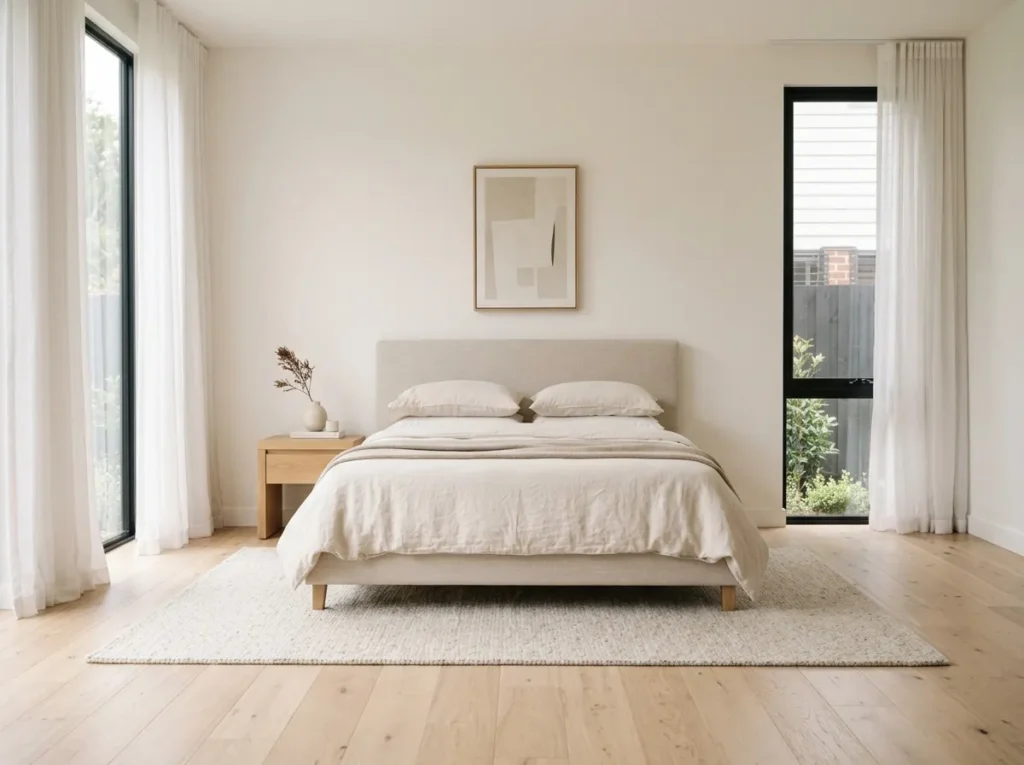
A calm room starts with what you leave out, and a minimalist bedroom proves that less furniture can create more breathing space. Choose a low-profile bed, one compact nightstand, and only the pieces you genuinely use. Keeping the floor visible makes the room feel larger, while a restrained palette of white, beige, warm gray, or soft taupe creates visual calm. This arrangement works especially well in smaller homes because every item has a purpose. The result is an uncluttered sleeping area that feels intentional, comfortable, and easy to maintain without looking cold or unfinished.
The beauty of a minimalist bedroom is that simplicity does not have to mean emptiness. Focus on quality basics, such as a comfortable bed, breathable bedding, and one useful bedside surface, then remove unnecessary furniture that interrupts movement. I’ve noticed that rooms feel noticeably more relaxing when pathways remain clear and storage is planned before decoration is added. Keep decorative objects limited to a few meaningful pieces, such as a ceramic lamp or framed print. This approach creates a practical retreat where cleaning takes less time and the room stays visually organized throughout the week.
Warm Neutral Palette
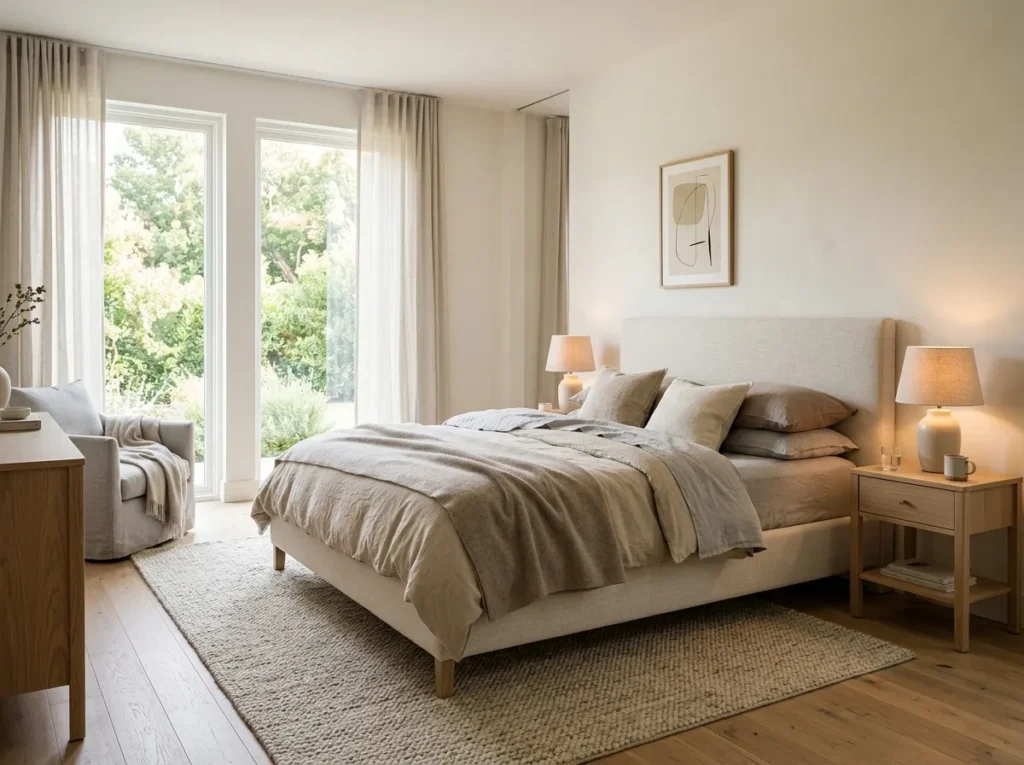
Nothing makes a minimalist bedroom feel instantly calmer than a carefully controlled neutral palette. Start with warm white walls, then layer beige bedding, light oak furniture, and soft gray textiles for subtle contrast. Instead of matching every surface exactly, repeat two or three tones throughout the room so the design feels connected. Natural daylight will make pale colors appear fresh during the day, while warm lamps add depth at night. This restrained combination works in both compact apartments and larger rooms because it creates visual continuity without demanding attention from every corner.
A neutral palette becomes much more inviting when texture replaces excessive decoration. In a minimalist bedroom, combine linen bedding, a woven rug, smooth wood, and a softly upholstered headboard to create depth without clutter. Choose materials with slightly different finishes so the eye notices gentle variation even when the colors remain similar. A simple wool throw folded at the foot of the bed can add warmth without introducing another busy pattern. The finished room feels serene and layered, proving that a pared-back design can still have personality, comfort, and plenty of visual interest.
Floating Nightstand
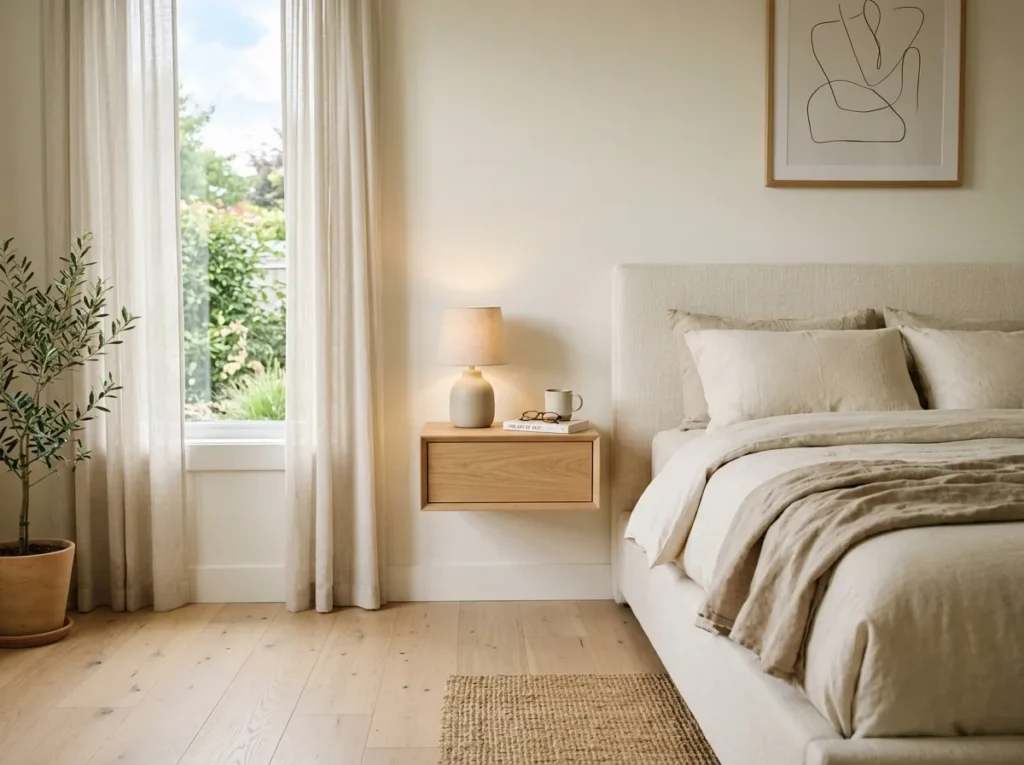
A floating nightstand can make a minimalist bedroom feel surprisingly spacious because it keeps the floor completely visible beneath the furniture. Choose a compact wall-mounted design in light wood, white, or another finish that complements your bed. Use the surface for essentials such as a small lamp, book, or alarm clock, while hidden storage keeps less attractive items out of sight. The open floor creates a lighter visual footprint and makes vacuuming easier. This setup is particularly useful in small bedrooms where traditional bedside tables can make the sleeping area feel cramped or crowded.
The best floating nightstands combine clean lines with enough storage for everyday needs. In a minimalist bedroom, avoid filling the surface with decorative objects because the empty space is part of the design. Mount the nightstand at a comfortable height relative to your mattress, and ensure the wall structure can safely support the chosen unit. A warm wood finish can soften an otherwise white room, while a white nightstand can nearly disappear against the wall. Add one small lamp with a warm bulb, and you have a functional bedside area that looks polished without adding unnecessary visual weight.
Textured Linen Bedding
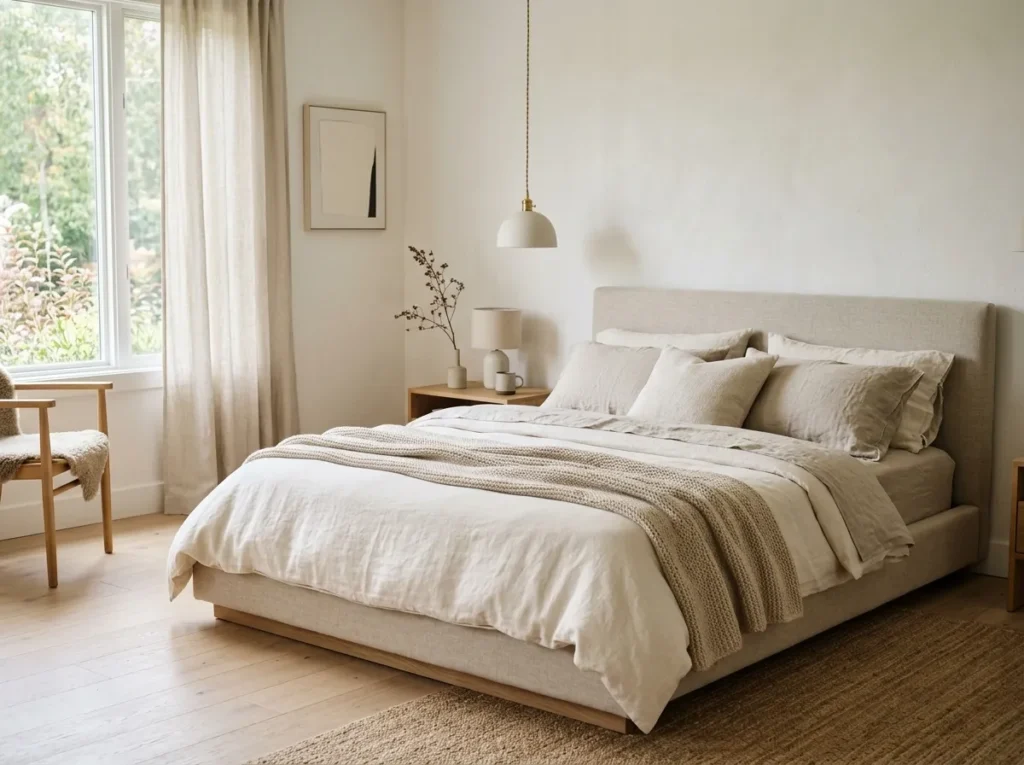
Texture can completely change how a minimalist bedroom feels without adding more furniture or decoration. Choose relaxed linen or linen-blend bedding in cream, oatmeal, or soft beige, then layer a duvet, simple pillowcases, and one lightweight throw. The natural creasing of linen adds character while keeping the palette calm and uncomplicated. Because the fabric has visible texture, the bed can look finished without a collection of decorative cushions. This approach is especially effective when the room has simple furniture and plain walls, giving the sleeping area warmth and dimension while preserving the uncluttered character that defines minimalist design.
For a polished result, keep the bedding colors close together and let the fabric textures provide most of the visual variation. A minimalist bedroom benefits from this approach because the bed remains inviting without becoming the busiest feature in the room. Choose breathable materials suited to your climate, and avoid piling on layers that you do not actually need. A loosely folded throw at the foot of the bed can add warmth and structure, while a single lumbar cushion provides enough detail without excess. The overall effect is relaxed, comfortable, and refined, making the room easier to maintain and enjoy.
Floating Shelves
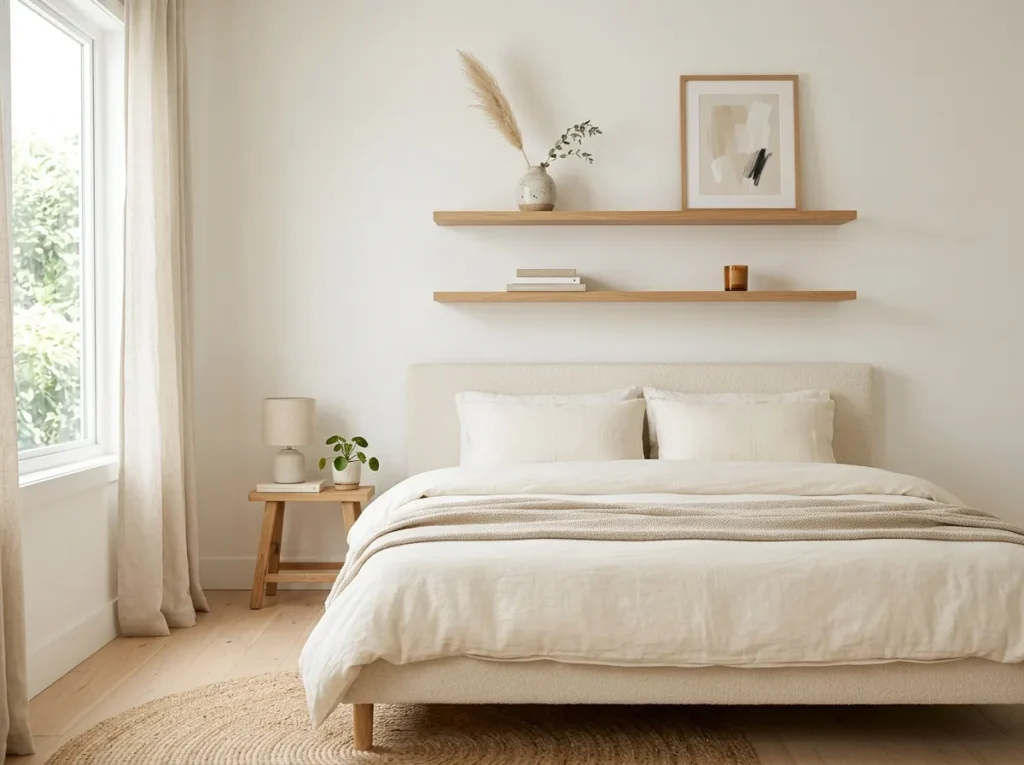
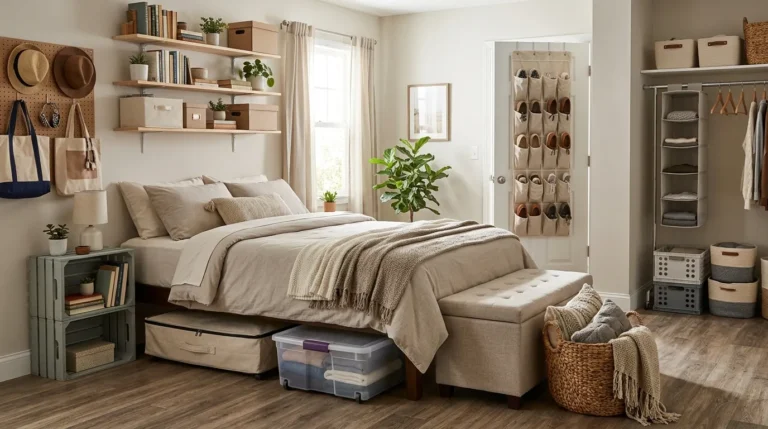
Floating shelves can instantly add function without making a room feel crowded. In a minimalist bedroom, they provide a practical place for books, small artwork, or a few meaningful objects while keeping bulky furniture to a minimum. The secret is restraint: a shelf looks more intentional when it holds only a handful of carefully chosen pieces. Use natural wood for warmth, then repeat that finish elsewhere through a nightstand or frame. Leaving visible wall space around the shelves also creates the airy, peaceful feeling that makes minimalist interiors so appealing.
Want a room that feels organized without looking overly styled? A minimalist bedroom can use floating shelves to create exactly that balance. Try arranging one small plant, one favorite book, and a simple ceramic object rather than filling every inch. This approach keeps the display visually light while still giving the room personality. Shelves are especially useful in smaller spaces because they add storage vertically instead of taking up valuable floor area. For the cleanest result, choose simple brackets or concealed mounting and keep the shelf depth modest.
Hidden Storage Bed
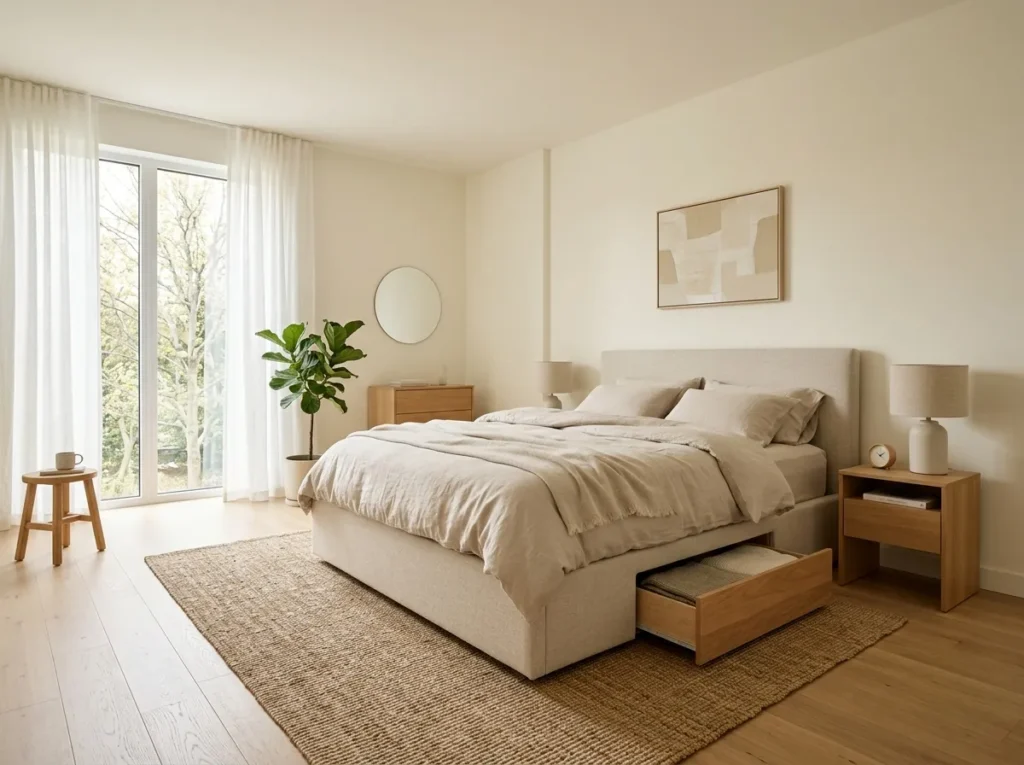
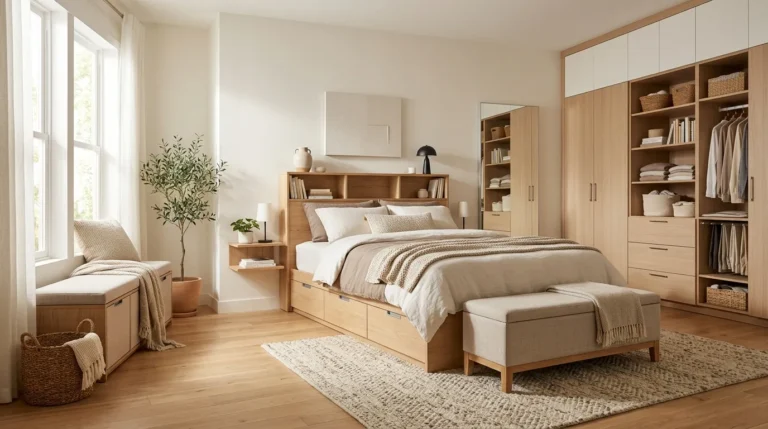
A clutter-free floor can completely change how a bedroom feels. In a minimalist bedroom, a storage bed hides extra bedding, clothing, and seasonal items without adding another cabinet to the room. This is particularly helpful when closets are limited or the space is compact. Choose drawers that glide smoothly or a lift-up design that is easy to access. Keep the bed frame visually simple so its storage function stays discreet. When everyday items have a hidden home, surfaces stay clearer and the entire room naturally feels calmer.
Smart storage does not have to look like storage. A minimalist bedroom becomes easier to maintain when useful compartments are built directly into the furniture you already need. Use under-bed space for bulky blankets, spare pillows, luggage, or off-season clothing rather than everyday essentials. Organize smaller belongings inside fabric boxes or low-profile containers so the interior remains manageable. This simple strategy reduces visible clutter without requiring more furniture. The result is a bedroom that feels spacious, practical, and intentionally designed even when the room itself is relatively small.
Oversized Mirror
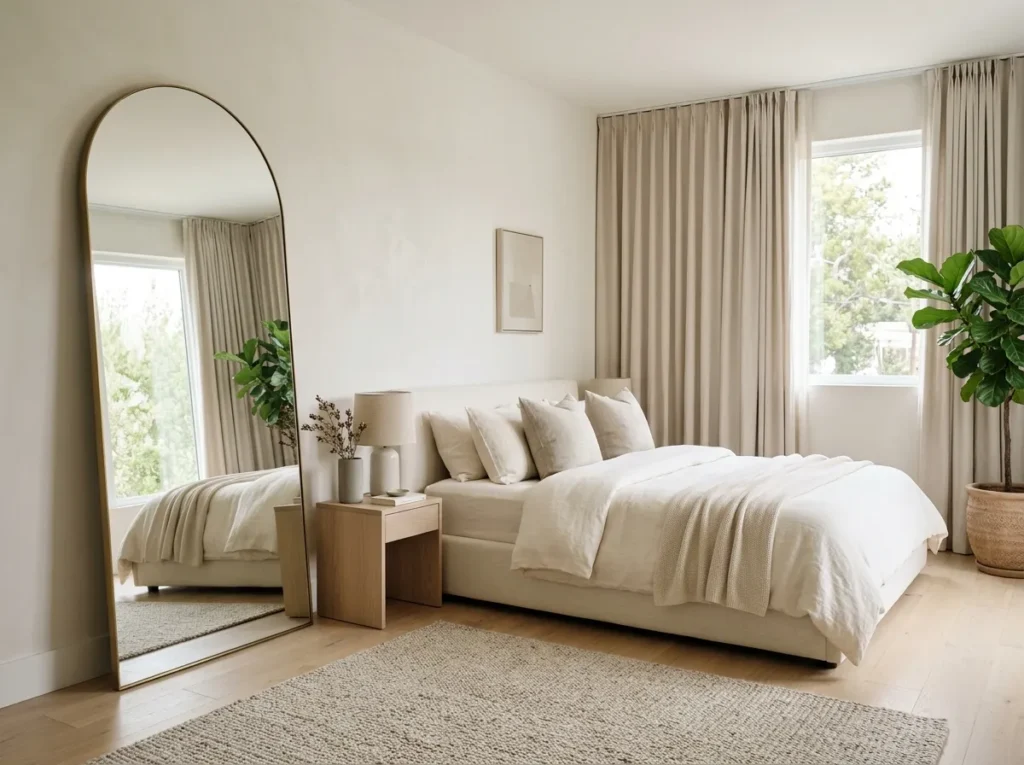
A large mirror can make a small room feel dramatically more open. In a minimalist bedroom, an oversized mirror adds visual depth while serving a useful everyday purpose. Position it opposite or near a window so it can reflect natural light and brighten darker corners. A frameless design keeps the effect understated, while a slim wood frame can introduce warmth. Avoid surrounding the mirror with too many accessories because its size already creates a strong visual statement. One carefully positioned mirror can provide both function and spaciousness without adding clutter.
Looking for a simple way to make the room feel larger? A minimalist bedroom benefits from reflective surfaces because they create the impression of additional space without requiring structural changes. A full-length mirror can also make dressing easier while giving the room a polished finishing touch. For a softer look, lean the mirror against the wall instead of mounting it. If safety or placement requires mounting, choose a secure installation appropriate for its size and weight. Keep nearby furniture streamlined so the mirror remains the main visual feature.
Soft Pendant Lighting
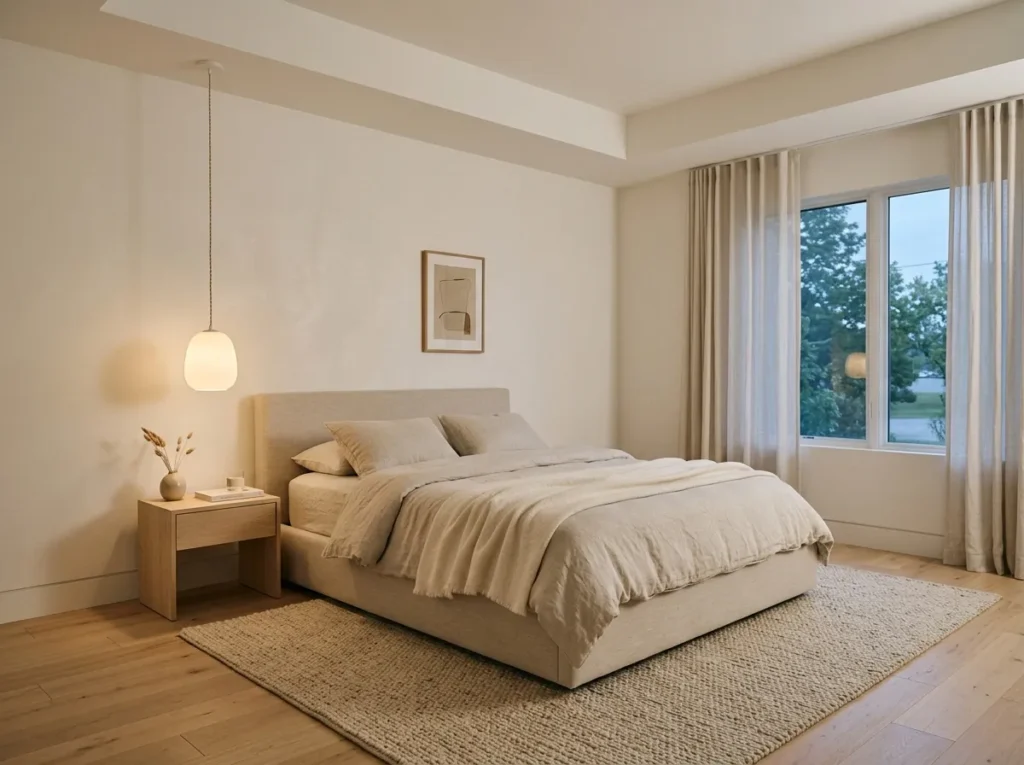
The right lighting can make minimal design feel warm rather than stark. In a minimalist bedroom, a soft pendant beside the bed provides focused illumination while freeing the nightstand surface from a traditional lamp. Choose a shade made from frosted glass, linen, paper, or woven material to create a gentle glow. Warm bulbs work especially well in bedrooms because they soften neutral colors and natural wood finishes. Keep the pendant silhouette simple so it complements the room instead of competing with the bed, artwork, or other carefully selected elements.
Want your bedroom to feel peaceful at night and uncluttered during the day? A minimalist bedroom can use pendant lighting to achieve both goals with one thoughtful choice. Hanging the light beside the bed keeps useful illumination within reach while visually opening the nightstand area. For symmetry, install matching pendants on both sides of the bed; for a more relaxed look, use one pendant on a single side. Keep cords neatly managed and choose a height that provides comfortable reading light without overwhelming the bed.
Built-In Wardrobe
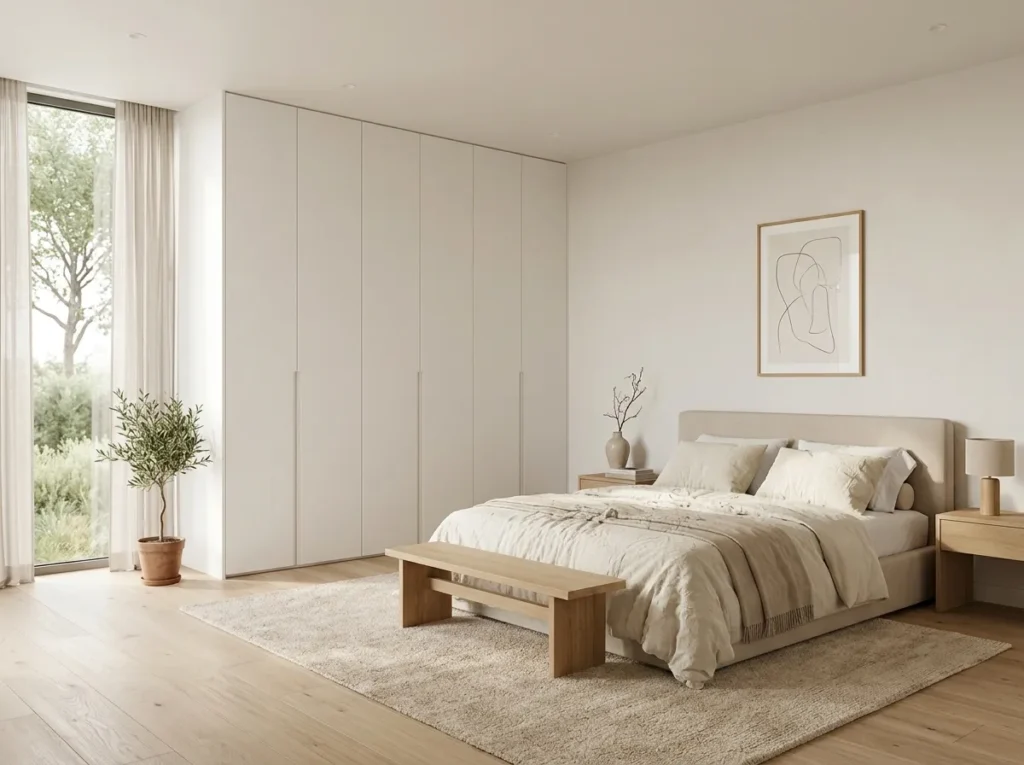
A seamless wardrobe can make storage almost disappear. In a minimalist bedroom, floor-to-ceiling cabinetry creates generous storage while keeping the room visually calm and organized. Matching the wardrobe doors to the wall color helps the furniture blend into the architecture instead of becoming a dominant feature. Inside, use adjustable shelves, drawers, and hanging sections to keep belongings easy to access. This approach works particularly well in smaller rooms because one streamlined storage wall can replace several separate furniture pieces while preserving valuable walking space.
The best storage is often the storage you barely notice. A minimalist bedroom feels more spacious when clothing, accessories, and everyday belongings stay behind simple cabinet doors. Choose handles that are slim and understated, or consider push-to-open doors for an even cleaner look. Use vertical compartments for long clothing and dedicated drawers for smaller items. Keeping the exterior consistent with the rest of the room creates visual continuity. The result is a practical storage solution that supports everyday routines while maintaining the quiet, uncluttered character of the space.
Minimal Desk Nook
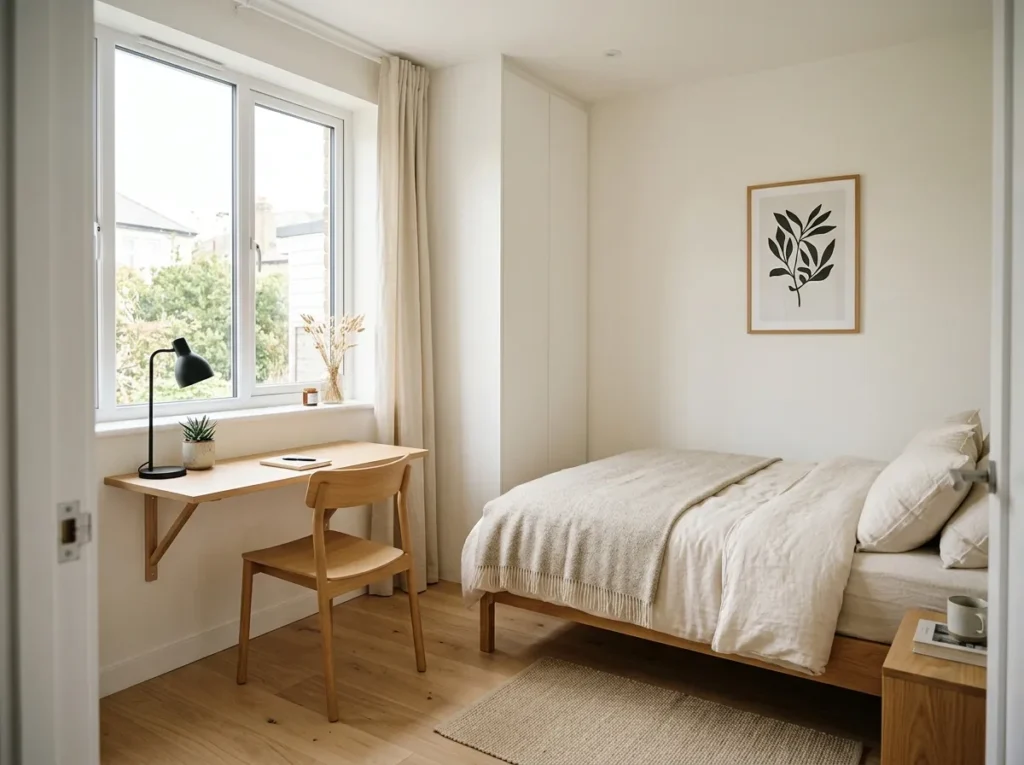
A tiny work area can fit beautifully without taking over the bedroom. In a minimalist bedroom, a slim desk tucked against an unused wall creates a practical place for reading, journaling, or occasional laptop work. Wall-mounted designs are especially useful because they preserve floor space and keep the room feeling open. Choose a simple chair that can slide completely underneath when not needed. Keep the desktop limited to essentials, such as a small lamp, notebook, and computer. This keeps the work zone functional without introducing unnecessary visual noise.
Need a workspace but do not want the bedroom to feel like an office? A minimalist bedroom can accommodate a compact desk nook with careful planning. Look for an overlooked corner near a window or beside a wardrobe and use a shallow desk rather than a bulky workstation. Natural light makes the area more pleasant during the day, while a warm task lamp provides flexibility at night. Keep cables hidden and supplies contained in one organizer. These small details help the workspace blend naturally into the relaxing atmosphere of the bedroom.
Single Statement Art
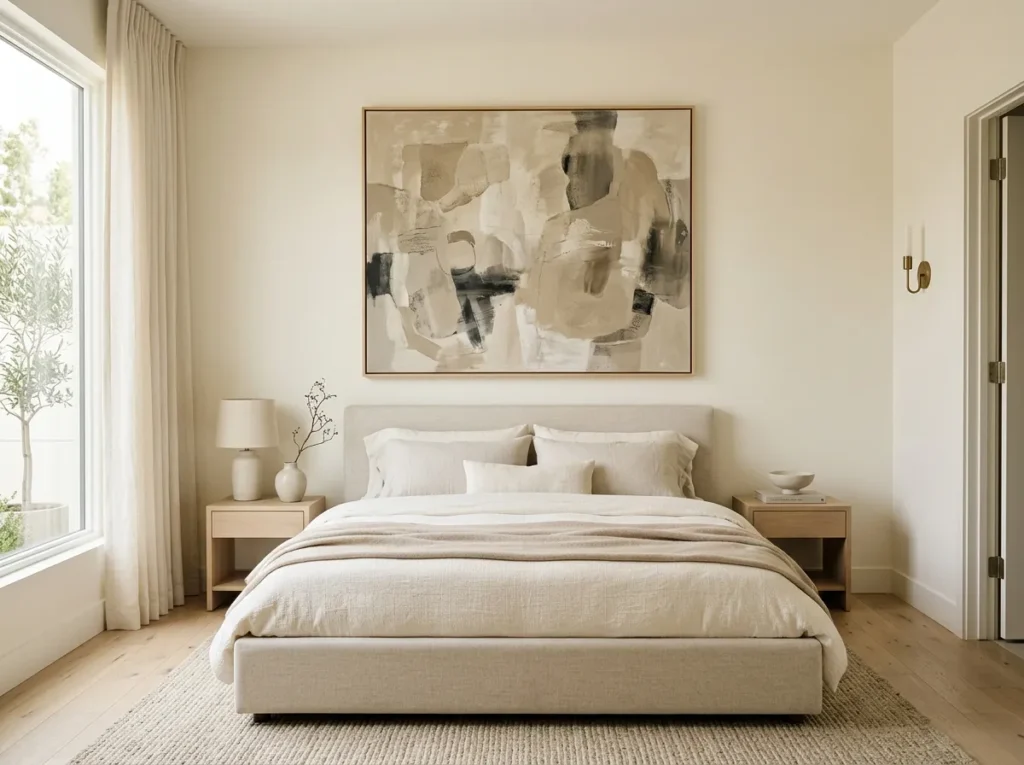
One beautiful artwork can say more than a crowded gallery wall. In a minimalist bedroom, a large framed print above the bed creates a clear focal point while preserving the peaceful feeling of open walls. Choose artwork with two or three colors already present in the room so it feels connected rather than random. Abstract shapes, soft landscapes, or simple line drawings can work especially well. Keep the frame understated and position the piece at a balanced height. This creates personality without overwhelming the carefully edited design.
Less decoration can actually make one meaningful piece feel more powerful. A minimalist bedroom benefits from a single statement artwork because the surrounding empty space gives the piece room to breathe. Instead of filling every wall, choose artwork that genuinely reflects the atmosphere you want, whether calm, earthy, modern, or slightly dramatic. Keep other decorative elements quiet so the artwork remains the visual anchor. This approach is also easy to update later because changing one large piece can refresh the entire room without requiring a complete redesign.
Natural Wood Accents
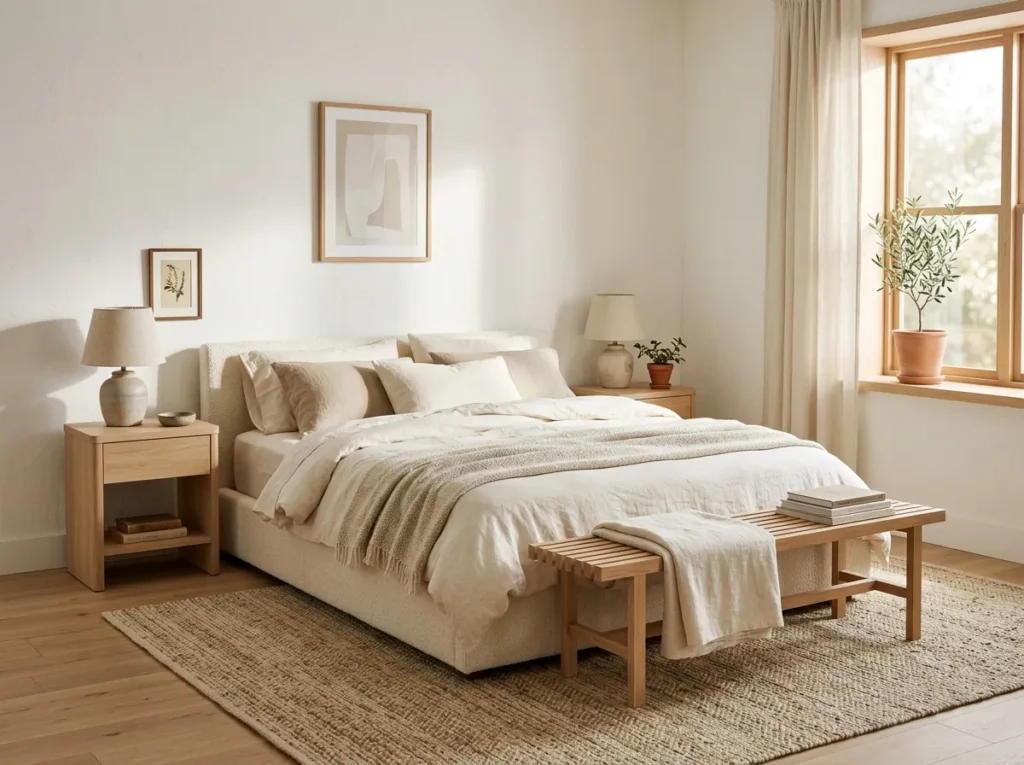
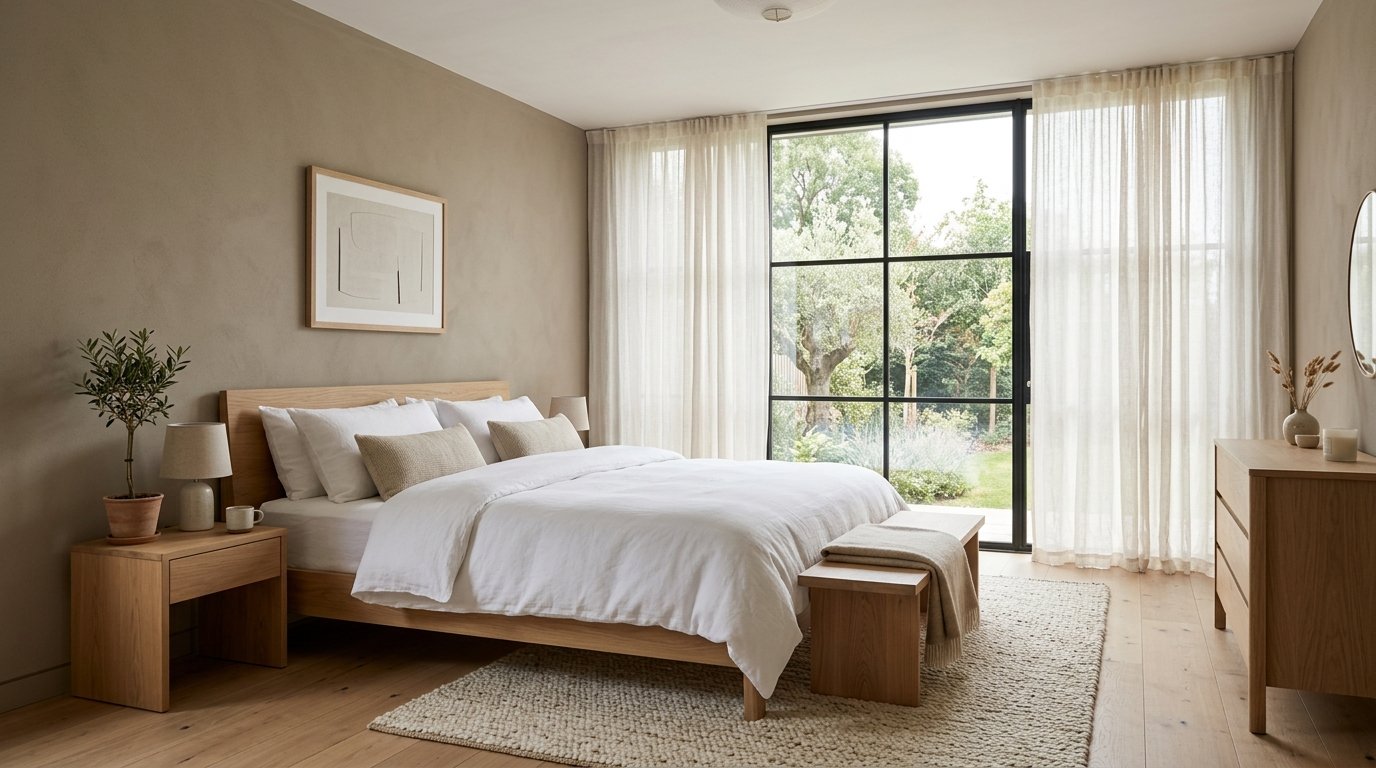
Natural materials can instantly soften a simple room. In a minimalist bedroom, light wood accents introduce warmth and texture without adding visual clutter. A pale oak nightstand, small bench, or wooden picture frame can make neutral walls and bedding feel more inviting. Try repeating the same wood tone in two or three places so the room feels coordinated. Avoid using too many different finishes because variety can quickly make a restrained space look busy. A few carefully selected wooden pieces are enough to create an organic, comfortable foundation.
Want minimalism to feel warm rather than cold? A minimalist bedroom can use natural wood to add character while keeping the overall design beautifully simple. Pair pale timber with linen, cotton, wool, or woven fibers to create subtle layers of texture. The contrast between smooth wood and soft fabrics makes the room feel comfortable without relying on excessive decoration. Matte finishes usually work better than highly polished surfaces because they maintain a relaxed appearance. This combination creates a timeless bedroom that feels intentional, natural, and easy to live with.
Floor-Length Curtains
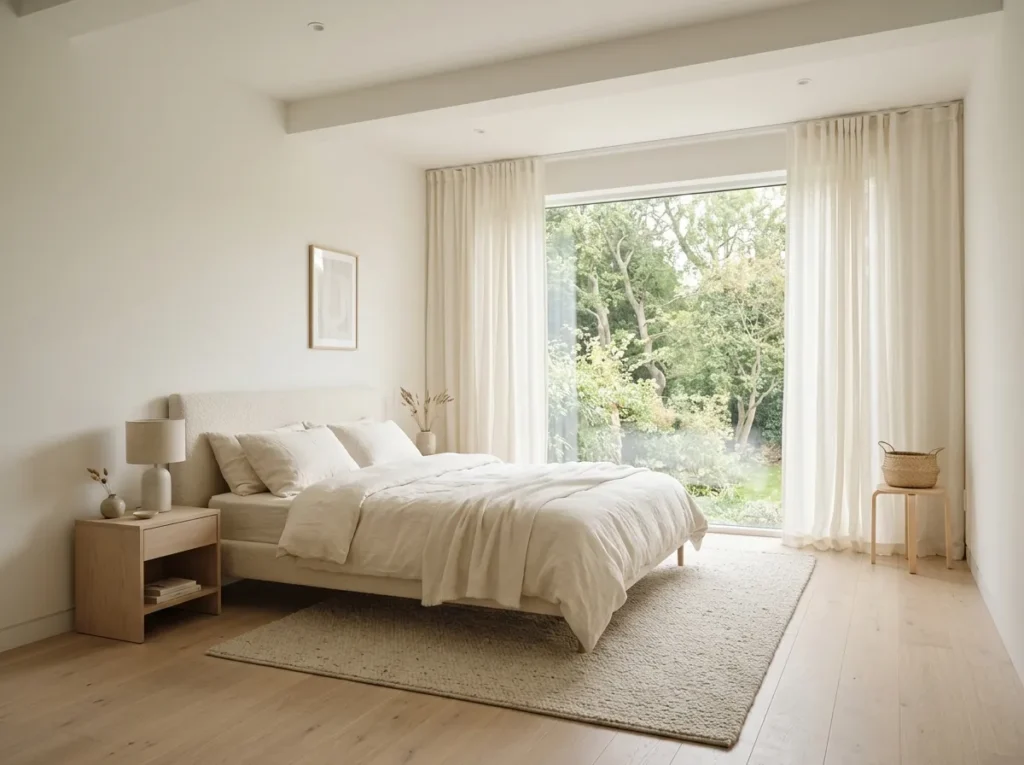
Beautiful window treatments can make the entire room feel taller and softer. In a minimalist bedroom, floor-length curtains create vertical lines that visually lift the ceiling while adding gentle texture around the windows. Choose lightweight linen or cotton in ivory, beige, or warm white so natural light can filter through without making the room feel heavy. Mount the curtain rod slightly above the window frame for a more spacious effect. When the fabric reaches the floor neatly, the finished look feels polished, calm, and intentionally designed.
Natural light becomes part of the decor when the window treatment is kept simple. A minimalist bedroom looks especially inviting when soft curtains diffuse harsh sunlight while maintaining an airy atmosphere throughout the day. Avoid elaborate patterns or heavy layers that compete with the room’s clean lines. Instead, select a neutral fabric that complements the bedding, walls, and flooring. If privacy is important, pair sheer curtains with a simple blackout layer that can be closed at night. This practical combination keeps the room comfortable without sacrificing the streamlined aesthetic.
Japandi Furniture
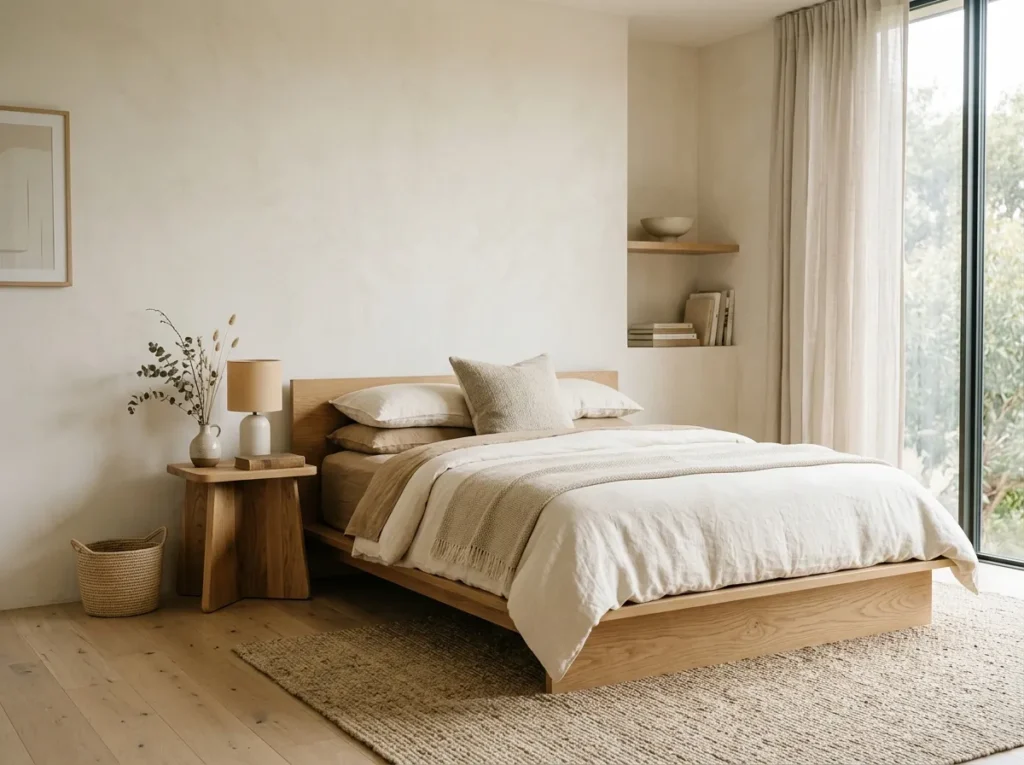
Simple furniture becomes more beautiful when every piece has a purpose. In a minimalist bedroom, Japandi-inspired furniture combines Japanese simplicity with Scandinavian warmth to create a space that feels refined but comfortable. Look for low beds, rounded wooden edges, natural finishes, and neutral upholstery. Avoid ornate detailing and oversized furniture that consumes unnecessary floor space. A few thoughtfully chosen pieces can provide everything the room needs while leaving generous breathing room. This balance makes the bedroom feel peaceful, grounded, and easy to maintain.
Warm minimalism does not require a lot of decoration. A minimalist bedroom can borrow Japandi principles by focusing on natural materials, practical furniture, and calm proportions. Pair pale oak with cream textiles, handmade ceramics, and subtle woven textures for a soft layered effect. Keep decorative objects limited and allow negative space to become part of the design. Furniture should feel comfortable rather than overly formal, with smooth shapes and useful proportions. The result is a bedroom that feels organized and sophisticated while still retaining a relaxed, lived-in quality.
Underbed Drawers
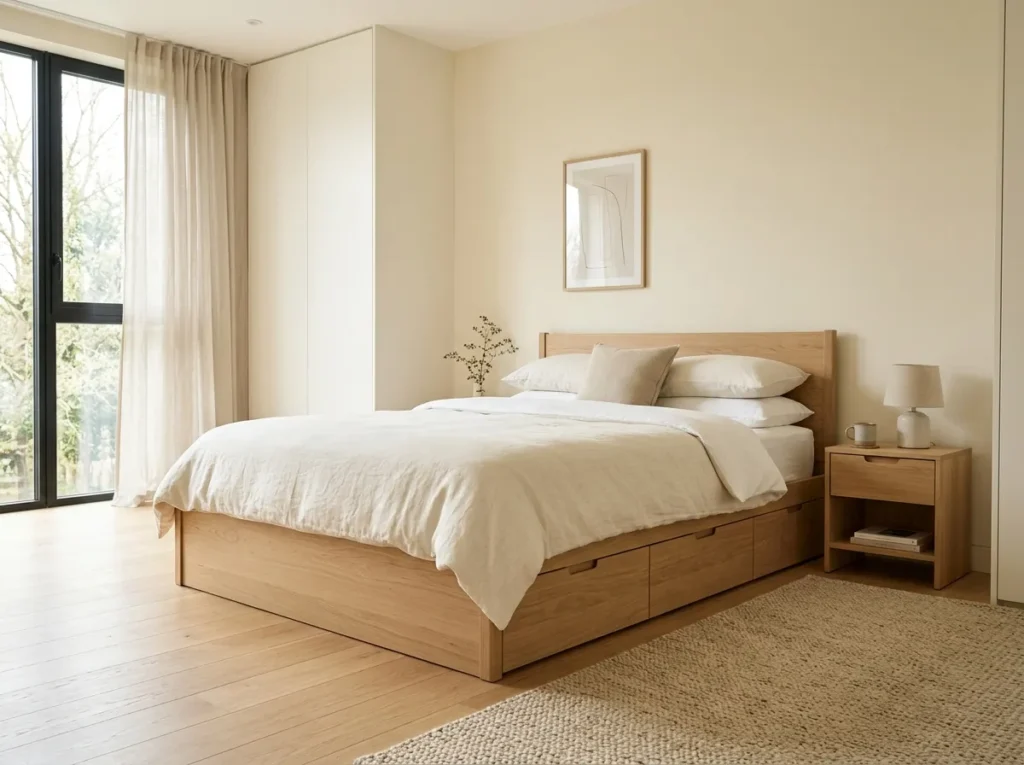
Unused space beneath the bed can become valuable storage without adding another piece of furniture. In a minimalist bedroom, discreet underbed drawers provide a practical solution for blankets, seasonal clothing, spare linens, and other bulky items. Choose drawers with smooth hardware and enough depth for the belongings you actually need to store. Keeping categories separated makes the space easier to manage and prevents hidden clutter from becoming a problem. When the storage remains visually integrated with the bed, the room maintains its clean appearance from every angle.
Storage works best when it supports your daily habits. A minimalist bedroom can stay remarkably tidy when underbed drawers handle items that do not need to remain visible. Use one drawer for extra bedding, another for seasonal accessories, and another for occasional-use items if space allows. Labeling discreet fabric organizers inside the drawers can make retrieval much faster. Avoid stuffing every compartment simply because space exists. Keeping some breathing room makes organizing easier and helps you maintain the calm, uncluttered feeling that defines effective minimalist design.
Open Corner Chair
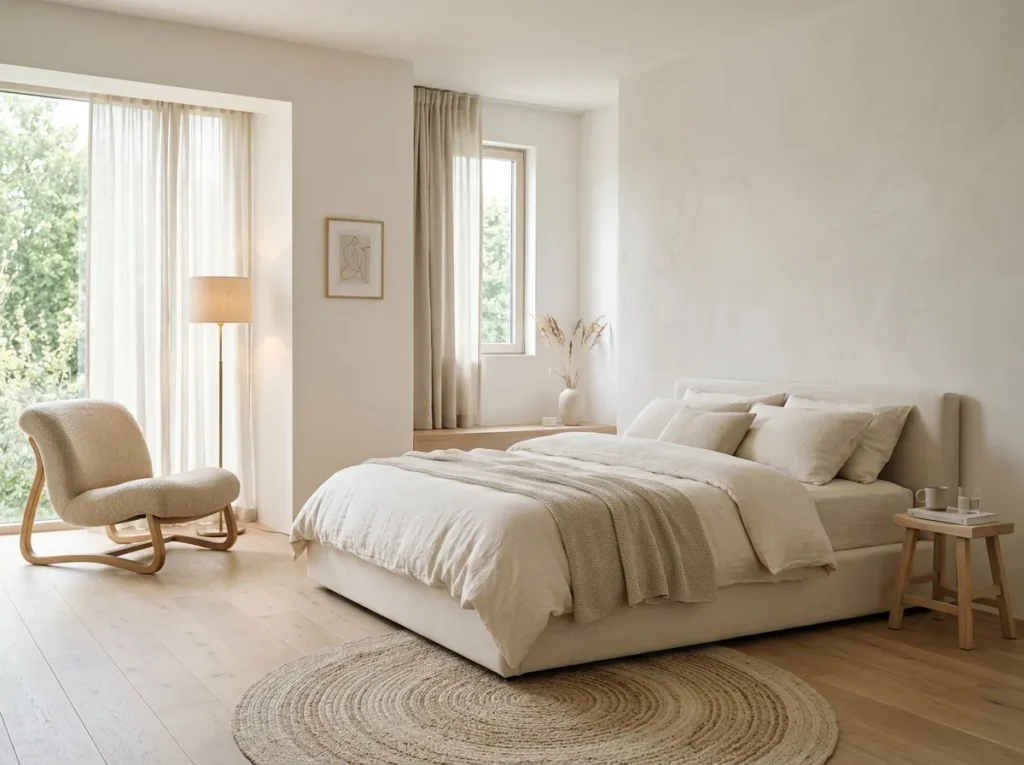
An empty corner can become useful without becoming cluttered. In a minimalist bedroom, one carefully chosen chair creates a comfortable spot for reading, putting on shoes, or simply pausing at the end of the day. Select a design with clean lines and a neutral fabric so it complements the bed rather than competing with it. A small cushion or folded throw can add softness without excessive decoration. Keep enough space around the chair to maintain easy movement and preserve the visual openness that makes the room feel larger.
A chair can add personality while still respecting a restrained design. A minimalist bedroom benefits from one intentional seating area when the furniture remains proportional to the room. Place the chair near natural light if you enjoy reading, or position it beside a slim floor lamp for evening use. Avoid turning the corner into a collection of accessories; one chair and one useful companion piece are usually enough. This creates a welcoming retreat while keeping the bedroom visually balanced, functional, and free from unnecessary furniture.
Monochrome Bedding
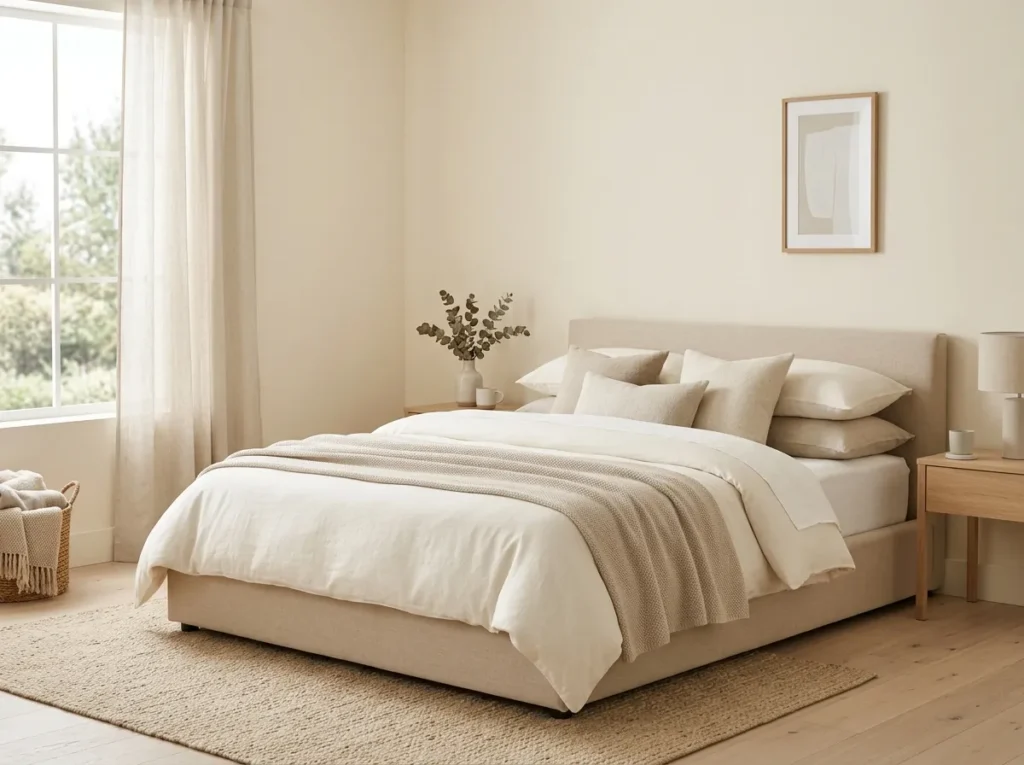
A single color family can make the room feel instantly calmer. In a minimalist bedroom, monochrome bedding creates a cohesive foundation without requiring multiple decorative elements. Try combining ivory sheets, a warm beige duvet, and oatmeal pillows to introduce subtle variation while maintaining visual harmony. Different textures prevent the palette from feeling flat, so consider linen, cotton, or a lightly woven throw. Keep patterns restrained and let the differences in fabric create interest. This approach makes the bed look polished while preserving the peaceful simplicity that defines minimalist interiors.
You do not need bold colors to make a bedroom feel finished. A minimalist bedroom can gain plenty of visual depth by layering closely related neutral shades across the bed. Start with the lightest tone underneath and gradually introduce slightly warmer or darker shades through pillows and throws. Keep the surrounding furniture simple so the bedding remains cohesive rather than decorative. This tonal approach is especially useful for small rooms because fewer contrasting colors can make the space appear more continuous. The result feels sophisticated, restful, and effortlessly coordinated.
Streamlined Dresser
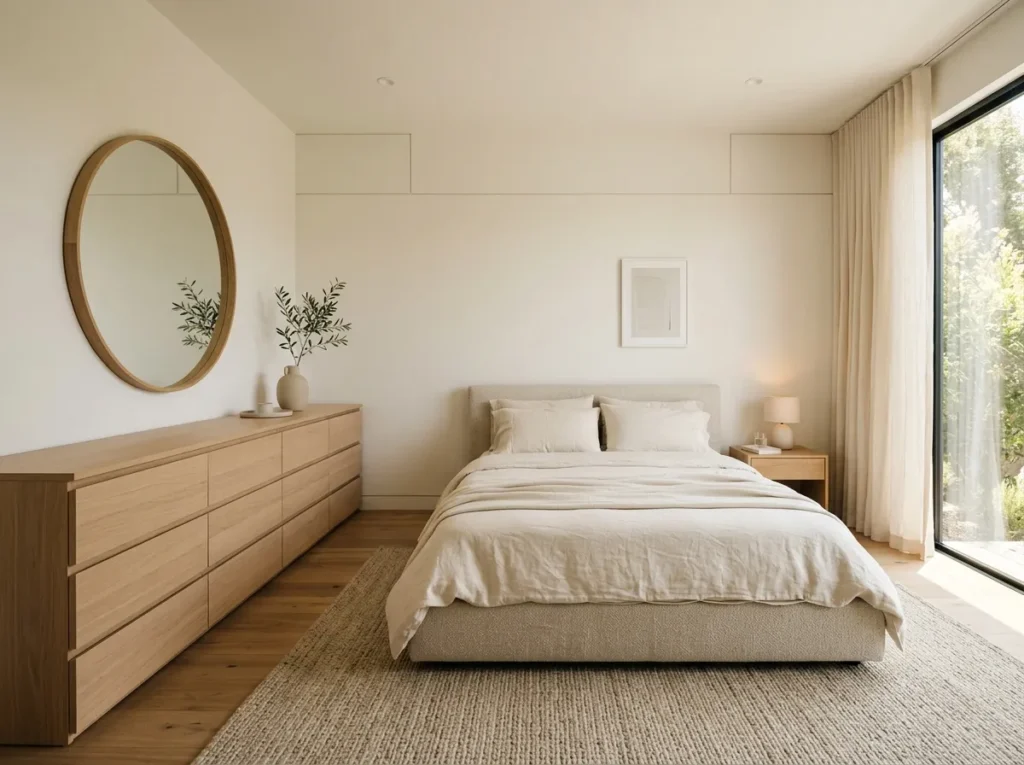
The right dresser can provide essential storage without becoming a visual distraction. In a minimalist bedroom, a streamlined dresser with flat drawer fronts and subtle hardware keeps clothing organized while maintaining clean architectural lines. Choose a width and height that suit the available wall rather than automatically selecting the largest option. Light oak, warm white, or soft beige finishes can blend naturally with the rest of the room. Keep the top surface mostly clear so the furniture looks intentional and the room retains a sense of openness.
A tidy dresser surface can make the entire room feel more peaceful. A minimalist bedroom works best when everyday belongings have designated storage instead of collecting on visible surfaces. Use drawer dividers for smaller clothing, accessories, or personal items so everything remains easy to find. On top, choose only a few functional or decorative pieces, such as a small lamp, ceramic vessel, or framed print. Avoid filling every available space. This simple editing habit keeps the dresser useful and attractive while supporting the uncluttered lifestyle that makes minimalist design practical.
Conclusion
Creating a minimalist bedroom doesn’t mean sacrificing comfort or personality. The best minimalist bedroom ideas focus on thoughtful design choices that reduce clutter, improve functionality, and create a calm environment you’ll enjoy every day. Even a few simple updates can make your bedroom feel more spacious, organized, and visually balanced.
I’ve seen how removing unnecessary distractions and focusing on quality over quantity can completely transform a room. As you explore these ideas, choose the elements that fit your lifestyle and design preferences. Save this post on Pinterest for future inspiration, try a few of your favorite ideas in your own space, and share this article with anyone looking to create a peaceful, stylish, and clutter-free bedroom.