18 Brilliant Hat Storage Ideas For A Beautiful Clutter-Free Home
Introduction
A pile of hats can quickly turn a tidy room into a cluttered corner. The right storage idea can make your collection feel organized, accessible, and beautifully displayed.
These hat storage ideas are designed to help you solve everyday storage problems while adding a stylish touch to your home. Whether your hats are taking over a closet shelf, crowding an entryway, or getting tossed onto furniture, there are simple ways to give every piece a proper home. You’ll find practical options for walls, doors, closets, shelves, and small spaces, along with creative setups that make hats part of your decor. In my experience, wall-mounted storage can be especially useful when floor and closet space are limited. I’ve noticed that when hats are easy to see and reach, they’re much less likely to become a messy pile. Explore these ideas, choose the setup that fits your space, and get ready to make your hat collection both functional and beautiful.
More Storage Inspiration
Once your hats is organized, why not tackle the clutter in another room? These scarf storage ideas reveal clever ways to make the most of small spaces while keeping your room stylish and beautifully organized.
Entryway Hat Hooks
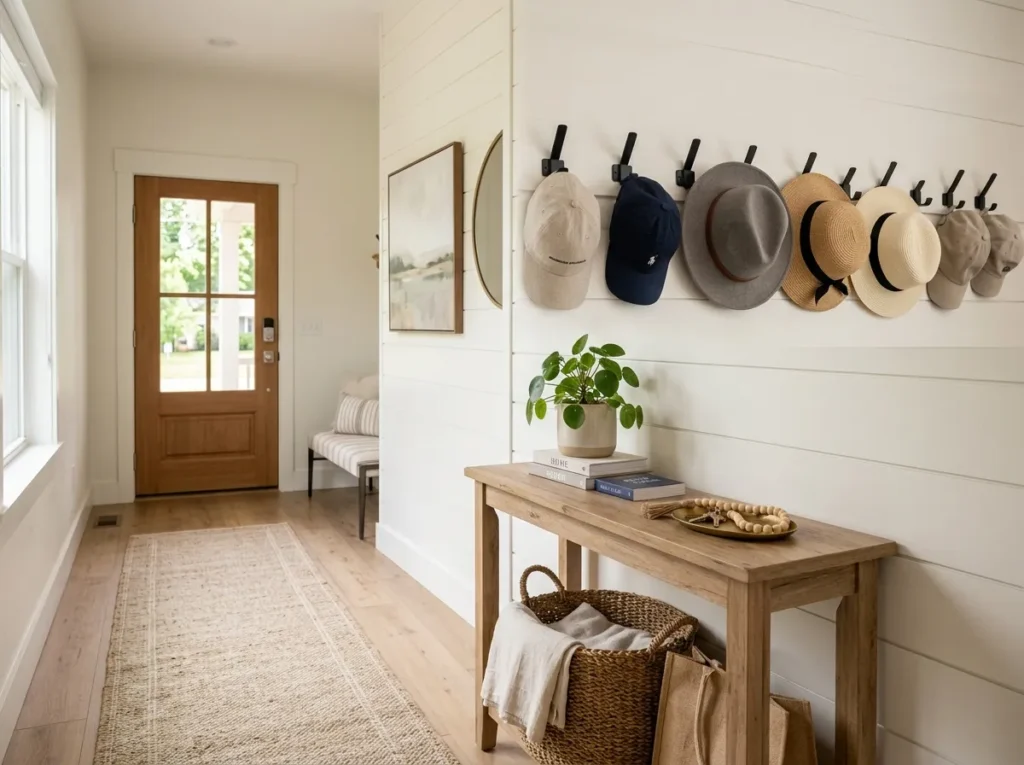
Your entryway can become a clutter-free zone with just a few well-placed hooks. A simple wall-mounted hat display keeps your favourite caps and sun hats within reach while giving the hallway a polished appearance. Install sturdy hooks near the entrance, leaving enough space between each one to prevent hats from overlapping. Choose wood, brass, or matte black finishes that complement your existing furniture. This arrangement works particularly well in smaller homes where floor space is limited. Instead of scattering hats across furniture, you create a dedicated accessory station that looks intentional and remains easy to maintain.
Consider the types of hats your household wears most often before choosing hook placement. Baseball caps can hang comfortably from individual hooks, while wider-brimmed styles need additional clearance. Mount the hooks at a reachable height and use suitable wall fixings for your surface. In my experience, an entryway display stays tidier when each person has a designated section. Keep seasonal accessories elsewhere if the wall becomes crowded. A narrow console beneath the hooks can hold keys and small essentials, creating a coordinated entrance where hats, daily belongings, and decorative details work together naturally.
Floating Display Shelves
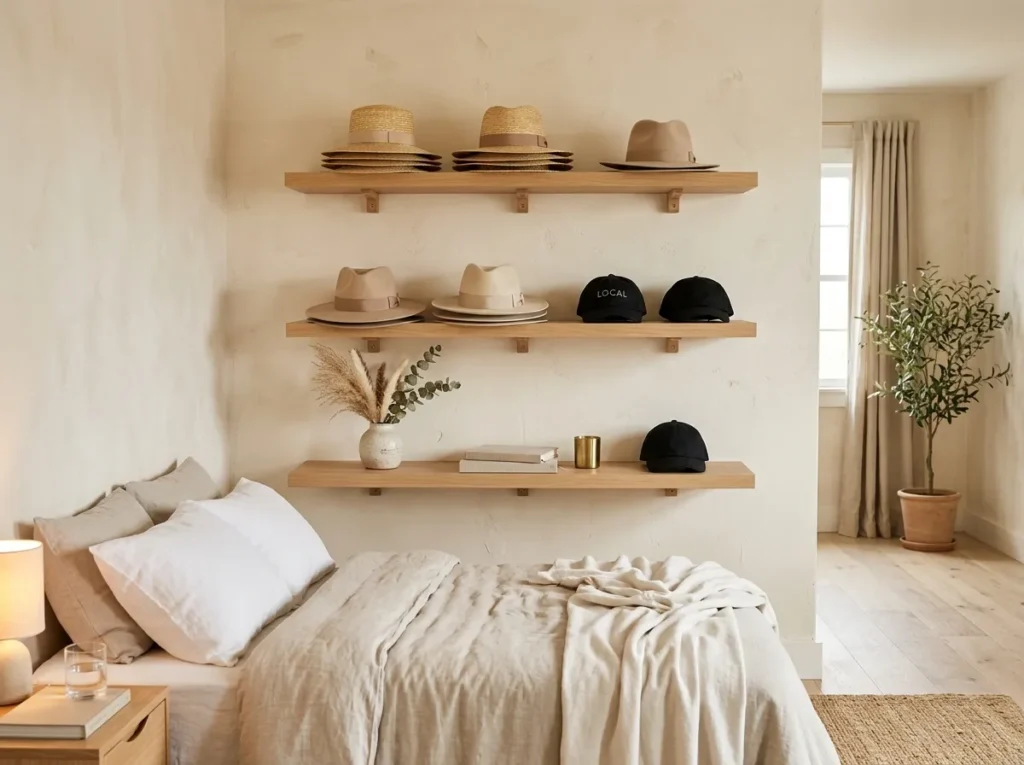
Floating shelves offer a stylish way to store hats while turning your collection into a decorative feature. Instead of hiding beautiful hat shapes inside a cupboard, you can arrange them where their colours and textures add character to the room. Install two or three shelves at different heights, depending on your wall space and collection size. Place structured hats carefully on the surface, ensuring they remain stable and protected. Light oak, white, or natural wood shelves suit many interiors. This approach works especially well in bedrooms, dressing areas, and hallways that need a practical visual upgrade.
Choose shelf depths that accommodate your widest hats without forcing the brims against nearby walls. Secure shelves properly, particularly when storing heavier designs. Leave breathing room between pieces so the display feels balanced rather than crowded. Group similar colours together for a calm appearance, or mix neutral and colourful hats for more personality. I’ve noticed that a smaller collection often looks more sophisticated when arranged with generous spacing. Dust shelves regularly and keep delicate materials away from prolonged direct sunlight. A thoughtfully planned display can combine everyday convenience with attractive home styling.
Behind-Door Rack
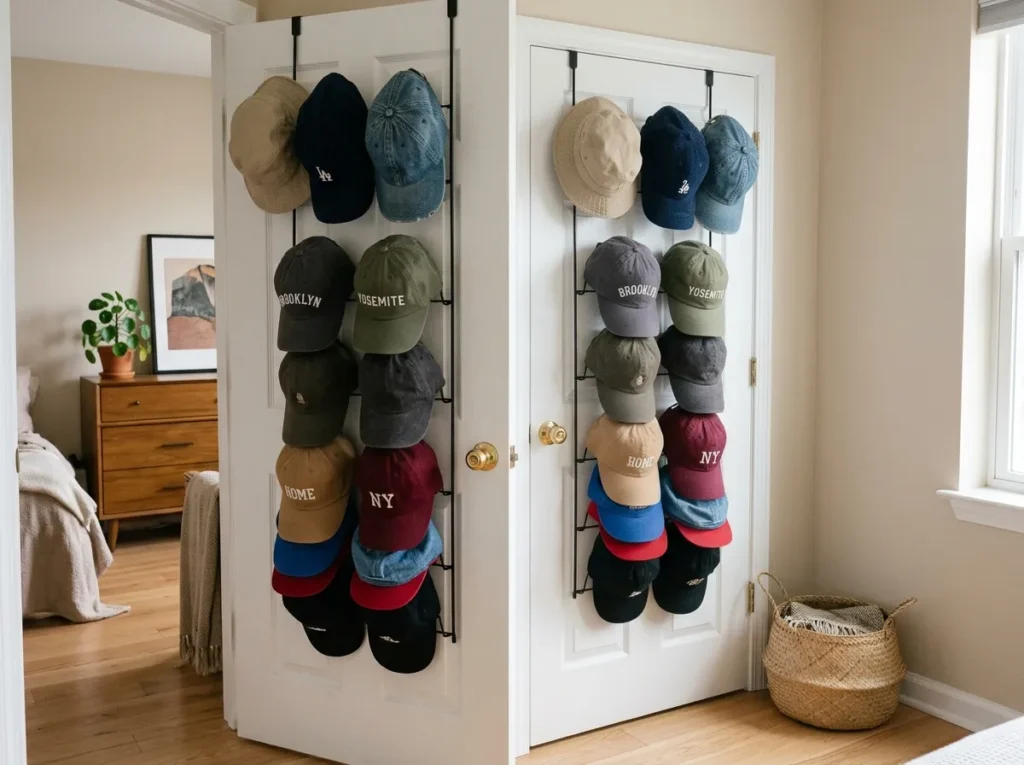
The space behind your bedroom door could be the answer to a growing hat collection. A slim behind-door rack provides discreet storage while keeping accessories organised and away from busy surfaces. Choose a rack that attaches securely and leaves enough clearance for the door to open and close smoothly. Multi-hook designs work well for baseball caps, lightweight hats, and everyday accessories. This solution is useful in compact homes where every square metre matters. By moving hats away from chairs, bedside tables, and wardrobes, you create a cleaner room without needing a large storage unit.
Before installation, check the door thickness, hinge movement, and available clearance around the frame. Select a rack with smooth hooks that will not snag fabric or damage hat materials. Avoid overloading the rack, especially if it uses adhesive mounting. Arrange frequently worn hats at comfortable heights and reserve upper hooks for occasional pieces. A simple colour grouping can make the storage area easier to browse. In my experience, hidden organisation works best when the system remains accessible and each item has a consistent place. This keeps tidying quick and the room visually calmer.
Pegboard Hat Wall
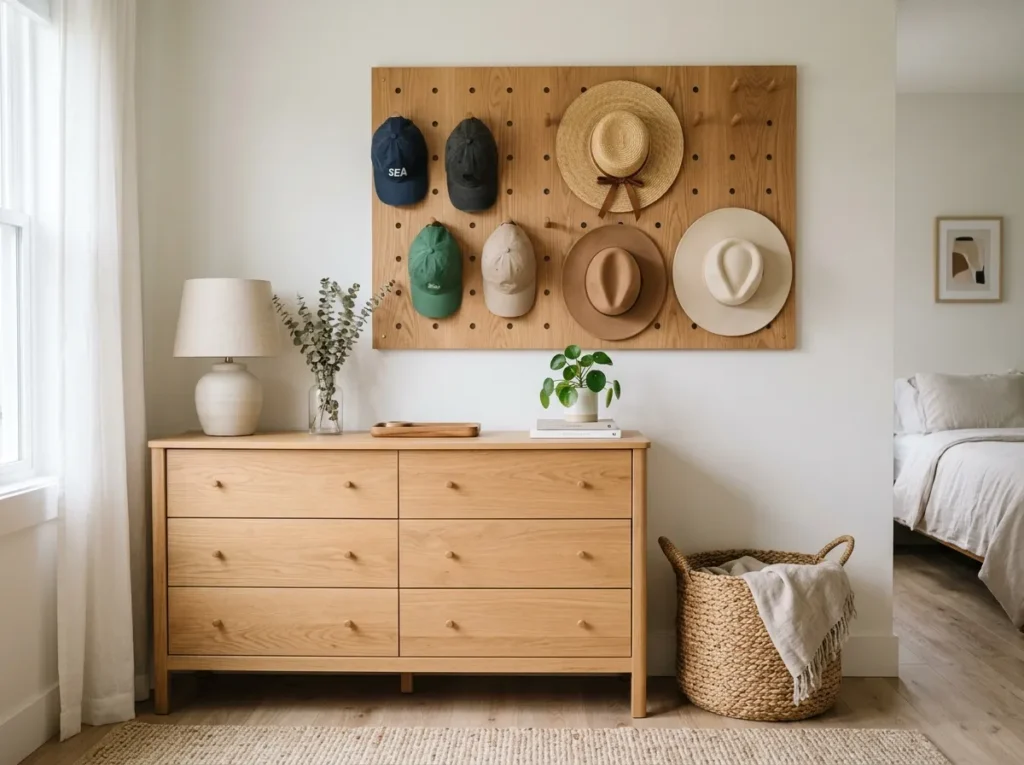
A pegboard can transform an ordinary wall into a flexible hat organisation station. Its adjustable design makes it easy to change your arrangement as your collection grows or your storage needs shift. Attach hooks, small shelves, or specialised holders to accommodate different hat shapes and sizes. Wooden pegboards create a warm, natural look, while white or black versions suit modern interiors. This setup is especially useful when you want storage that adapts rather than remains permanently fixed. Keep frequently worn hats at eye level and arrange less-used pieces on higher sections for a balanced display.
Start by measuring your available wall area and planning how much room each hat requires. Choose sturdy pegs and suitable fixings for the weight of your accessories. Leave enough distance between hats to prevent crushing brims or creating a crowded appearance. You can add a small shelf for sunglasses, keys, or other dressing essentials, making the wall more functional. I’ve noticed that modular storage feels easier to maintain because you can adjust it whenever your routine changes. A simple, coordinated layout keeps the display attractive while ensuring every hat remains easy to reach.
Woven Storage Baskets
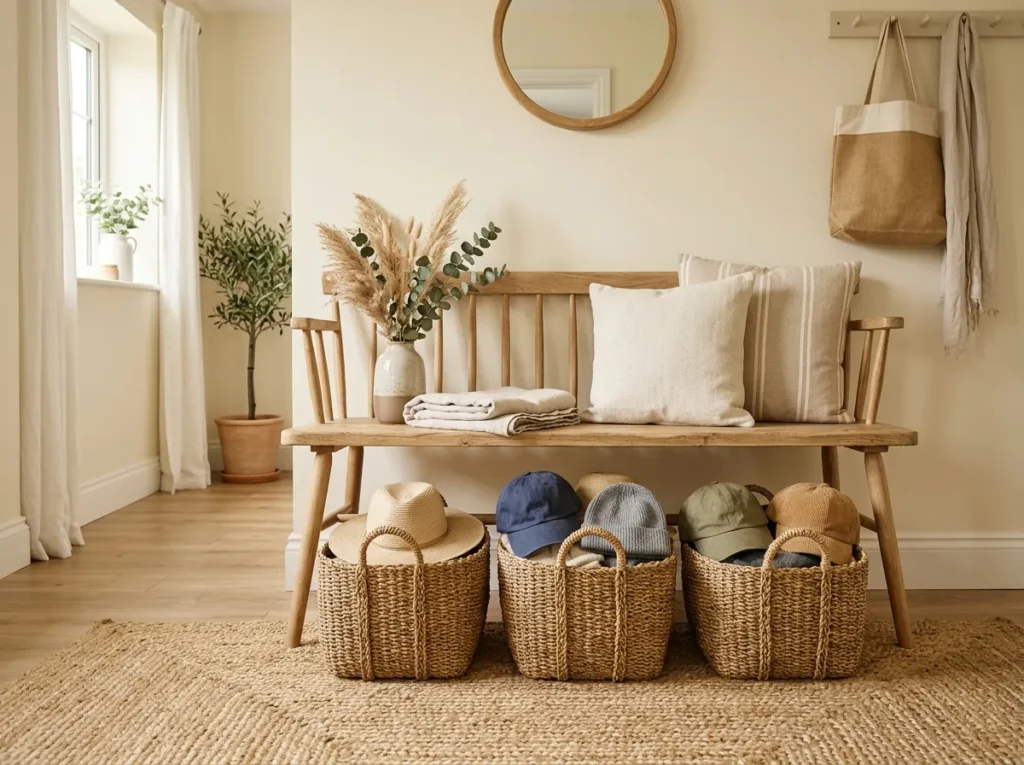
Woven baskets offer a simple way to contain hats while adding warmth and texture to your home. When loose caps and soft hats collect on furniture, a well-placed basket gives them a convenient place to land. Choose baskets with enough width to accommodate your hat styles without crushing them. Seagrass, rattan, and cotton rope designs complement neutral interiors particularly well. Place one beneath an entryway bench, inside an open wardrobe, or beside a dresser. This approach suits households that prefer accessories stored out of sight while keeping them available for everyday use.
Use separate baskets for different categories, such as baseball caps, lightweight summer hats, and seasonal accessories. Avoid pushing structured or delicate hats into tight containers, as their shape may become distorted. Label baskets if several family members share the storage area. Select a sturdy design with comfortable handles if you plan to move it regularly. In my experience, baskets work best when they are easy to access and not placed behind too many objects. A coordinated set can reduce visual clutter, soften hard furniture lines, and create a more welcoming, organised atmosphere.
Closet Shelf Dividers
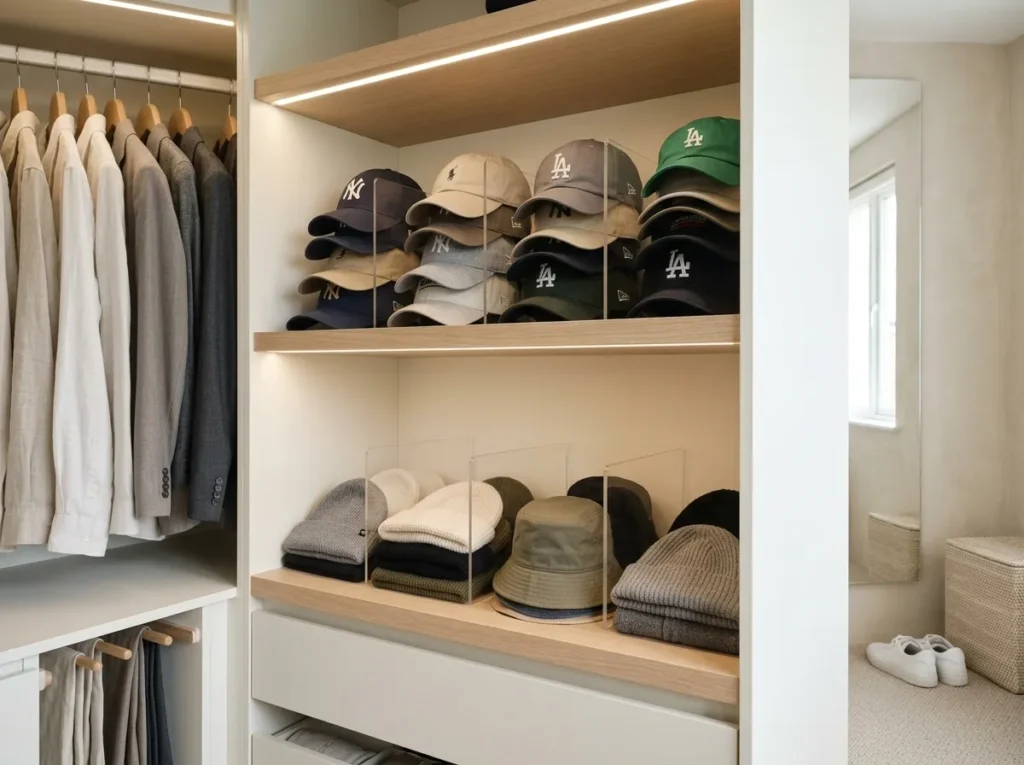
A crowded wardrobe shelf becomes much easier to manage when every hat has a defined section. Shelf dividers create structure between stacked accessories, helping prevent piles from collapsing or spreading across the closet. Use clear acrylic, wire, or wooden dividers according to your wardrobe style and storage needs. Place them between groups of baseball caps, soft hats, or seasonal pieces, ensuring each section has enough room. This method works particularly well for open shelves where accessories tend to shift whenever you remove one item. It improves visibility while making existing storage feel more efficient.
Measure your shelf depth and height before selecting dividers, and choose designs that stand securely without damaging the surface. Keep heavier hats on lower shelves when possible, especially if the wardrobe is tall. Stack flexible caps carefully, but avoid compressing structured hats that need to retain their shape. Grouping accessories by type makes the system easier to use. I’ve noticed that shelf organisation stays practical when each section holds a manageable number of items. With consistent placement and occasional editing, your wardrobe can remain tidy without requiring additional furniture.
Wall-Mounted Hat Rail
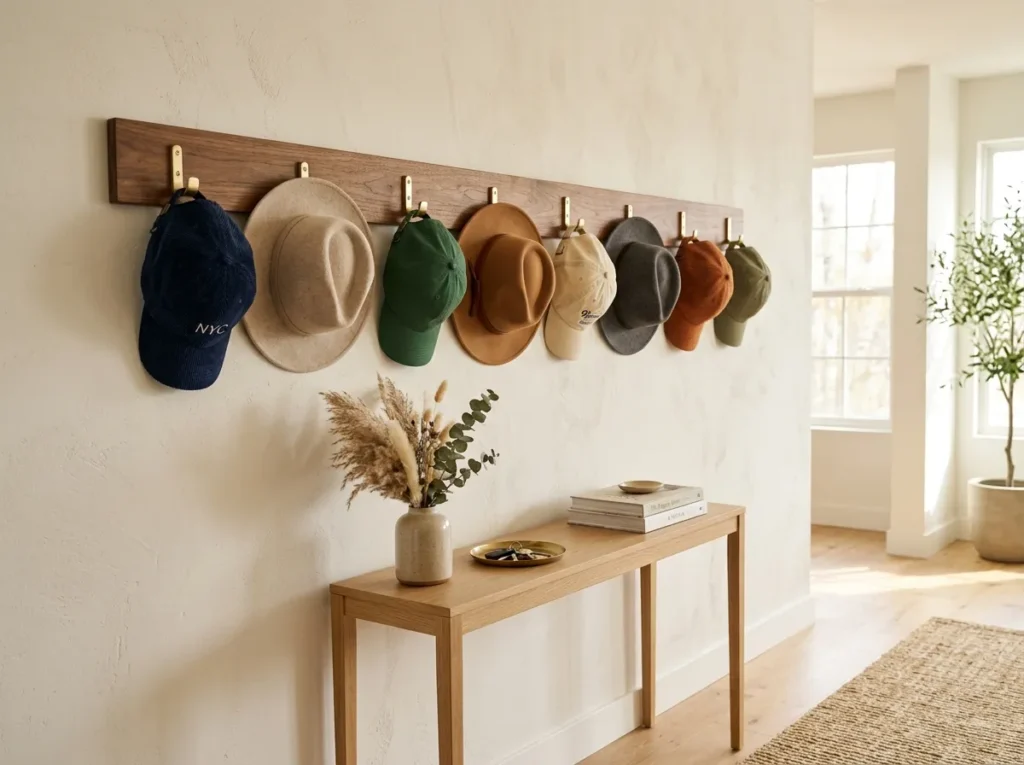
A simple wall rail can turn a blank surface into an attractive hat display. Instead of letting caps accumulate on furniture, a mounted rail keeps them together in one organized location. Choose a wooden rail for warmth or a metal design for a contemporary appearance. Space the hooks according to your hat sizes, leaving room between wide brims and neighboring accessories. This storage method works especially well near a wardrobe or bedroom entrance. It offers easy access, improves the appearance of an empty wall, and helps maintain a consistent place for everyday hats.
Measure the wall carefully before installation and select fixings suitable for its construction. Position the rail at a comfortable height so frequently worn hats can be reached without stretching. Use individual hooks for caps and wider spacing for structured designs. Keep the arrangement visually balanced by mixing colours thoughtfully rather than filling every space. In my experience, a simple rail looks most polished when the display remains slightly open. Regularly remove hats you no longer wear, and keep the rail away from damp areas to help protect the materials.
Under-Bed Hat Storage
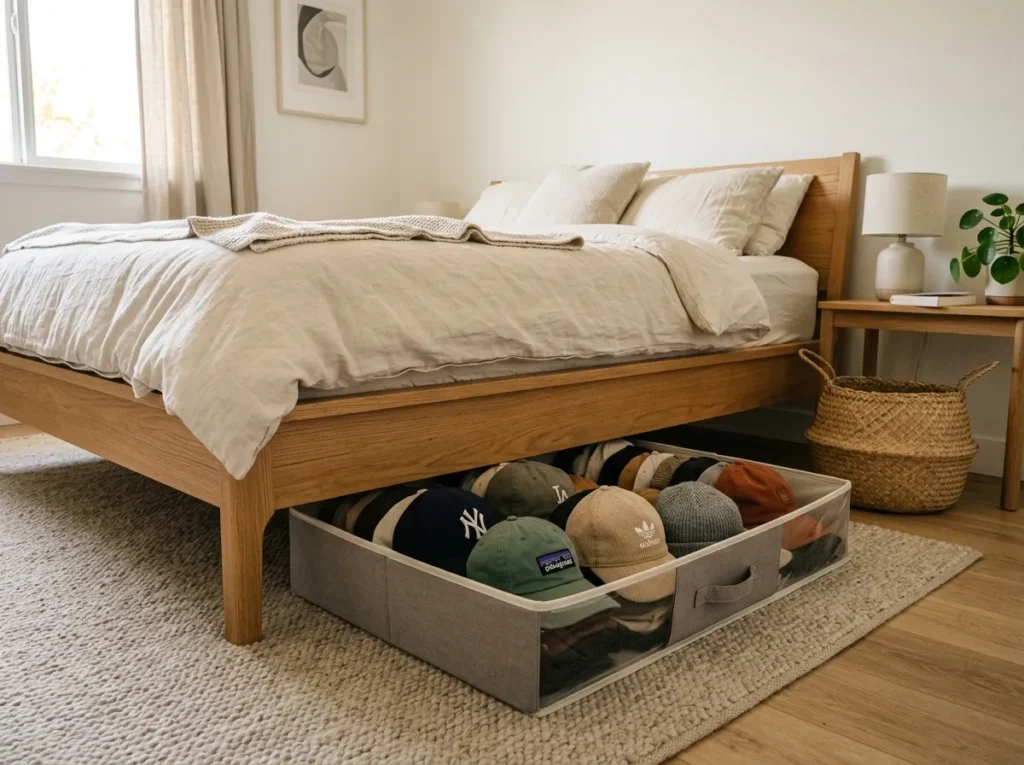
The space beneath your bed can hold more than spare blankets and forgotten belongings. Under-bed storage provides a practical hiding place for hats you wear occasionally or only during certain seasons. Choose a low-profile container that slides easily beneath your bed frame and offers enough room for your collection. Soft storage bags work well for flexible caps, while rigid boxes may suit hats that need additional protection. This approach keeps accessories out of sight without taking up wardrobe space. It is particularly useful in compact bedrooms where every storage area needs to serve a purpose.
Before placing hats underneath the bed, check that the area is clean, dry, and protected from excessive dust. Use breathable fabric bags for suitable materials, and avoid compressing structured hats into narrow containers. Add labels to identify seasonal contents without opening every box. Keep frequently used hats in a more accessible location so you do not need to move storage containers daily. I’ve noticed that under-bed storage works best when it is reserved for items used less often. A clear organisation system prevents hidden spaces from becoming another source of clutter.
Freestanding Hat Stand
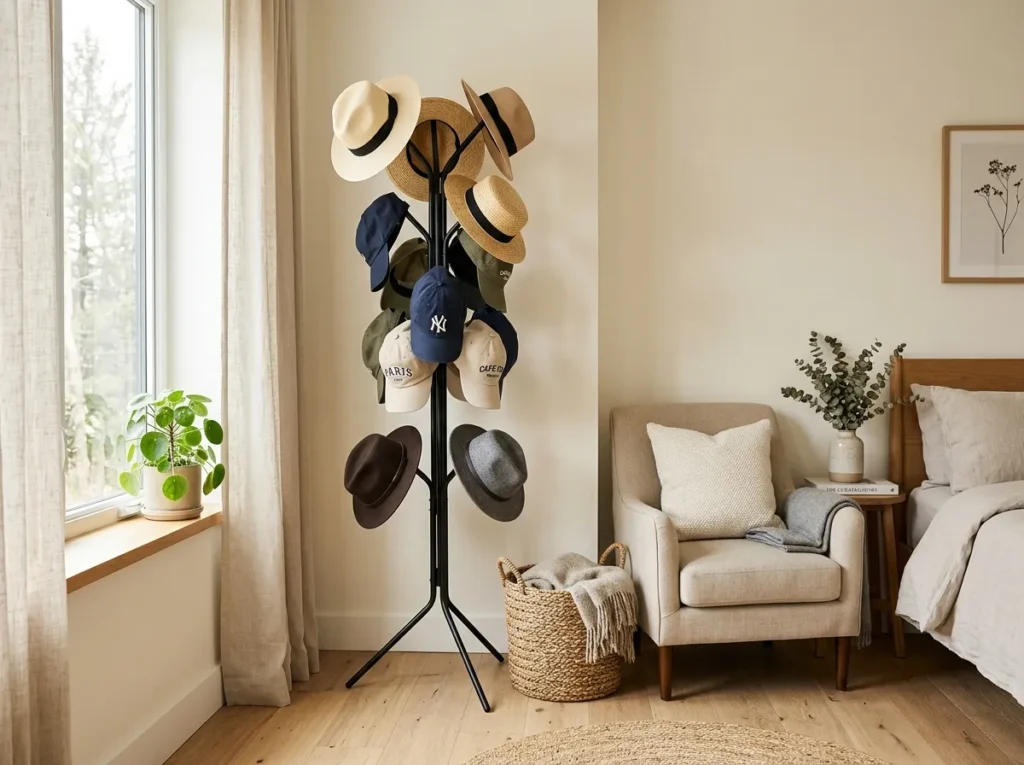
A freestanding hat stand gives your accessories a dedicated place without requiring permanent wall installation. Its vertical shape makes use of a small corner while keeping hats easy to reach and visually organised. Choose a stable stand with hooks or arms suited to your hat collection. Place it beside a wardrobe, near a dressing mirror, or in an unused bedroom corner. Wooden designs create a softer, traditional appearance, while slim metal stands suit modern spaces. This option works particularly well when you want flexible storage that can move with your furniture arrangement.
Choose a stand with a stable base and enough height for your largest hats. Avoid placing it in a narrow walkway where it could become an obstruction. Distribute accessories evenly across the hooks to maintain balance, and avoid hanging too many heavy items on one side. Keep delicate brimmed hats on suitable supports rather than squeezing them between other pieces. In my experience, a freestanding stand looks most attractive when it holds a curated selection instead of the entire collection. Position it near good lighting so you can easily choose an accessory before leaving.
Acrylic Hat Boxes
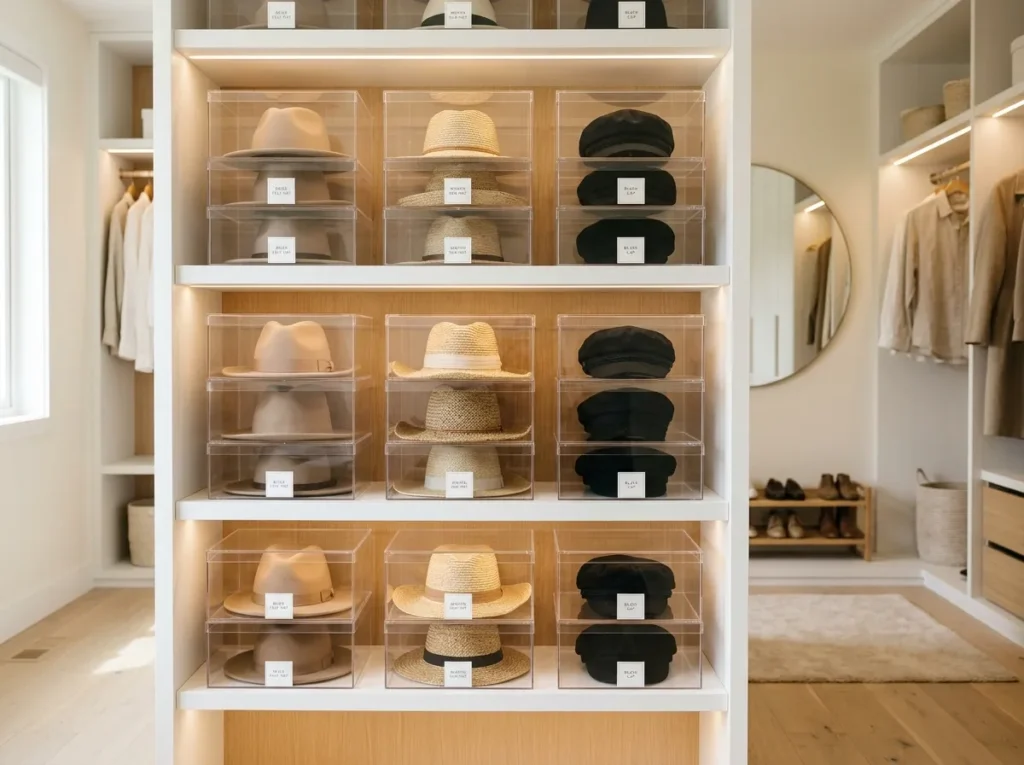
Acrylic hat boxes bring clarity and protection to your accessory collection. Their transparent design lets you see colours and styles without opening every container, making daily outfit choices quicker. Stack matching boxes on wardrobe shelves or arrange them inside a dressing area for a polished appearance. They work especially well for structured hats that need protection from dust and accidental crushing. Choose boxes with enough internal height and width to accommodate each hat comfortably. A neat stack can replace scattered accessories with a display that feels organised, practical, and visually consistent.
Before buying, measure your hats carefully, including their widest brim points. Select boxes with adequate ventilation where appropriate for the hat material, and avoid storing damp accessories inside sealed containers. Keep acrylic boxes away from direct sunlight if prolonged exposure could affect delicate fabrics or colours. Arrange everyday hats on accessible shelves, reserving higher positions for occasional pieces. A consistent box design creates a calm wardrobe appearance. Clear labels can help identify seasonal items while preserving the transparent aesthetic. Regular dusting keeps both the boxes and their contents looking fresh.
Peg Rail Display
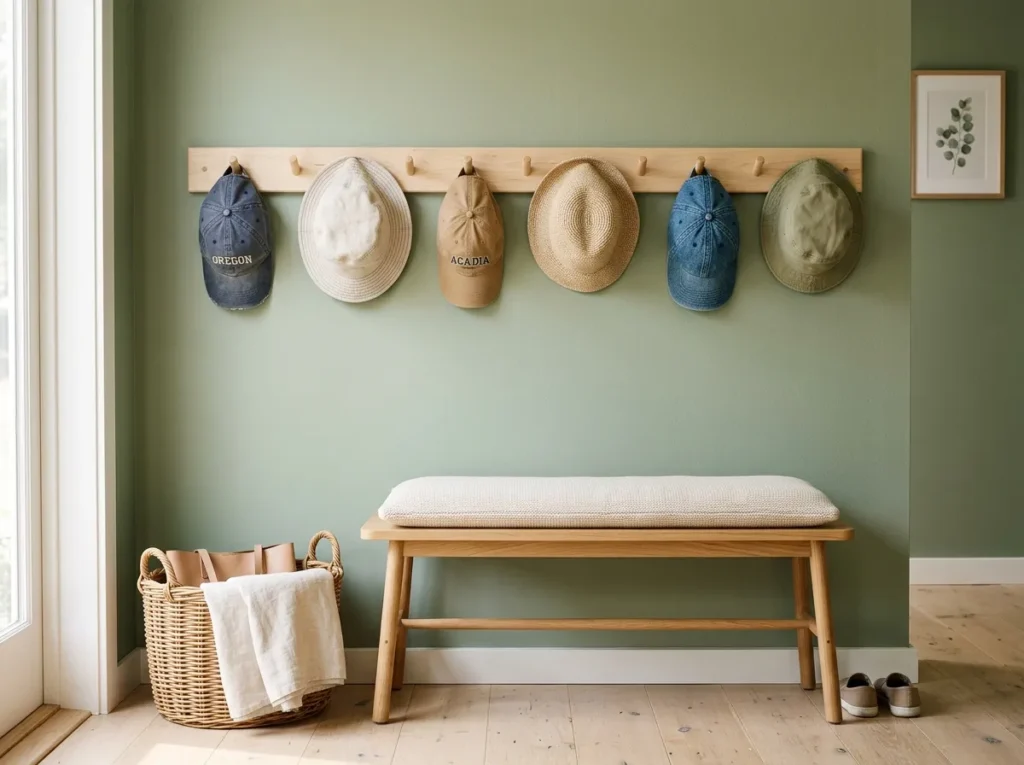
A wooden peg rail makes everyday hat storage feel simple and intentional. Its compact design uses wall space while adding a natural decorative element to your room. Install the rail near an entryway, dressing table, or wardrobe, then assign each peg to a specific hat. Rounded wooden pegs suit lightweight caps and flexible styles, while sturdy options can support suitable heavier accessories. The open arrangement helps prevent hats from becoming buried beneath one another. A neutral wood finish also blends easily with Scandinavian, farmhouse, and modern organic interiors.
Measure the wall area and leave enough room between pegs for hats to hang without pressing against each other. Select secure mounting hardware appropriate for the wall surface. Keep heavier pieces on suitable pegs and avoid placing the rail where it could interfere with movement. You can arrange hats by colour, size, or frequency of use. In my experience, a limited display is easier to maintain than a completely full rail. Keep extra seasonal accessories in a separate container, allowing the peg rail to remain functional and visually balanced.
Rolling Storage Cart
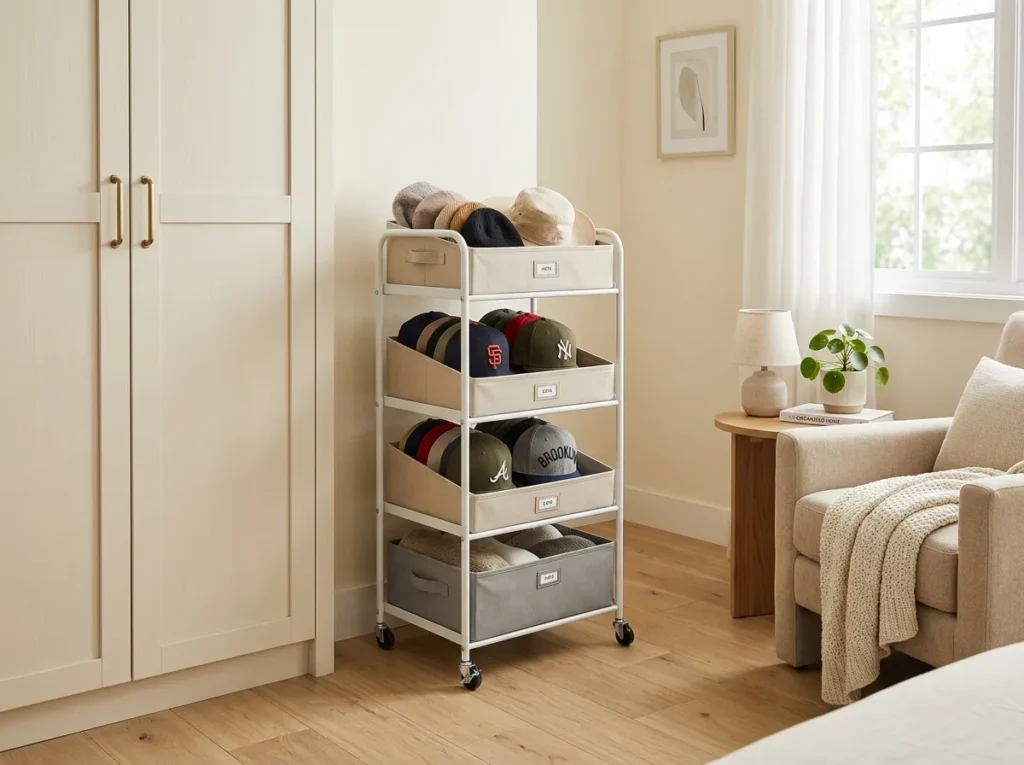
A rolling storage cart offers flexibility when your hat collection needs a dedicated but movable home. Choose a narrow cart that fits beside your wardrobe, under a desk, or near a dressing area. Use separate baskets or shelves to organise baseball caps, soft hats, and seasonal accessories. Its wheels make it easier to move the storage unit when cleaning or rearranging furniture. This option suits smaller bedrooms where permanent fixtures may not be practical. A neutral cart finish can blend with existing furniture while keeping loose accessories contained and accessible.
Measure the available gap before purchasing, checking both width and height. Select a cart with secure wheels and compartments that suit your hat sizes. Avoid packing structured hats into narrow baskets where their brims may become distorted. Keep the most frequently used accessories in the upper sections, with seasonal pieces stored lower down. A small label system can help separate household members’ belongings. I’ve noticed that movable storage is particularly useful in rooms that serve several purposes. Choose a stable cart and keep pathways clear to maintain both convenience and safety.
Vintage Hat Cabinet
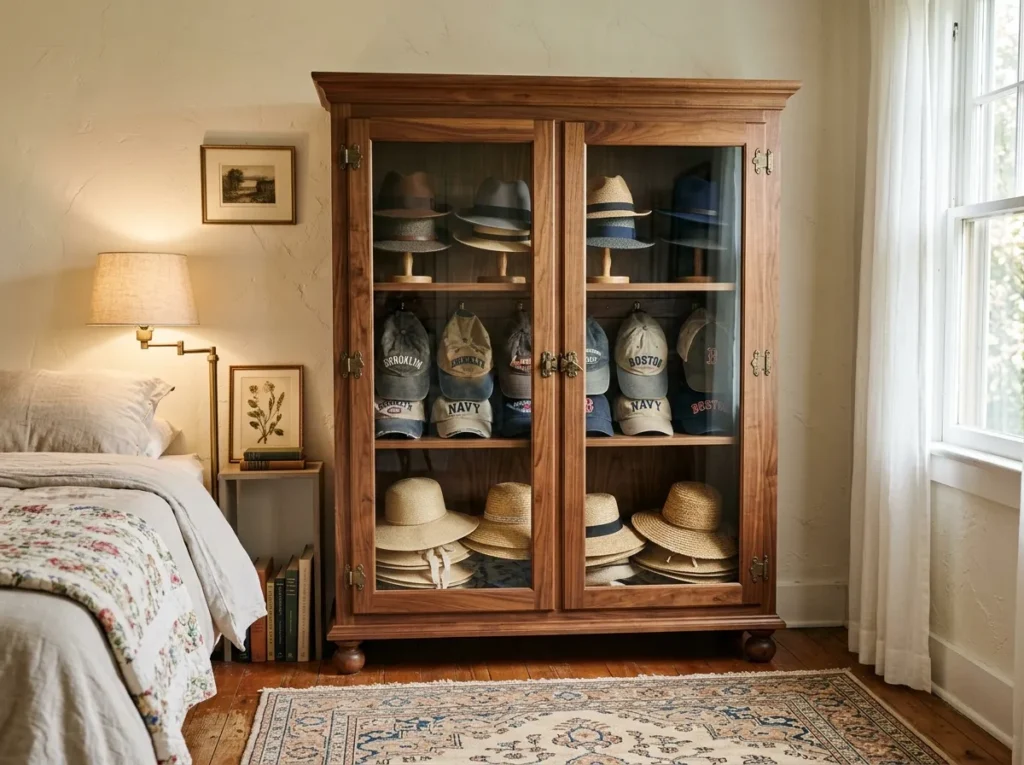
A vintage hat cabinet can make everyday storage feel like a beautiful piece of furniture. Instead of leaving hats scattered across shelves, place them inside a cabinet with dedicated compartments or adjustable shelving. Glass-panel doors allow you to appreciate your collection while helping protect it from dust. Look for a cabinet with enough internal space to accommodate different hat shapes without crushing brims. Wooden finishes such as walnut, oak, or painted cream create a timeless appearance. This solution works especially well in bedrooms, dressing rooms, and homes with traditional decorative details.
Before choosing a cabinet, measure both your available floor space and the height of your tallest hats. Check that shelves provide sufficient clearance, particularly for wide-brimmed styles. Use removable supports or suitable hat stands when individual pieces need extra protection. Avoid overcrowding the cabinet, as tightly packed accessories can lose their shape. In my experience, furniture-style storage works best when it combines practical capacity with easy access. Keep everyday hats on reachable shelves and seasonal pieces in less accessible sections. A carefully selected cabinet can organise your collection while becoming an attractive room feature.
Under-Shelf Hooks
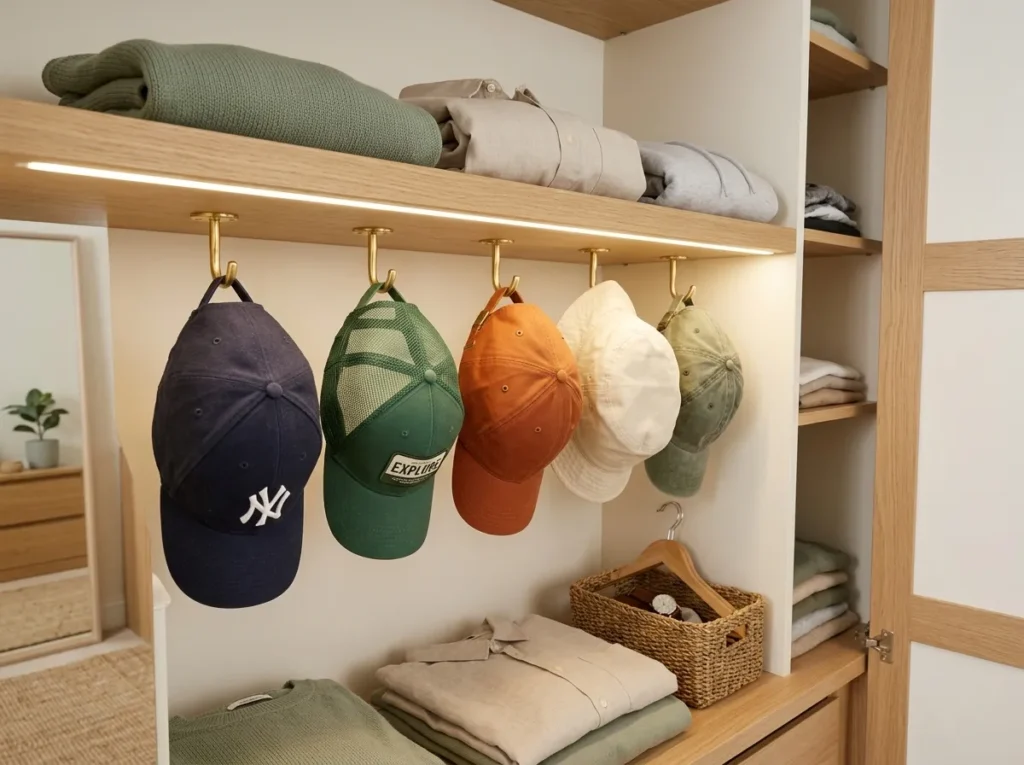
The underside of a wardrobe shelf can become useful storage space with a few carefully placed hooks. This simple approach adds hanging capacity without taking away room from folded clothing or other accessories. Choose hooks designed for your shelf material and installation method, then position them with enough space between each hat. This arrangement works particularly well for baseball caps and lightweight styles that hang comfortably. It is a practical choice for small wardrobes where additional furniture is not an option. The result keeps accessories visible, accessible, and neatly separated.
Measure the shelf thickness before choosing hooks, and check whether the installation method is suitable for your wardrobe. Adhesive options may work for lightweight items when used according to the manufacturer’s instructions, while screw-mounted hooks may provide greater security where appropriate. Leave enough clearance beneath the shelf so hats do not interfere with clothing. Arrange frequently worn pieces towards the front and less-used accessories towards the sides. I’ve noticed that small storage upgrades can make a meaningful difference when they use space that would otherwise remain empty.
Hat Storage Bench
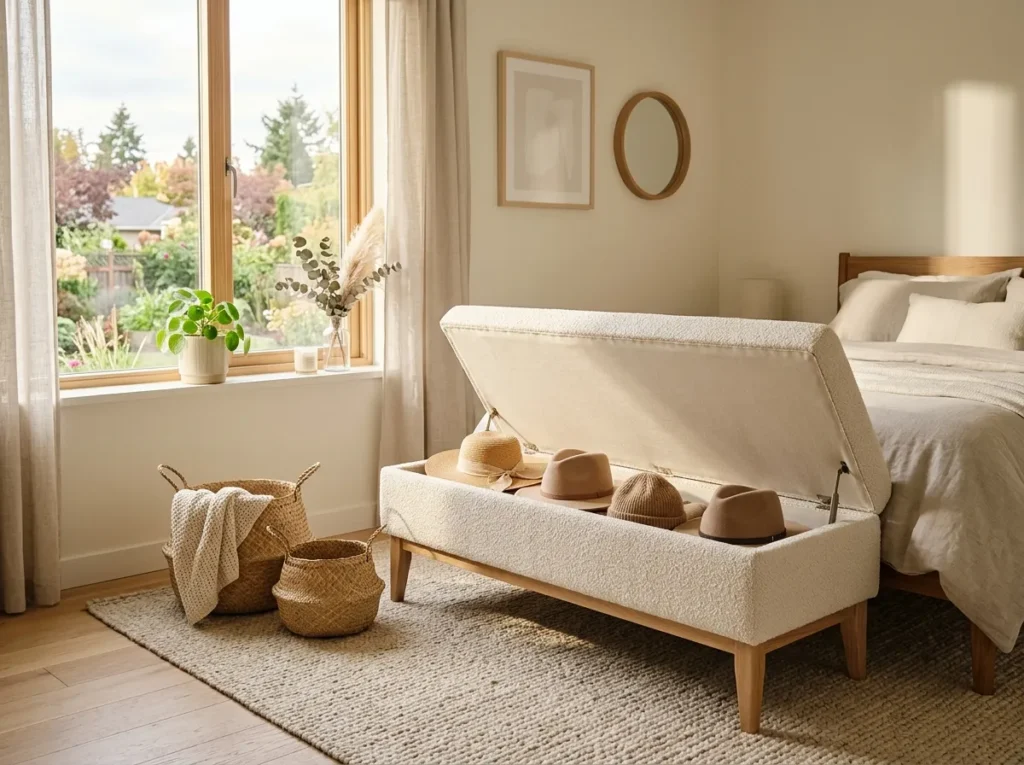
A storage bench gives your room two useful functions in one attractive piece of furniture. You can sit comfortably while putting on shoes, then use the hidden compartment to store suitable hats and accessories. Choose a bench with enough internal space for your collection, but avoid compressing structured hats into a crowded compartment. Upholstered designs add softness to bedrooms, while wooden benches suit entryways and minimalist interiors. Position the bench beneath a window, along a bedroom wall, or near a wardrobe. This arrangement helps keep accessories contained while making the room more functional.
Before using the compartment, check its dimensions and internal construction. Store flexible hats in breathable organisers when suitable, and use separate protective containers for delicate or structured pieces. Avoid placing heavy objects on top of hats inside the bench. Keep everyday accessories in a small, accessible section so you do not need to empty the entire compartment. A coordinated bench can complement surrounding furniture and create a comfortable dressing area. In my experience, multifunctional furniture is especially useful in smaller homes where storage and seating need to share the same footprint.
Hanging Hat Organizer
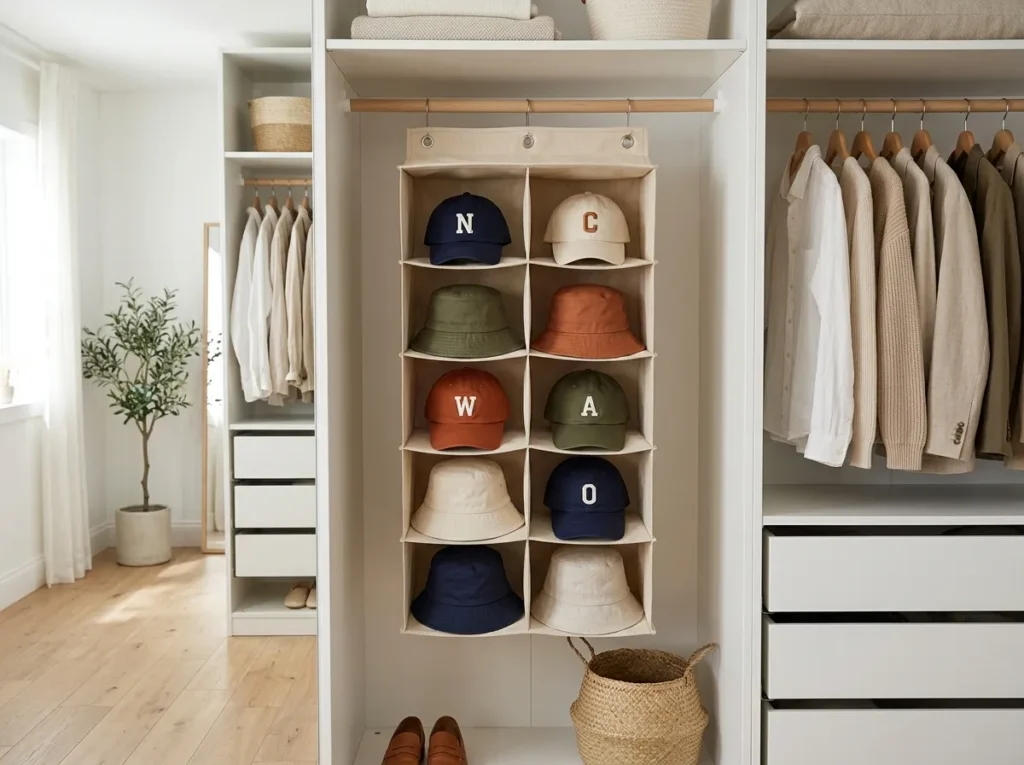
A hanging organizer can turn unused wardrobe space into a practical accessory station. Its vertical compartments keep hats together while freeing up valuable shelf and drawer space. Choose a fabric organizer with pockets wide enough for your hat collection, especially if you own flexible caps or bucket hats. Hang it from a sturdy wardrobe rail and arrange accessories by colour, style, or frequency of use. This solution works well in bedrooms, shared wardrobes, and compact apartments. A neutral fabric design blends discreetly with clothing, while a colorful organizer can add a subtle decorative touch.
Measure your wardrobe’s vertical clearance before selecting an organizer, making sure the bottom compartments remain accessible. Avoid overfilling pockets or forcing structured hats into narrow spaces. Place everyday caps near the top and reserve lower sections for occasional accessories. If the organizer shifts during use, check that its hanging system is secure and suitable for the wardrobe rail. In my experience, clearly separated compartments make daily organization easier because each hat has an obvious place. Regularly remove unused pieces to maintain room and prevent the storage system from becoming overcrowded.
Hat Wall Grid
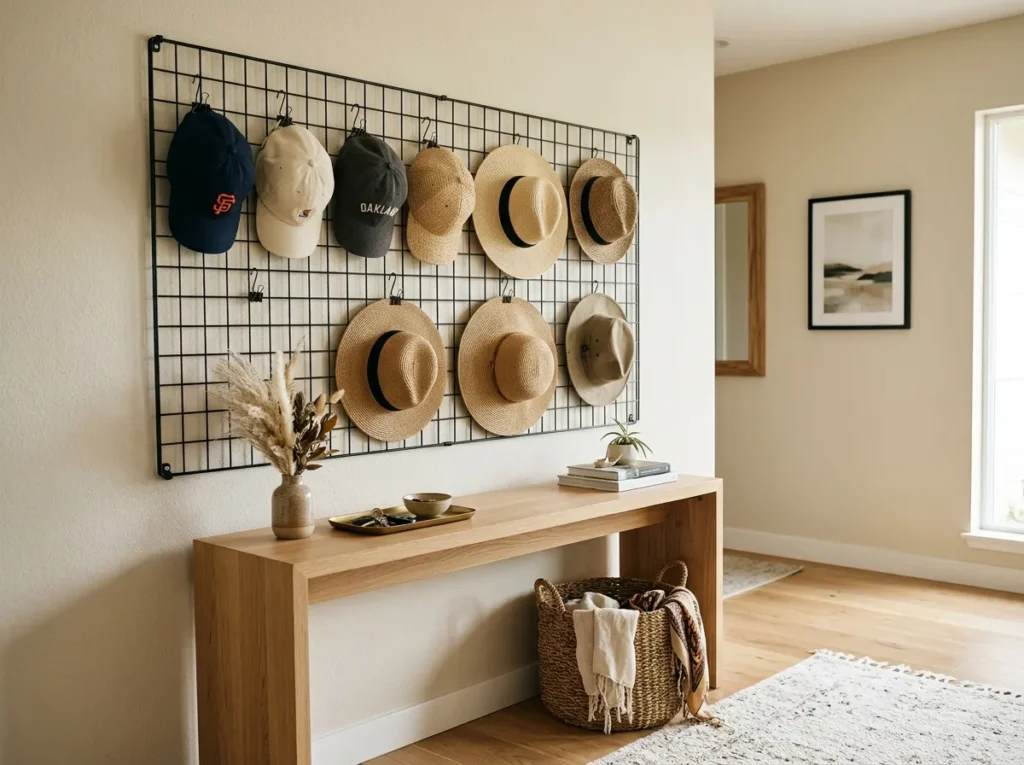
A wall grid offers a creative way to display hats while keeping your storage arrangement flexible. Its open framework allows you to attach hooks, clips, and small shelves according to your collection. Use individual clips for baseball caps and suitable supports for lightweight sun hats. Position the grid near a dressing table, wardrobe, or entryway where accessories remain convenient to reach. Black metal creates a modern industrial appearance, while white or brass finishes offer alternative styling options. This setup is useful when you want functional organization that can evolve with your changing needs.
Before mounting the grid, measure the available wall space and choose appropriate fixings for its weight and the accessories you plan to display. Keep wider hats separated to prevent overlapping brims. Arrange pieces by colour or style, leaving some open sections so the display does not feel crowded. Check clips regularly to ensure they hold accessories securely without damaging fabric. A grid system can also accommodate small baskets for related items, provided the structure supports them. Its adaptable layout makes it easier to reorganize your collection whenever your storage requirements change.
Custom Wardrobe Inserts
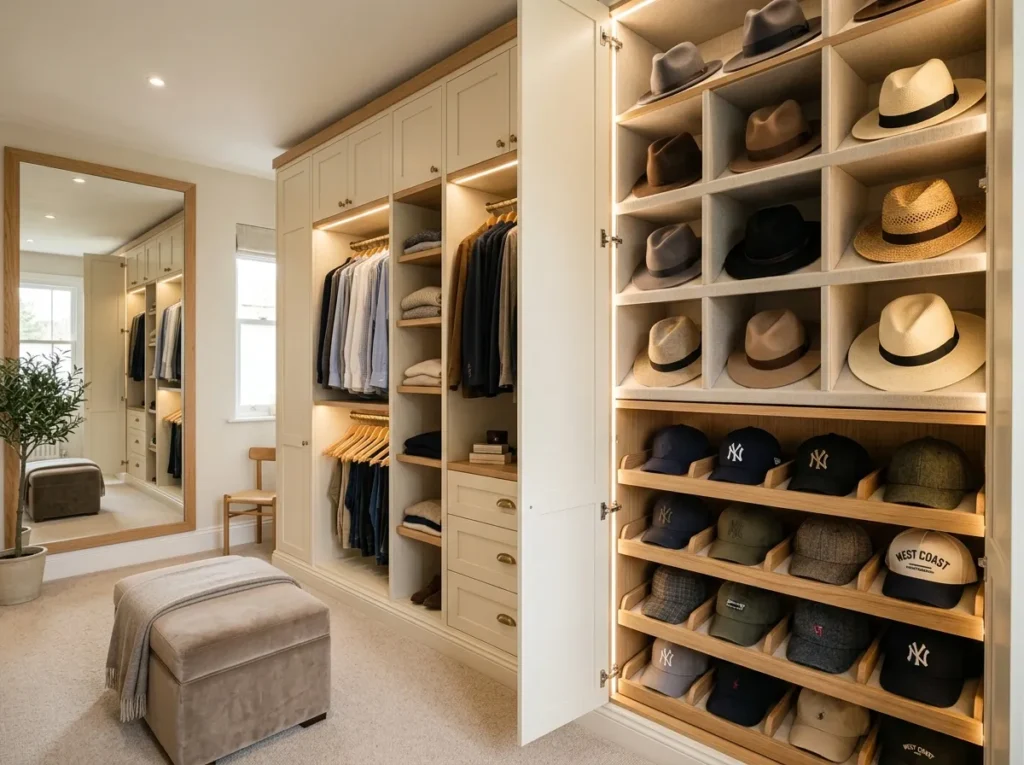
Custom wardrobe inserts can transform an ordinary closet into a storage system designed around your hat collection. Adjustable shelves, padded compartments, and dedicated supports allow you to accommodate different shapes without wasting valuable space. This approach works particularly well when you own structured fedoras, wide-brimmed hats, and everyday caps that need different storage conditions. Choose finishes that complement your wardrobe interior, such as light oak, white laminate, or warm walnut. A carefully planned layout can improve accessibility while giving your dressing area a cohesive, professionally organized appearance.
Start by measuring your wardrobe and identifying the hat styles that require the most protection. Discuss shelf heights, compartment widths, and suitable materials with a qualified storage professional if custom installation is needed. Avoid designing compartments so tightly that hats become difficult to remove. Keep frequently worn accessories within easy reach, and reserve higher sections for seasonal pieces. In my experience, storage systems are most useful when they reflect actual daily habits rather than simply looking attractive. A thoughtful design can provide long-term organization while helping preserve the condition of your favorite hats.
Conclusion
Good storage doesn’t have to mean hiding everything away. With the right hat storage ideas, you can protect your collection, free up valuable space, and even turn everyday hats into an attractive part of your room. From simple hooks and wall displays to clever closet solutions, small changes can make a noticeable difference. I’ve seen how organizing frequently used items in a visible, accessible way can make daily routines feel much easier. Choose one idea that fits your home and give it a try. Then save this post on Pinterest for later, share it with someone who needs more storage inspiration, and enjoy your newly organized space!