15 Brilliant Entryway Shoe Storage Ideas For Beautiful Homes
Introduction
Is your entryway constantly covered with scattered shoes? The right entryway shoe storage ideas can instantly transform a messy entrance into a clean, organized, and welcoming space.
Your entryway is the first thing people see when they enter your home, yet it often becomes a catch-all area for shoes, bags, and everyday essentials. The good news is that a few smart storage solutions can make a dramatic difference. In this article, you’ll discover practical and stylish ways to organize footwear while making the most of every inch. In my experience, even small changes near the front door can make an entire home feel more organized. These ideas are designed to help you create a functional, clutter-free entry that looks beautiful and works effortlessly for daily life.
Love finding smart ways to organize your home? Don’t miss our collection of shower storage ideas for creative solutions that help maximize space, reduce clutter, and make everyday routines feel more organized and stress-free.
Storage Bench
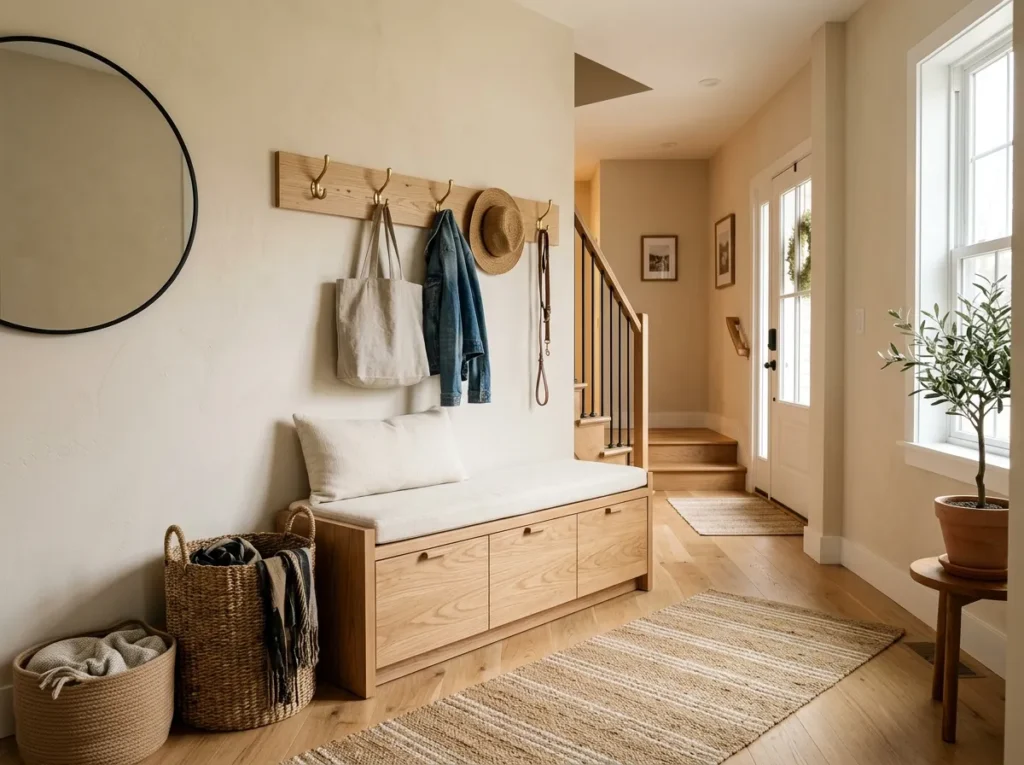
A tidy entrance starts with one smart change: give every pair a proper place. Entryway shoe storage ideas work especially well when a slim bench combines seating and hidden compartments. Choose a design with lift-up storage, baskets, or drawers beneath the seat, then place it against the main wall near the door. This keeps everyday footwear contained while giving you a comfortable spot for putting on shoes. A light wood finish with cream upholstery can make the entrance feel warm, organised, and welcoming without making a narrow hallway appear crowded.
A storage bench also creates a natural visual anchor for the doorway. Choose baskets for flexible access or closed compartments when you prefer a cleaner appearance. Keep frequently worn trainers and slippers closest to the entrance, while seasonal footwear can sit farther inside. In my experience, a bench works best when its width matches the wall rather than overwhelming it. Add two cushions, a small runner, or a wall hook above it for extra function. The result is a practical drop zone that helps prevent shoes from spreading across the floor.
Slim Shoe Cabinet
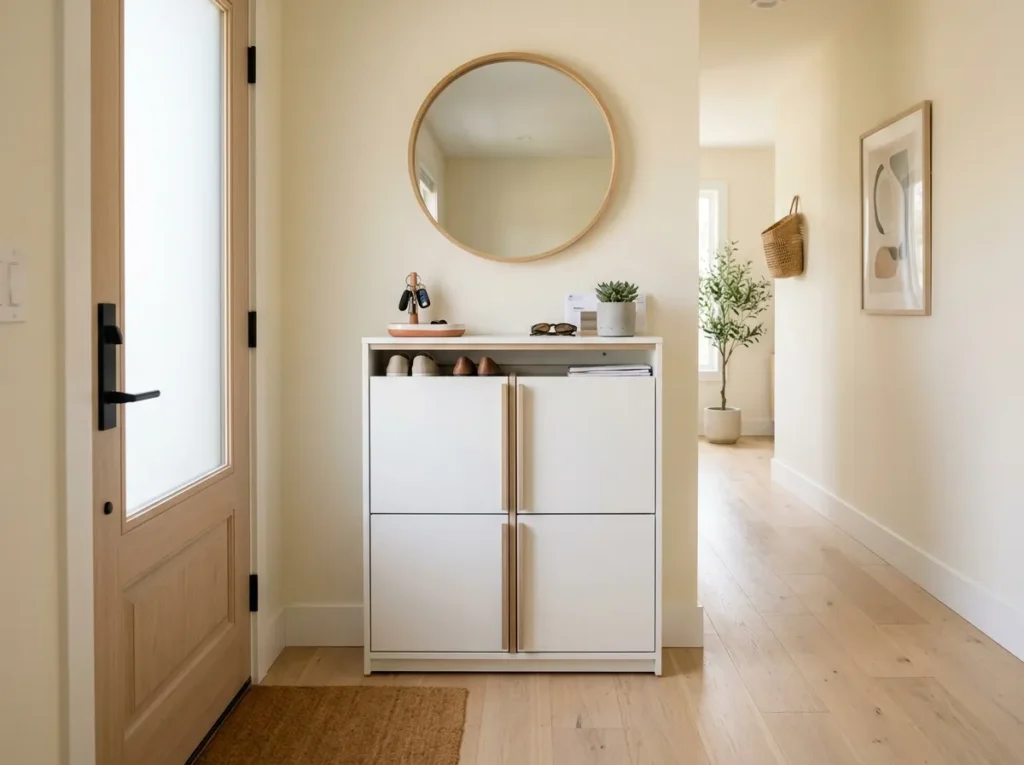
Make a small entrance work harder with a narrow cabinet that uses vertical space instead of valuable floor area. A slim shoe cabinet is one of the most useful ways to keep footwear organised in compact hallways, especially when floor width is limited. Choose flip-down compartments or shallow doors that hold several pairs without extending far into the walkway. White, beige, or pale oak finishes can visually blend with the walls. Position the cabinet beside the doorway and add a small mirror above it to create a functional getting-ready zone.
The best narrow storage solutions disappear visually while still handling everyday clutter. Look for ventilated compartments if shoes need airflow, and avoid packing each section too tightly. Group daily footwear at comfortable hand height and reserve upper compartments for occasional pairs. A slim cabinet can also make a hallway feel wider because the floor remains open and easy to walk through. Add a simple tray on top for keys or sunglasses, keeping the surface restrained. This combination gives a small entrance a cleaner appearance while adding useful storage without bulky furniture.
Floating Shoe Shelves
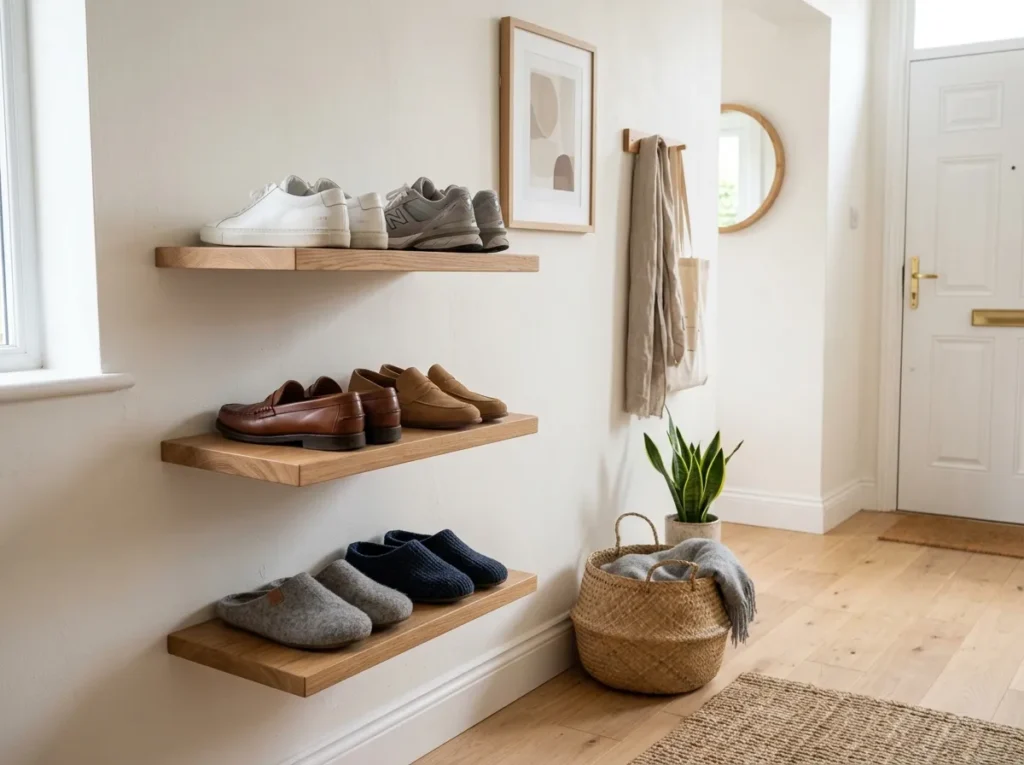
Turn an empty entrance wall into useful storage with floating shoe shelves arranged in a neat vertical column. This setup keeps footwear visible and off the floor while creating a light, modern look. Use natural oak shelves against warm white walls for a Scandinavian feel, or choose matte black shelving for a more contemporary entrance. Leave consistent spacing between levels so the arrangement looks intentional. Position the shelves near the door where everyday shoes are easiest to reach, but keep enough clearance around the walkway for comfortable movement.
Open shelving makes footwear easy to grab, but thoughtful styling keeps the entrance from looking messy. Use matching trays or low baskets on selected shelves to contain smaller items such as sandals and slippers. Keep the most frequently worn pairs between waist and knee height, while less-used footwear can occupy higher levels. I’ve noticed this arrangement works particularly well in homes where a closed cabinet feels too heavy. A simple wall colour, woven basket, and small framed print can soften the display while preserving the clean lines of the storage system.
Wooden Cubby Unit
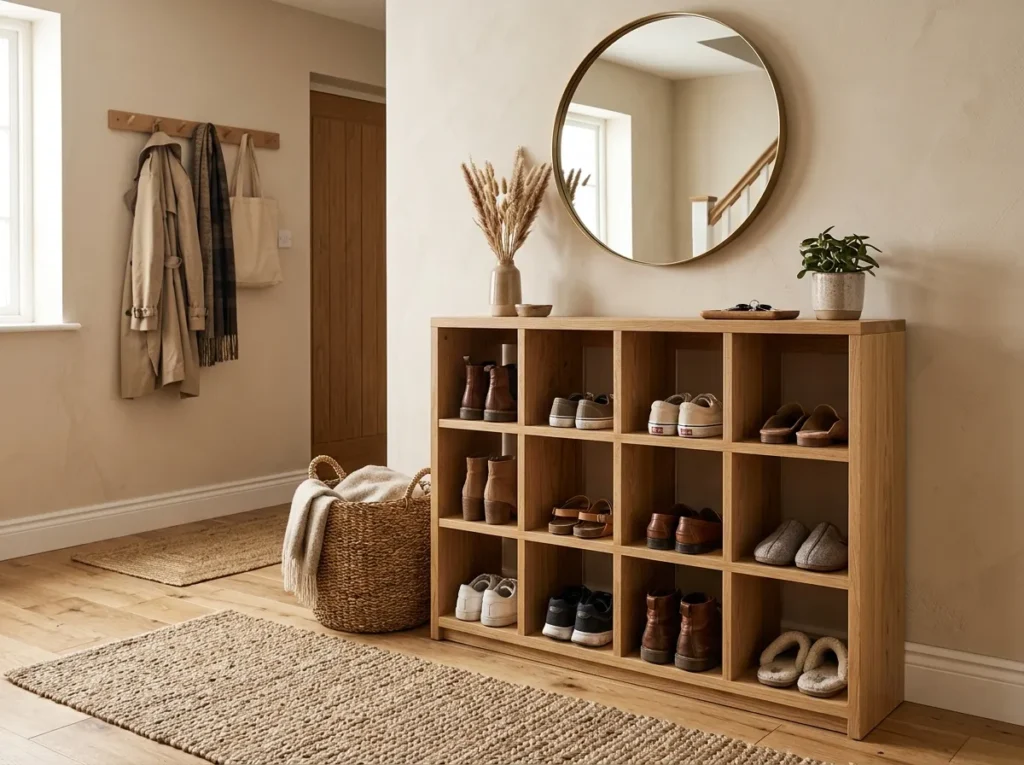
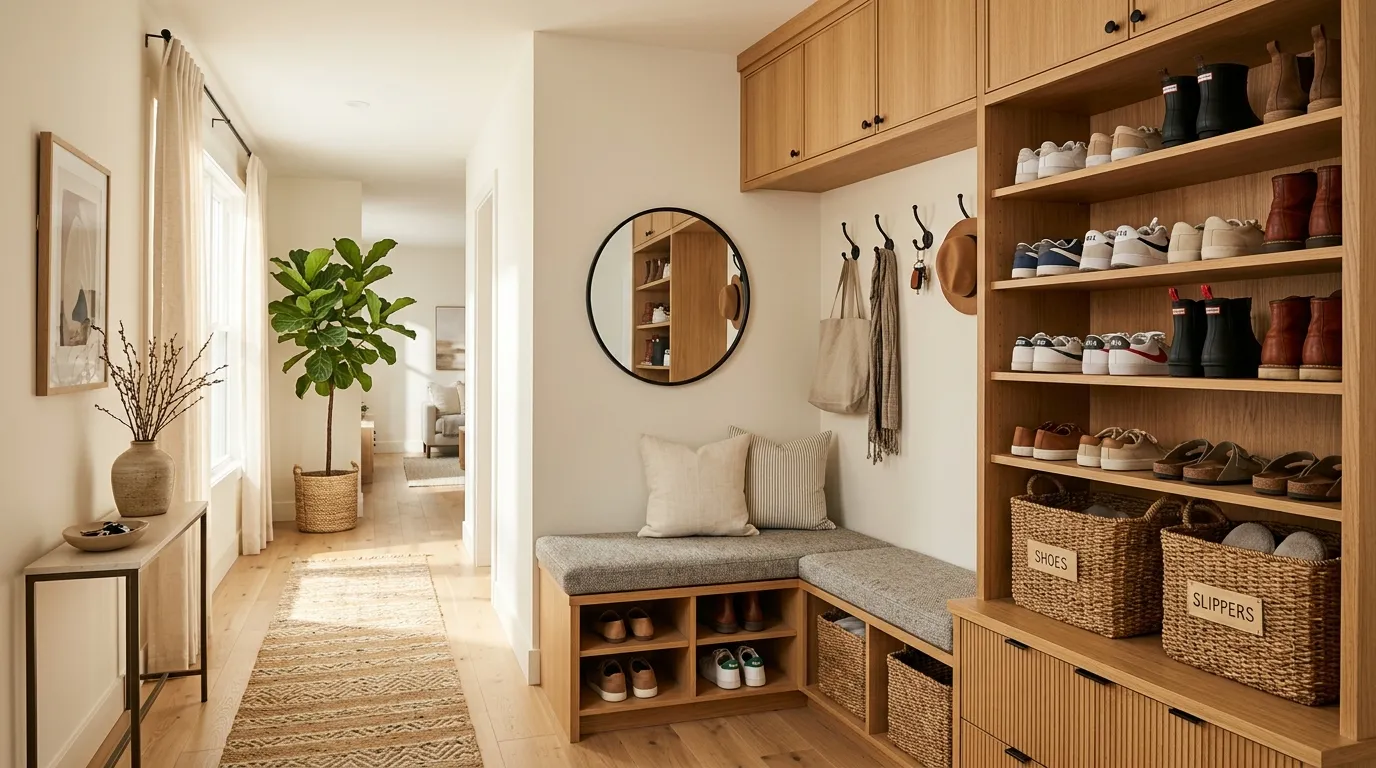
For a warmer, furniture-style solution, consider a compact wooden cubby unit with individual sections for each pair. This arrangement gives every household member a defined place for shoes and makes daily tidying much easier. Choose natural oak, walnut, or painted wood depending on your entryway palette. Place the unit beneath a mirror or artwork to create a balanced focal point. If children use the space, keep their everyday footwear in lower cubbies. Adding labelled baskets to selected sections can also hide smaller accessories without sacrificing the organised appearance.
Cubbies are especially helpful when several types of footwear need to share one entrance. Trainers, boots, sandals, and slippers can each have their own compartment, reducing the chance of pairs becoming mixed together. Keep heavier shoes on lower levels for stability and place lightweight footwear above them. A washable mat beneath the unit protects the floor from dirt and moisture. Choose slightly larger compartments for boots so they are not squeezed into unsuitable spaces. This straightforward arrangement creates a structured drop zone that remains easy to maintain throughout busy weeks.
Entryway Shoe Bench
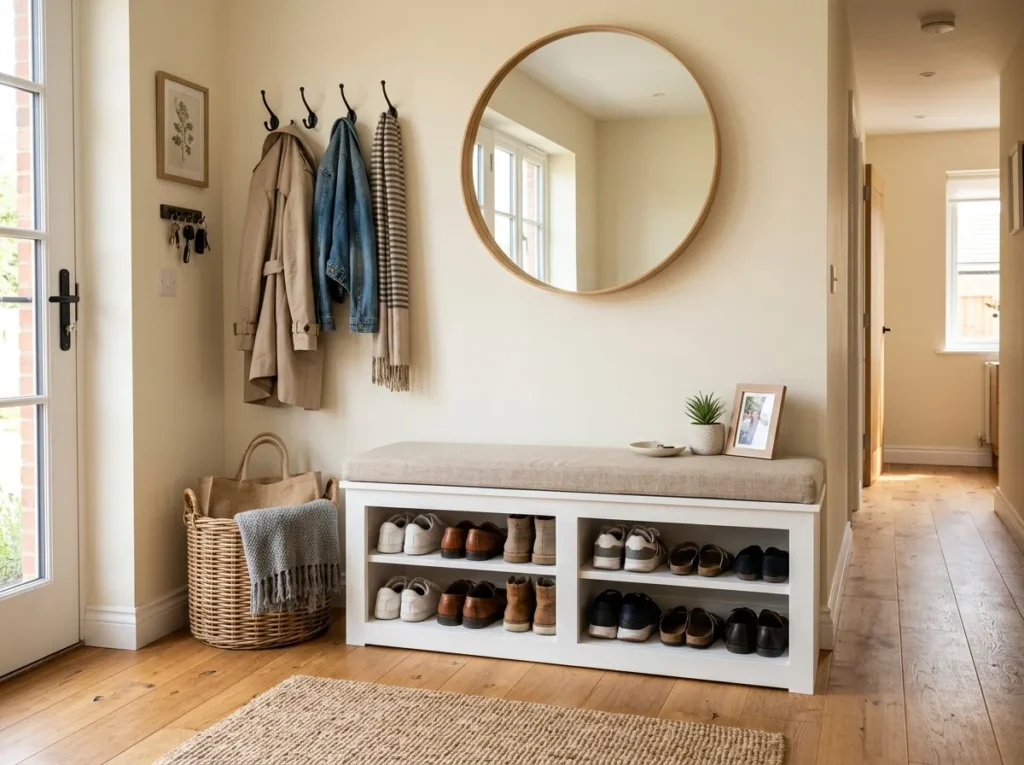
A comfortable bench can instantly make a busy entrance feel more organised and purposeful. Entryway shoe storage ideas that combine seating with open compartments are especially useful for households that need a convenient place to sit while putting on footwear. Choose a compact bench with two or three sections underneath, then assign each space to different shoe types. Keep trainers and slippers in the easiest-to-reach areas while storing occasional footwear farther inside. A neutral cushion and natural wood finish can make the furniture feel like part of the décor rather than a purely functional storage piece.
For a polished look, avoid filling every compartment to the point where shoes overlap. Entryway shoe storage ideas work best when each section has enough room for footwear to remain visible and easy to remove. Add woven baskets to hide smaller items such as sandals or shoe-care accessories. A washable runner underneath can protect the floor from dirt, especially during wet weather. I’ve noticed that a bench becomes even more useful when paired with wall hooks above it, creating one compact zone for shoes, coats, bags, and everyday essentials without overwhelming the entrance.
Built-In Shoe Drawers
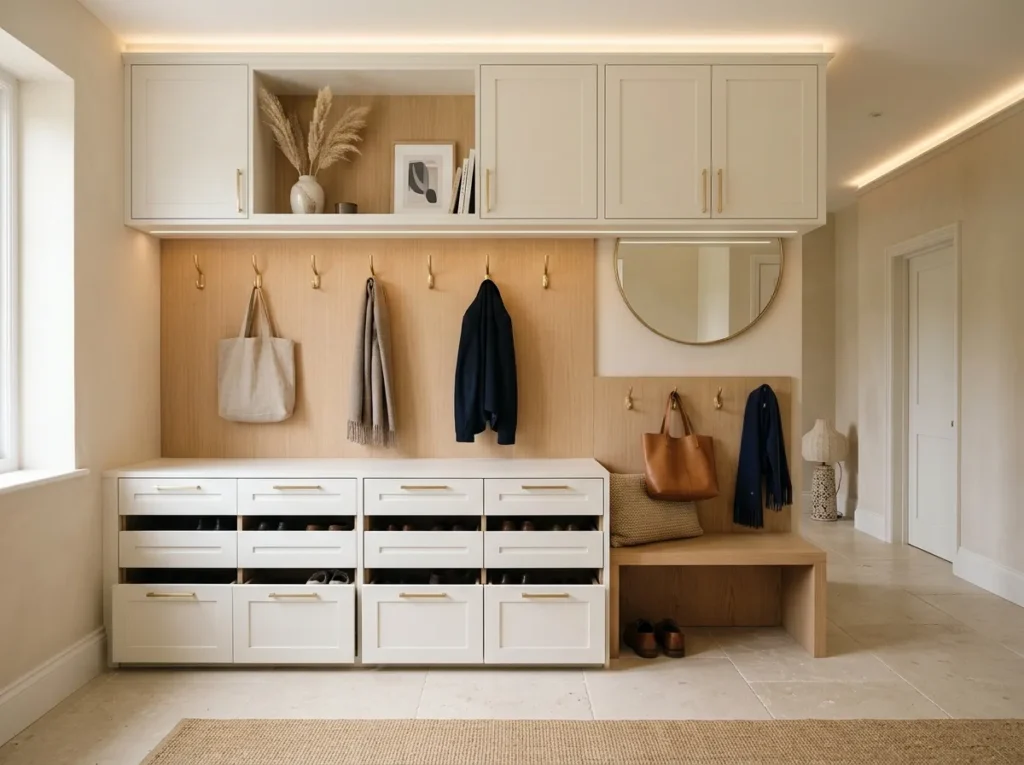
When every inch of the entrance matters, built-in drawers can create storage that looks almost invisible. Entryway shoe storage ideas using custom drawers are ideal for homes where a clean architectural appearance is more important than open displays. Drawers can be designed beneath seating, along a full wall, or underneath coat hooks. Assign separate compartments for trainers, formal shoes, boots, and seasonal footwear. Matching the drawer fronts to the surrounding walls makes the storage visually recede, leaving the hallway looking spacious while still providing substantial capacity for everyday household needs.
Custom cabinetry also lets you solve awkward layout problems that ready-made furniture cannot always handle. Entryway shoe storage ideas become more effective when drawer dimensions are planned around the actual footwear collection rather than generic storage sizes. Deeper sections can accommodate boots, while shallower drawers work well for flats and trainers. Add soft-close runners for a quieter experience and ventilation where appropriate. In my experience, matching the cabinetry to existing doors or wall colours creates the most cohesive result. The finished entrance feels calmer because footwear disappears from view without sacrificing accessibility.
Woven Basket Storage
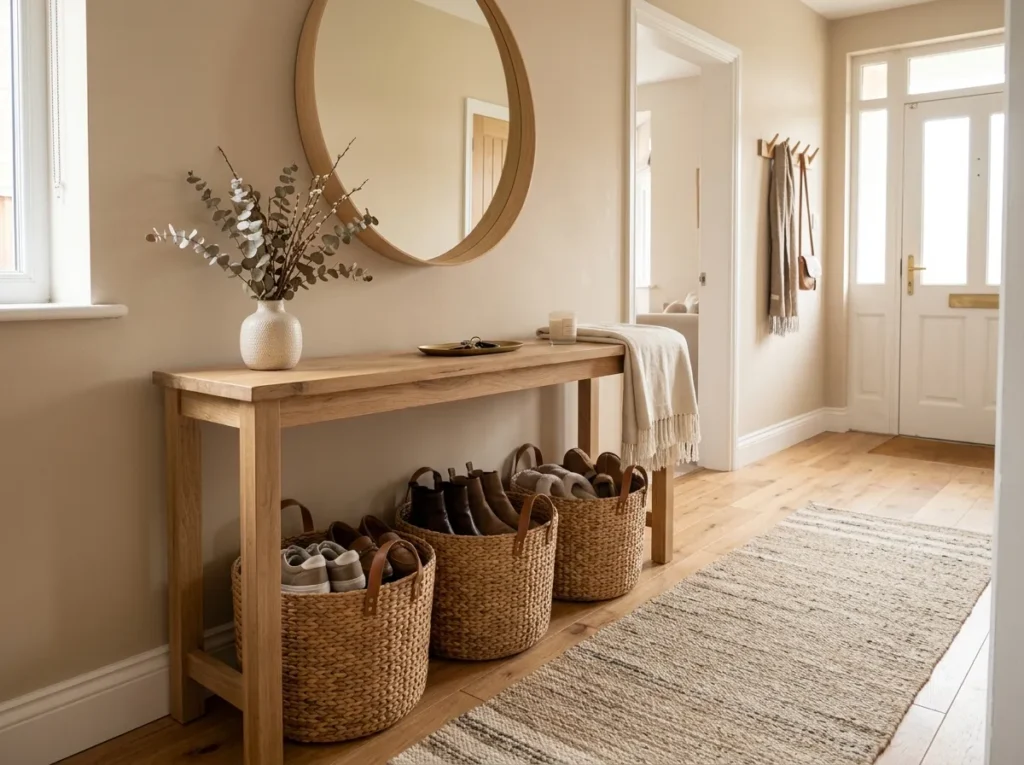
Natural baskets bring texture and flexibility to an entrance while keeping footwear contained. Entryway shoe storage ideas based on woven baskets are particularly useful for renters or anyone who wants storage without permanent installation. Place two or three sturdy baskets beneath a console table, bench, or open shelving unit. Assign each basket to a footwear category or household member so the system stays easy to maintain. Natural seagrass, rattan, or water hyacinth works beautifully with neutral interiors, adding warmth without introducing heavy furniture into a narrow hallway.
The trick is choosing baskets large enough to be useful but not so deep that shoes become difficult to find. Entryway shoe storage ideas should always balance capacity with everyday convenience. Keep frequently worn pairs near the front and avoid piling footwear higher than the basket rim. If the entrance experiences wet weather, use washable liners or allow damp shoes to dry before storing them inside. Matching baskets can also hide visual clutter and create a calm rhythm beneath furniture. This simple solution is affordable, movable, and easy to adjust as your storage needs change.
Vertical Shoe Tower
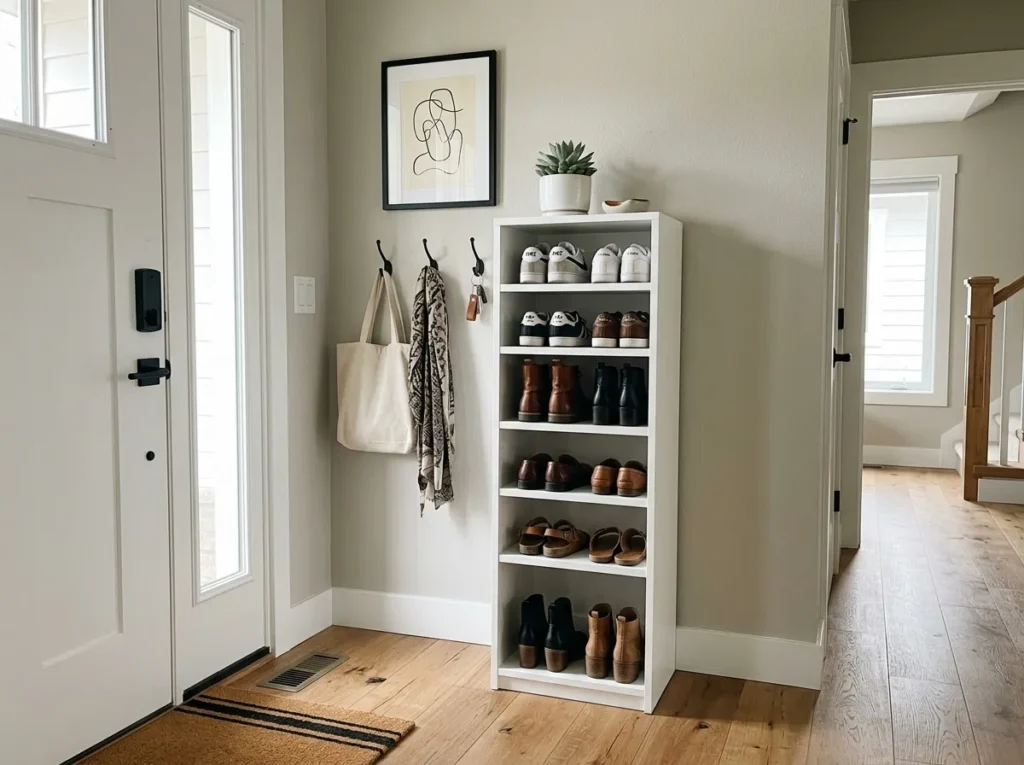
Think upward when floor space is limited and the entrance needs more capacity. Entryway shoe storage ideas using a tall shoe tower can provide several levels of organisation while taking up surprisingly little floor area. Choose a narrow unit that fits comfortably beside the door without restricting movement. Use lower shelves for heavier boots and everyday trainers, then reserve higher levels for lighter or less frequently worn footwear. A white or pale wood finish can help the tower blend into the wall, while darker finishes create a stronger contemporary feature.
A vertical unit is particularly helpful for households with different footwear needs because each shelf can have a clear purpose. Entryway shoe storage ideas become easier to maintain when shoes are grouped logically rather than placed wherever space happens to be available. Consider one shelf for trainers, another for slippers, and separate levels for seasonal footwear. Add small labels if several family members share the unit. Keep the tallest boots where they fit comfortably and avoid overloading upper shelves. With thoughtful organisation, a narrow tower can turn unused vertical space into an efficient everyday storage zone.
Hidden Under-Stair Storage
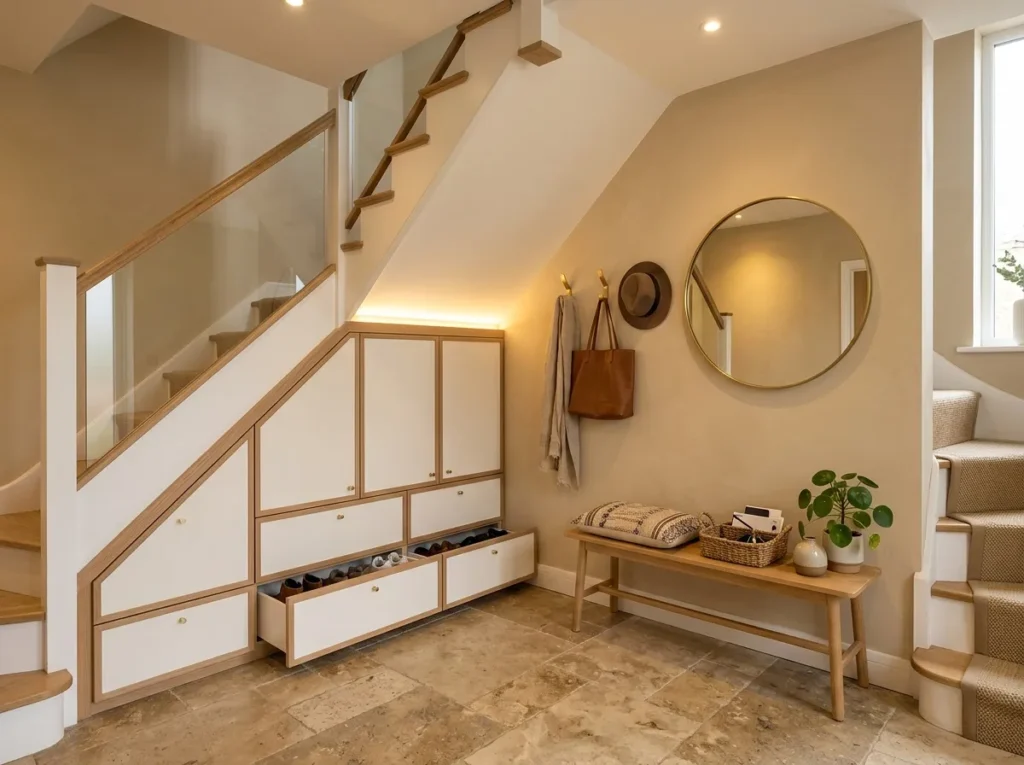
Unused space beneath a staircase can become one of the most valuable storage areas in a busy entrance. Entryway shoe storage ideas that use this awkward zone provide substantial capacity without taking additional floor space from the hallway. Custom drawers, pull-out shelves, or cabinet doors can be fitted around the staircase shape. Keep frequently worn shoes in the easiest-to-reach compartments and reserve deeper sections for seasonal footwear. Matching the cabinet finish to the stairs or surrounding walls creates a seamless appearance, making the storage feel like part of the original architecture.
Under-stair storage works particularly well when several household members need separate sections. Entryway shoe storage ideas can include labelled drawers, adjustable shelves, or individual pull-out compartments depending on the available depth. Make sure the storage remains ventilated and easy to clean, especially near the entrance where dirt and moisture collect. A small bench positioned beside the unit can create a convenient changing area. This approach transforms an often-wasted architectural space into useful organisation while keeping the main walking route open and visually uncluttered.
Peg Rail Storage
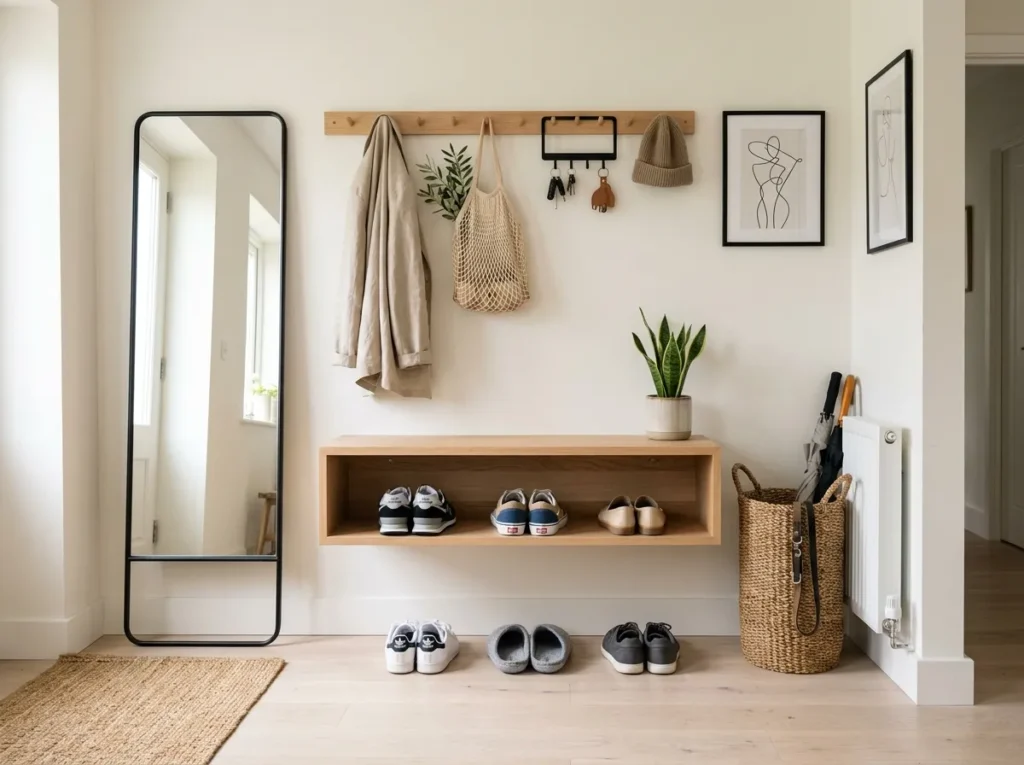
A simple peg rail can turn a narrow wall into a highly functional drop zone without making the entrance feel crowded. Entryway shoe storage ideas become more versatile when a floating shoe shelf is paired with hooks above it for coats, bags, and umbrellas. Use a natural timber rail with matching shelving for a cohesive Scandinavian-inspired look. Keep the lower shelf dedicated to everyday footwear and place frequently used shoes near the door. The open design makes everything visible, which can encourage household members to return shoes to their designated position.
The key is maintaining enough empty space around the rail so the entrance does not become visually overloaded. Entryway shoe storage ideas should provide practical organisation while still allowing the room to breathe. Use only the hooks you need and avoid filling every section with bags or coats. A small woven basket can hold slippers or accessories, while a washable runner protects the floor underneath. I’ve seen this setup work particularly well in smaller homes because it combines several functions on one wall without requiring a deep cabinet or bulky freestanding furniture.
Pull-Out Shoe Rack
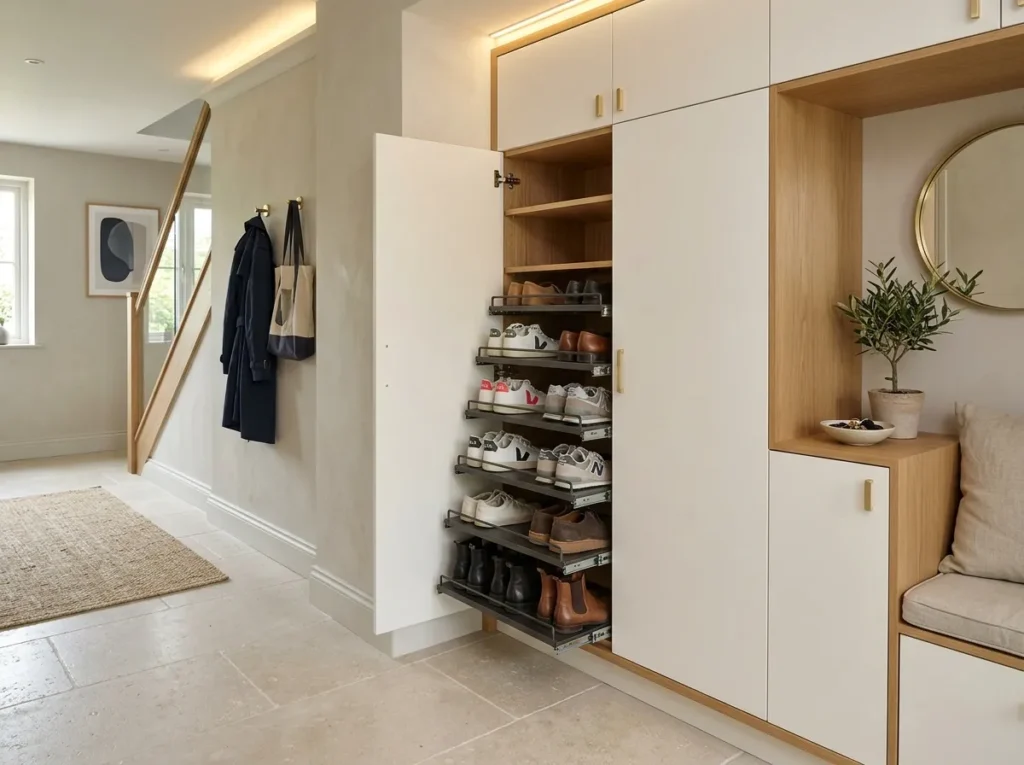
Deep cabinets often waste space when shoes at the back become difficult to reach, but pull-out racks solve that problem neatly. Entryway shoe storage ideas featuring sliding or extending shelves allow you to bring the entire collection forward instead of searching through stacked footwear. Choose sturdy runners that can handle the weight of several pairs and provide enough clearance for different shoe shapes. Closed cabinet fronts keep the hallway looking tidy when the storage is not being used. This design works especially well when the entrance has enough wall depth for built-in cabinetry.
For better organisation, dedicate each pull-out section to a specific category rather than mixing every pair together. Entryway shoe storage ideas are easier to maintain when boots, trainers, formal shoes, and seasonal footwear each have an assigned location. Leave additional space around larger shoes so they can slide smoothly without catching on neighbouring pairs. Add ventilation where appropriate and keep wet footwear outside the enclosed cabinet until completely dry. A pull-out mechanism may cost more than basic shelving, but the improved visibility and access can make a deep storage unit considerably more practical.
Open Metal Rack
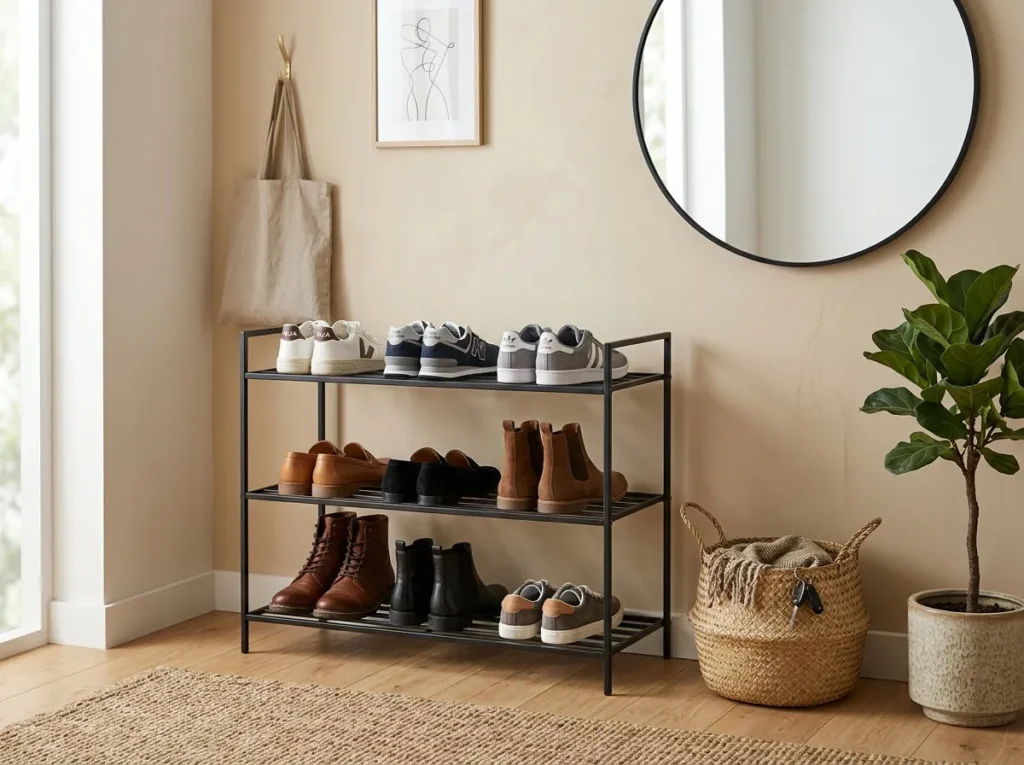
An open metal rack offers a straightforward solution when quick access matters more than concealed storage. Entryway shoe storage ideas using slim metal shelving can hold several pairs while keeping the floor underneath relatively open. Black powder-coated frames create a modern contrast against pale walls, while brass or white finishes can produce a softer appearance. Arrange everyday trainers and loafers on the middle shelves and place heavier boots on the lowest level. Because everything remains visible, the rack encourages quick organisation and makes it easy to spot the pair you need.
Open shelving does require a little styling discipline to keep the entrance looking intentional. Entryway shoe storage ideas work best when shoes are aligned rather than randomly placed across each tier. Leave a little breathing room between pairs and use one woven basket for slippers or smaller items. A washable mat beneath the rack can catch dirt before it reaches the surrounding floor. If the entrance is particularly narrow, measure the rack depth carefully before buying. A slim metal frame can provide useful capacity without creating the bulky appearance associated with larger closed cabinets.
Hidden Shoe Drawers
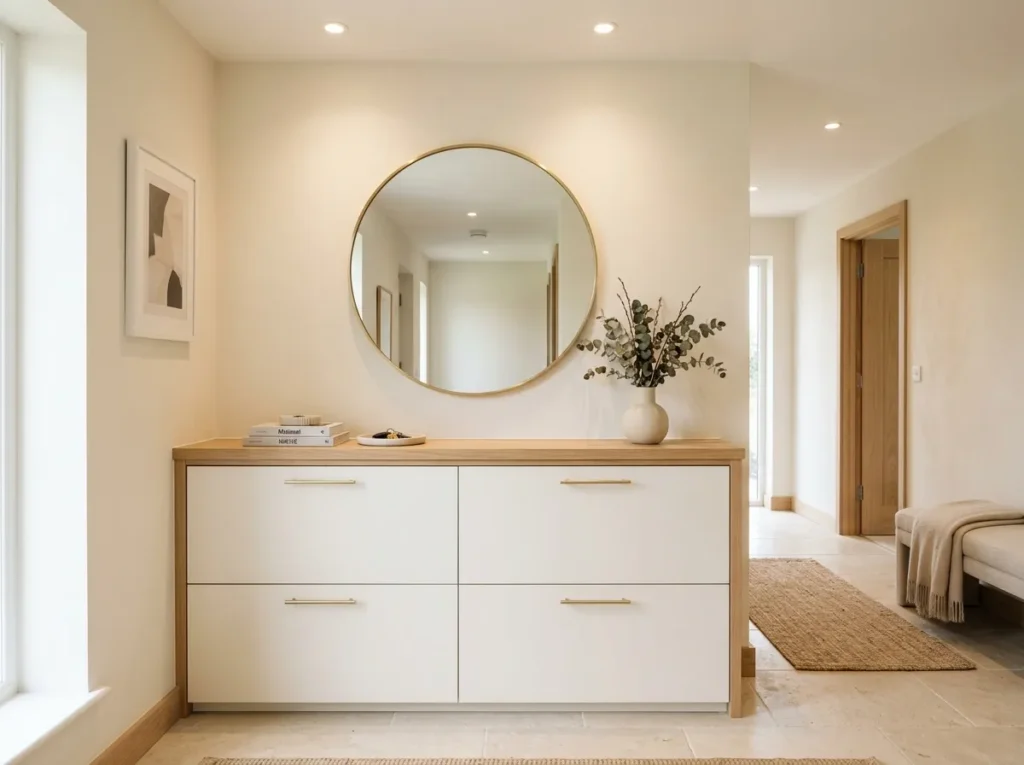
A clean hallway becomes much easier to maintain when footwear can disappear behind simple drawer fronts. Entryway shoe storage ideas using concealed drawers are ideal for homeowners who prefer minimal visual clutter and streamlined furniture. Each drawer can hold a different footwear category, making everyday organisation straightforward. Choose warm white or natural wood finishes that coordinate with the surrounding walls and flooring. Soft-close mechanisms make the drawers quieter, while recessed handles or push-to-open fronts create an uninterrupted appearance. A narrow console above the drawers can provide additional space for keys and decorative accessories.
Careful planning makes concealed storage even more useful in a busy household. Entryway shoe storage ideas should account for different shoe sizes, so include deeper compartments for boots and wider sections for larger footwear. Keep frequently used pairs in the easiest-to-reach drawers and store seasonal options higher or farther inside. A washable mat nearby can contain dirt before shoes enter the storage area. In my experience, closed drawers are particularly effective when the entrance connects directly to a living room because they prevent everyday footwear from becoming a visible part of the home’s main décor.
Staircase Shoe Shelves
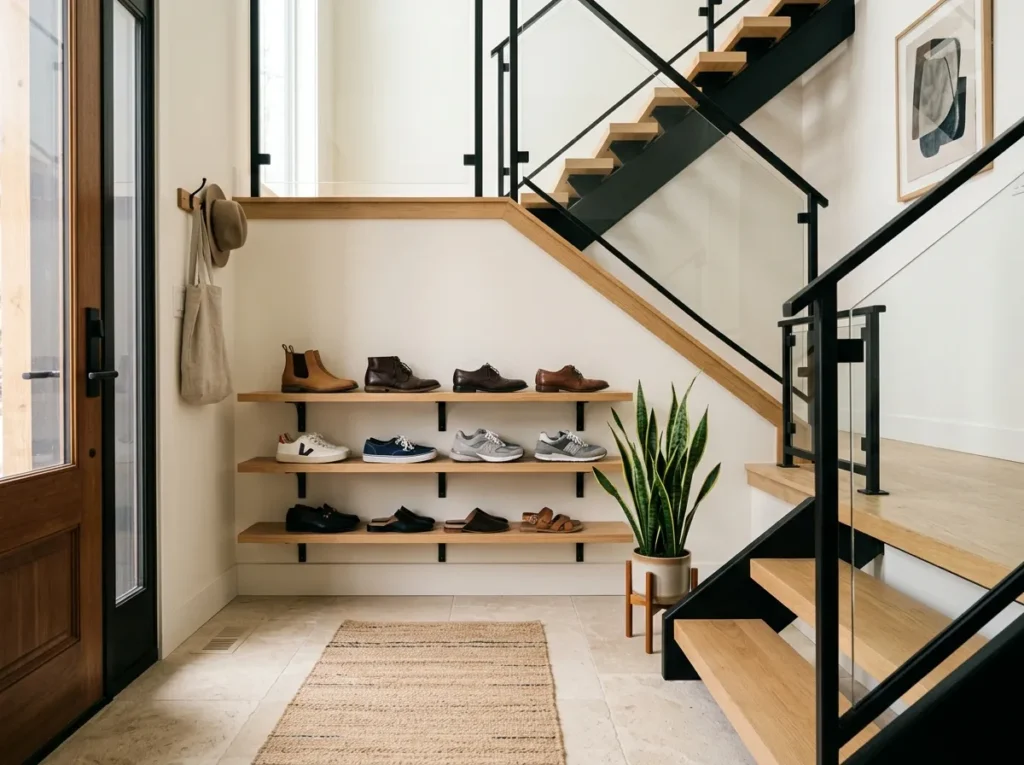
The wall beside a staircase can offer surprisingly useful space for a dedicated footwear zone. Entryway shoe storage ideas that follow the staircase line make use of an area that might otherwise remain completely empty. Install several shallow shelves at different heights or create a stepped arrangement that visually follows the stairs. Keep everyday footwear on the lower levels and less frequently worn pairs higher up. Natural timber shelves can soften a modern staircase, while painted shelves can blend into the wall for a more understated appearance.
Safety and accessibility should guide the layout of staircase shelving. Entryway shoe storage ideas work best when the storage remains outside the main walking path and does not interfere with stairs or handrails. Measure the available wall depth carefully before installing shelves, particularly near narrow landings. Use sturdy brackets and avoid placing fragile footwear near exposed edges. A small basket can hold slippers or shoe-care supplies, while a runner helps define the entrance area. The finished arrangement adds storage capacity without requiring another large piece of furniture in the hallway.
Compact Entry Cabinet
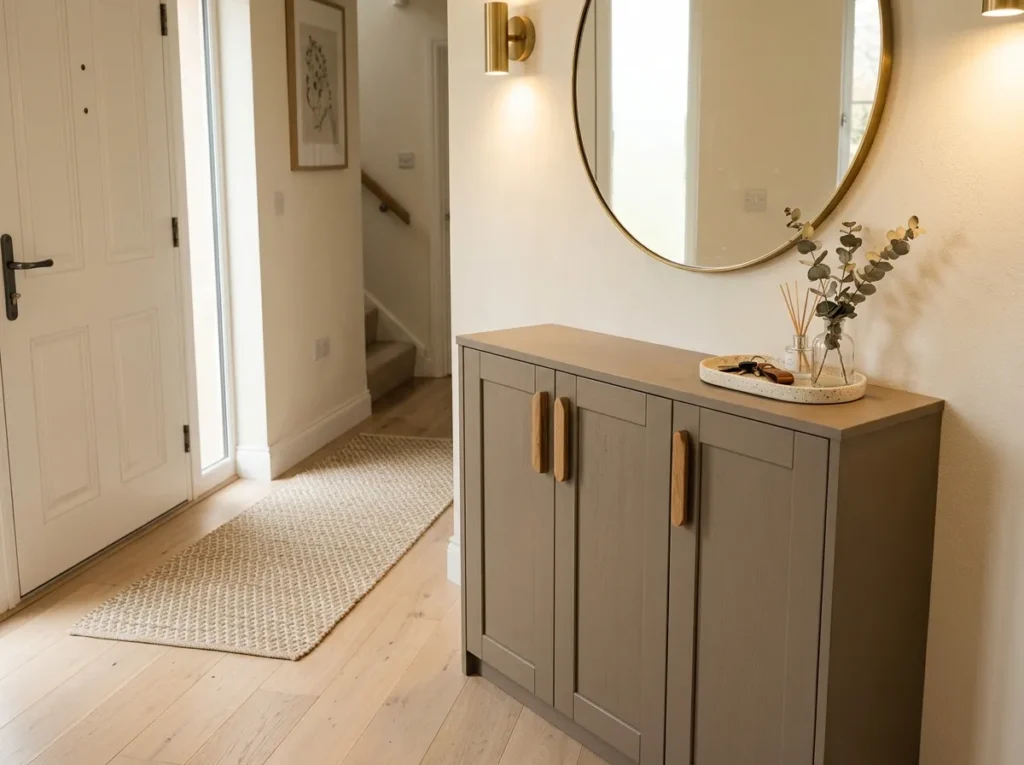
A compact cabinet can provide substantial organisation without making a small entrance feel crowded. Entryway shoe storage ideas built around a closed cabinet are especially useful when you want footwear completely hidden from view. Choose a narrow design with adjustable shelves so trainers, sandals, and boots can fit comfortably. Position the cabinet close to the main doorway and keep its depth shallow enough to preserve a clear walking route. A warm greige or natural oak finish can coordinate beautifully with neutral interiors while making the storage feel like an intentional piece of furniture.
The top of a compact cabinet can become a useful styling surface, but restraint keeps the entrance looking spacious. Entryway shoe storage ideas should leave enough room for practical items without turning the cabinet into another clutter zone. Add a small tray for keys, a simple vase, or one decorative object rather than several accessories. Inside, group footwear by frequency and season so daily pairs remain easy to reach. Choose durable materials that can handle regular use and occasional dirt. This creates a tidy entrance where storage remains functional, attractive, and easy to maintain.
Conclusion
A well-organized entryway can set the tone for the rest of your home. These entryway shoe storage ideas show how simple storage upgrades can reduce clutter, improve functionality, and create a more inviting space. Whether you choose a compact shoe bench, wall-mounted organizer, hidden cabinet, or decorative basket system, each idea offers a practical way to keep shoes neatly contained. Save this post on Pinterest for future inspiration, try your favorite solution at home, and share it with friends or family who want a cleaner entryway. Small changes can create a surprisingly big transformation.