15 Amazing Toys Storage Ideas For A Tidy Play Space
Introduction
Tired of toys taking over every room in your home? The right toys storage ideas can turn chaotic play areas into organized, functional spaces that are easier to enjoy and maintain.
Whether you’re dealing with overflowing bins, crowded shelves, or toys scattered across the floor, smart storage can make a huge difference. The best solutions keep favorite items accessible while helping children learn simple organization habits. In my experience, families have the most success when storage is easy for kids to use independently. In this collection, you’ll find creative ways to organize toys, maximize available space, and create a cleaner, more inviting environment. These ideas blend practicality and style, making everyday cleanup feel far less overwhelming.
Love finding smart ways to organize your home? Don’t miss our collection of sock storage ideas and blanket storage ideas for creative solutions that help maximize space, reduce clutter, and make everyday routines feel more organized and stress-free.
Low Cube Shelves
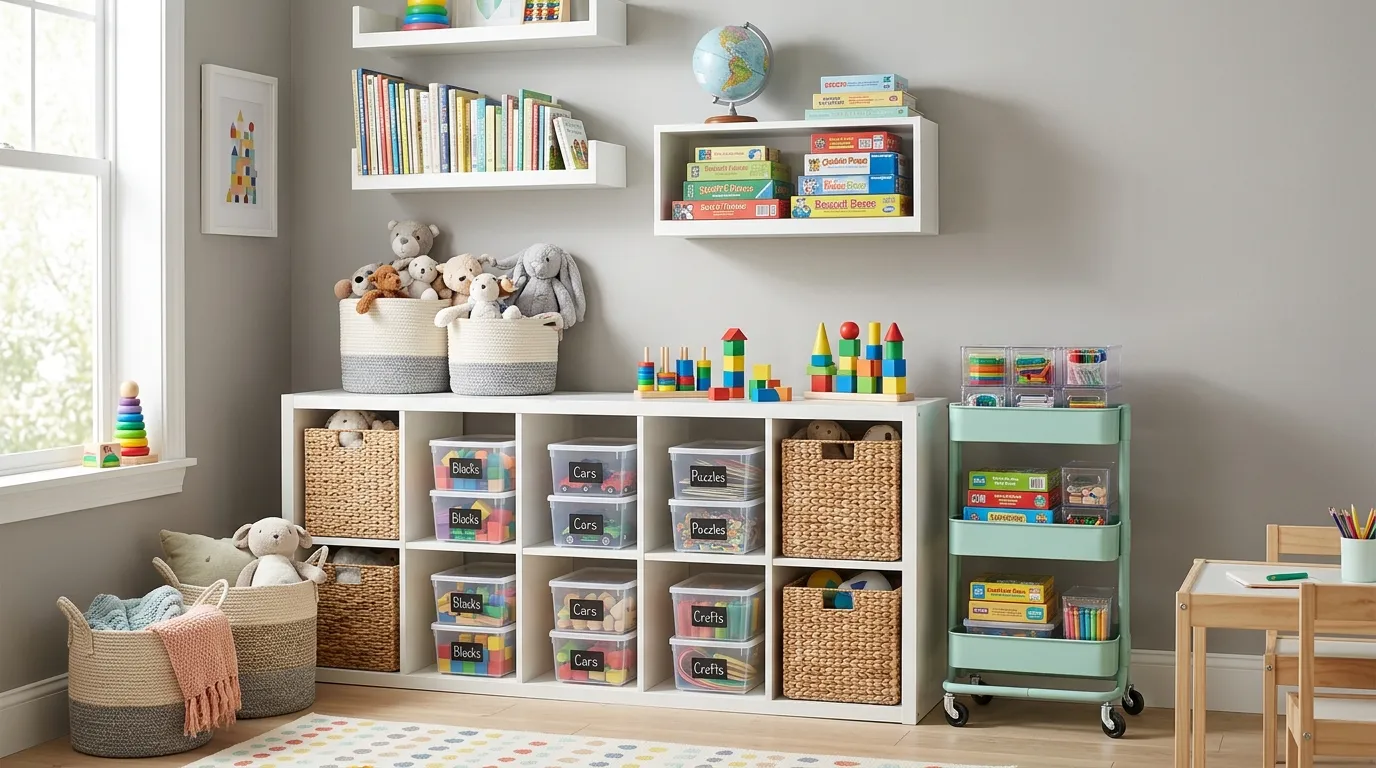
A tidy playroom starts with giving every toy an easy home. Toys Storage Ideas like low cube shelves make cleanup simple because children can see their choices without opening drawers or climbing. Place sturdy cubbies along one wall, keeping favorite toys on lower levels and less-used items higher up. Add colorful fabric bins for blocks, dolls, or craft supplies, while leaving a few open sections for attractive displays. In my experience, open storage encourages children to put toys away because the next step is obvious. The room feels brighter, calmer, and easier to reset after busy play sessions.
Good Toys Storage Ideas should work for children, not just make the room look organized. Choose shelves with rounded edges and secure them properly to the wall, then create simple categories that are easy to understand. One cube can hold cars, another stuffed animals, and another building sets. Matching baskets can hide smaller pieces while keeping the overall color palette controlled. Leave the lowest compartments within comfortable reach for young children, and reserve upper shelves for fragile or rarely used items. This setup reduces scattered toys while creating a flexible system that can grow with changing interests.
Rolling Toy Baskets
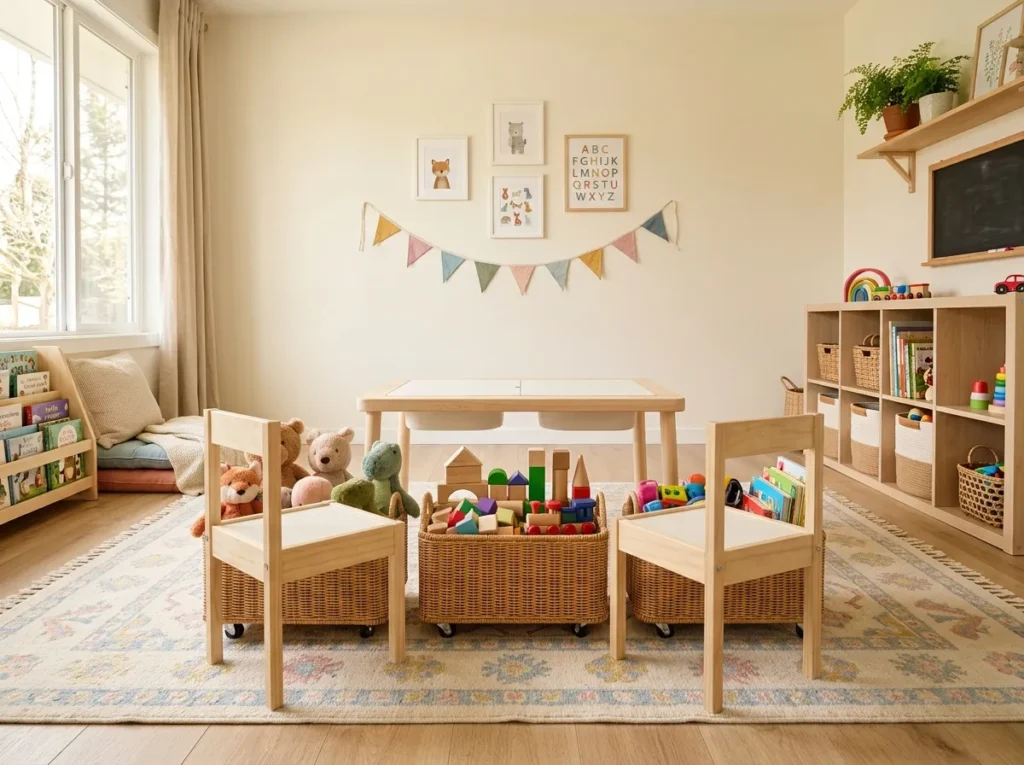
Nothing clears floor clutter faster than giving tiny toys a dedicated landing place. Toys Storage Ideas using rolling baskets are especially helpful for playrooms where children move between different activities throughout the day. Choose sturdy baskets with smooth casters, then label each one with a simple picture or word. Cars, stuffed animals, costumes, and building pieces can each have their own basket, making cleanup feel more manageable. Keep the baskets under a low table or along a wall when they are not being used. The room stays flexible, while children can quickly pull out what they want and return it afterward.
The beauty of mobile Toys Storage Ideas is that they follow the activity instead of forcing children to stay in one spot. A rolling cart with two or three deep baskets can move from the playroom to a bedroom, reading corner, or craft table whenever needed. Use the top level for frequently used supplies and lower baskets for heavier toys. Choose locking wheels so the cart stays stable during play. I’ve noticed that mobile storage works particularly well for shared spaces because it can be moved away when adults need the room. A quick push restores an open, uncluttered floor.
Wall Hook Rail
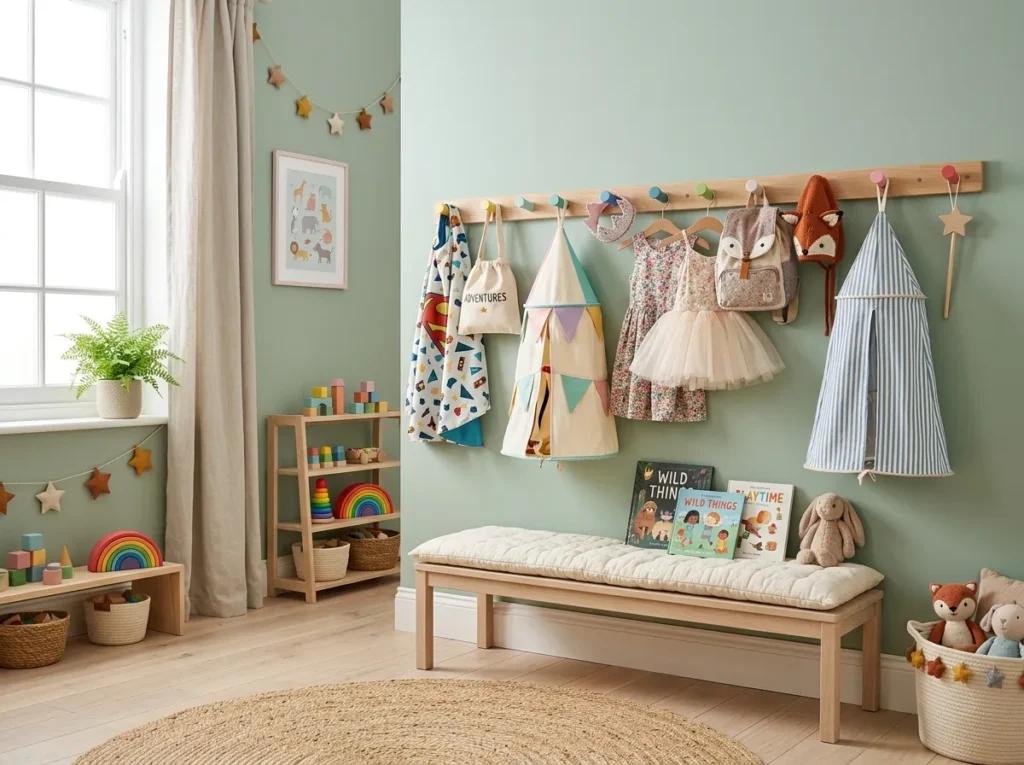
Turn an empty wall into a playful storage feature with a row of sturdy wall hooks. Toys Storage Ideas built around hooks are perfect for dress-up clothes, toy bags, fabric play tents, and lightweight outdoor toys. Install them at child-friendly heights and leave enough space between each hook so items do not overlap. A painted wood backing board can add color while protecting the wall from scuffs. Use simple labels or picture markers to show where each item belongs. This approach keeps frequently used toys visible without covering the floor, helping the playroom feel open even when many activities are happening.
Practical Toys Storage Ideas should make cleanup easier without creating another complicated routine. Hooks are especially useful because children can hang an item in seconds rather than opening a drawer or arranging a shelf. Choose sturdy hooks with smooth edges and secure them into appropriate wall support. Keep heavier bags lower and lighter costumes higher, depending on the child’s reach. A small bench underneath can provide a convenient place for shoes or baskets. The finished wall becomes both functional and decorative, especially when colorful play items are arranged neatly against a soft neutral background.
Labeled Toy Drawers
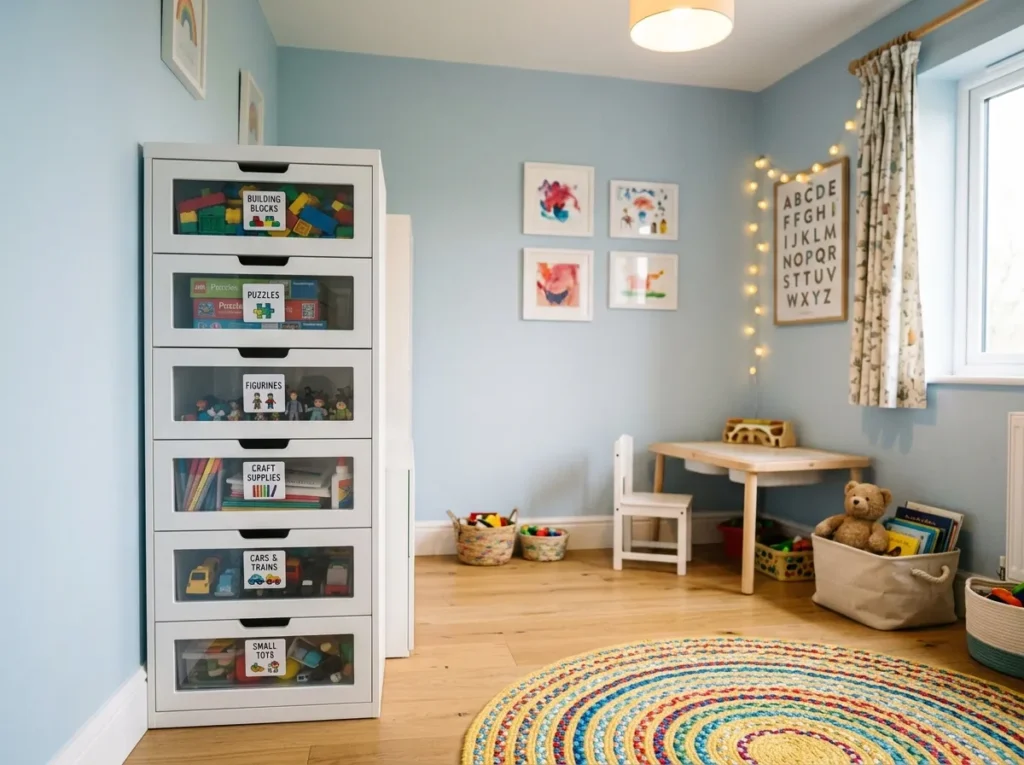
Small pieces become much easier to manage when they have a dedicated drawer system. Toys Storage Ideas using shallow labeled drawers work beautifully for puzzles, building bricks, figurines, craft supplies, and game pieces that otherwise spread across the floor. Choose transparent or clearly labeled drawers so children can identify contents before pulling everything out. Arrange the most frequently used categories at comfortable heights and keep delicate materials higher. A narrow drawer unit can slide beside a bookshelf or under a desk, making it useful even in compact rooms. The result is a cleaner floor and faster cleanup after every play session.
The secret to successful Toys Storage Ideas is making small-item storage predictable. Use one drawer for each category and avoid mixing unrelated pieces, because sorting becomes much harder when everything shares the same container. Add simple picture labels for younger children and written labels for older kids. Choose drawers that slide smoothly and have secure stops to prevent accidental spills. Keep a small empty section available for new toys so the system can adapt over time. When every little piece has a clear destination, the playroom stays easier to maintain and children can become more independent during cleanup.
Under-Bench Bins
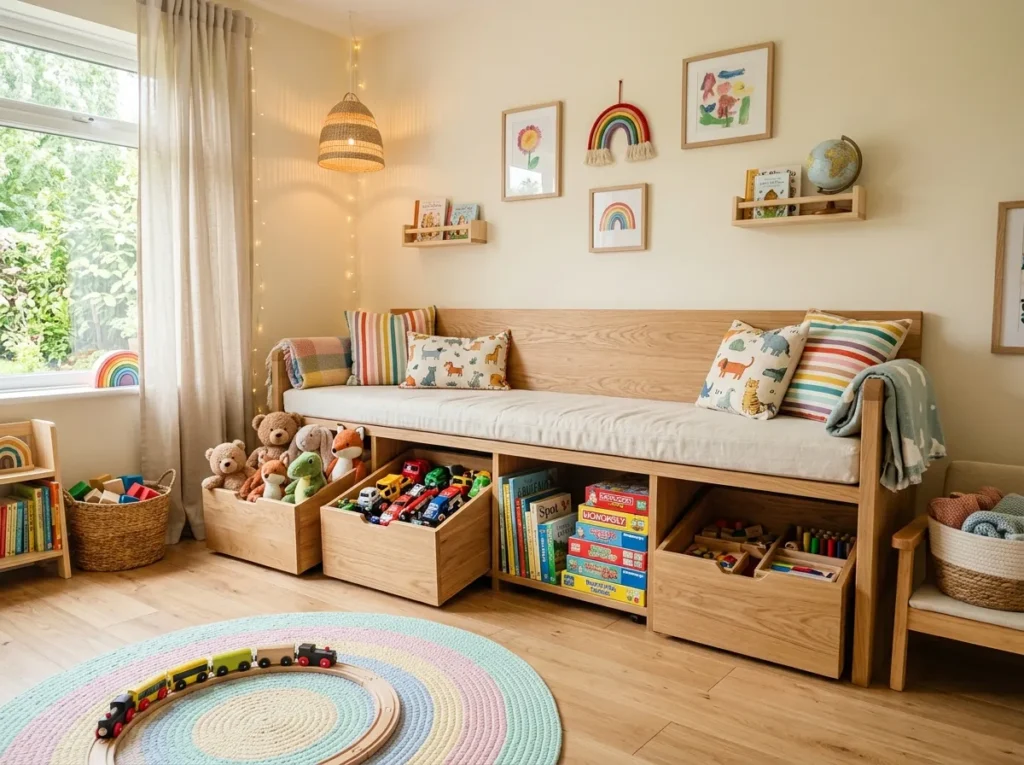
An unused space beneath a playroom bench can become a surprisingly valuable part of Toys Storage Ideas. Add deep fabric or woven bins underneath the seat for stuffed animals, cars, blocks, and larger toys that do not fit neatly on shelves. Choose matching containers to create a calmer visual line, then label each one with simple words or pictures. A cushioned bench above the storage can double as a reading spot or quiet play area. In my experience, combining seating with storage works especially well in smaller rooms because one piece of furniture handles two everyday needs.
The best Toys Storage Ideas make storage easy without taking away valuable play space. Before choosing bins, measure the height and depth beneath the bench so children can pull them out comfortably. Use lighter containers for younger children and reserve deeper bins for larger, lightweight toys. Keep the most frequently used items in the easiest-to-reach sections, while seasonal toys can sit farther back. When the bins are pushed neatly underneath, the room instantly looks more organized. The bench remains useful for reading, putting on shoes, or resting, while the hidden compartments quietly handle everyday toy clutter.
Hanging Fabric Pockets
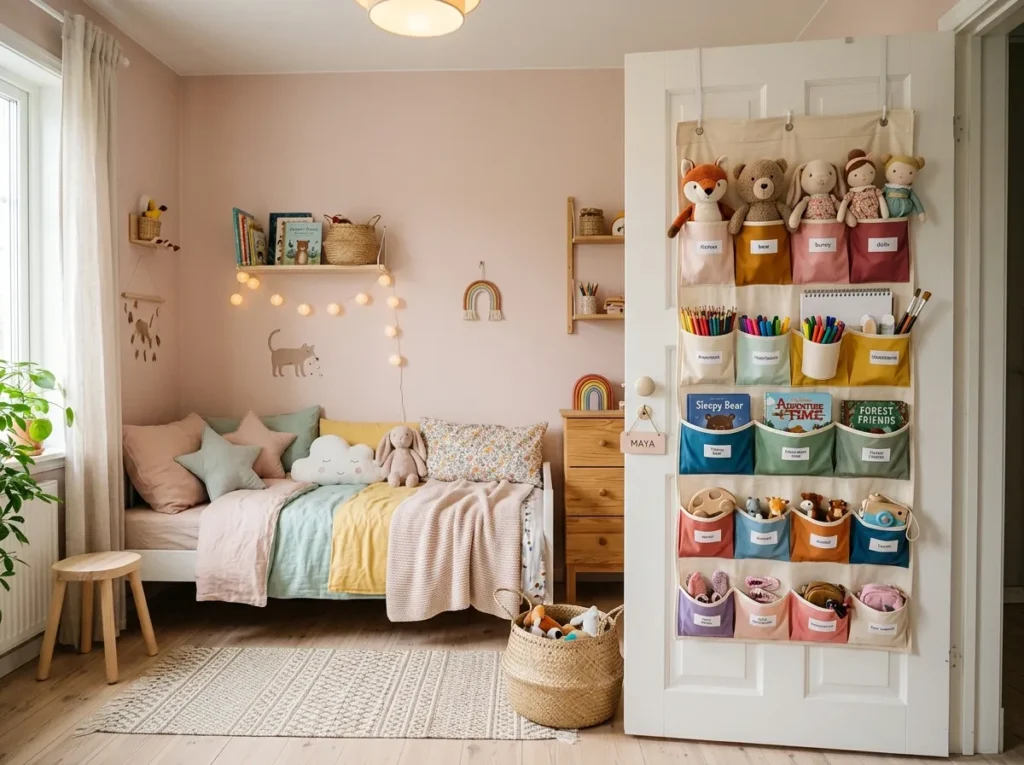
The back of a door can become one of the smartest places for Toys Storage Ideas when floor space is limited. A hanging fabric organizer with multiple pockets can hold dolls, toy animals, art supplies, puzzles, small books, and accessories without adding another cabinet. Choose a sturdy design that hangs securely and does not interfere with the door frame. Clear pockets make it easier for children to see what is inside, while fabric versions can add a soft decorative touch. Keep frequently used toys at eye level and reserve upper pockets for items that need adult supervision or less frequent access.
Simple Toys Storage Ideas often work best when they use space that already exists. A door organizer adds several compartments without taking away room needed for play, making it especially useful in bedrooms and compact playrooms. Use picture labels for younger children so they can quickly match each toy with its pocket. Avoid overfilling the compartments because heavy pockets can make the door difficult to open. I’ve noticed that vertical organizers are particularly helpful for small accessories because they stop tiny items from disappearing into larger bins. The finished door stays functional while the floor remains open and inviting.
Rolling Book Cart
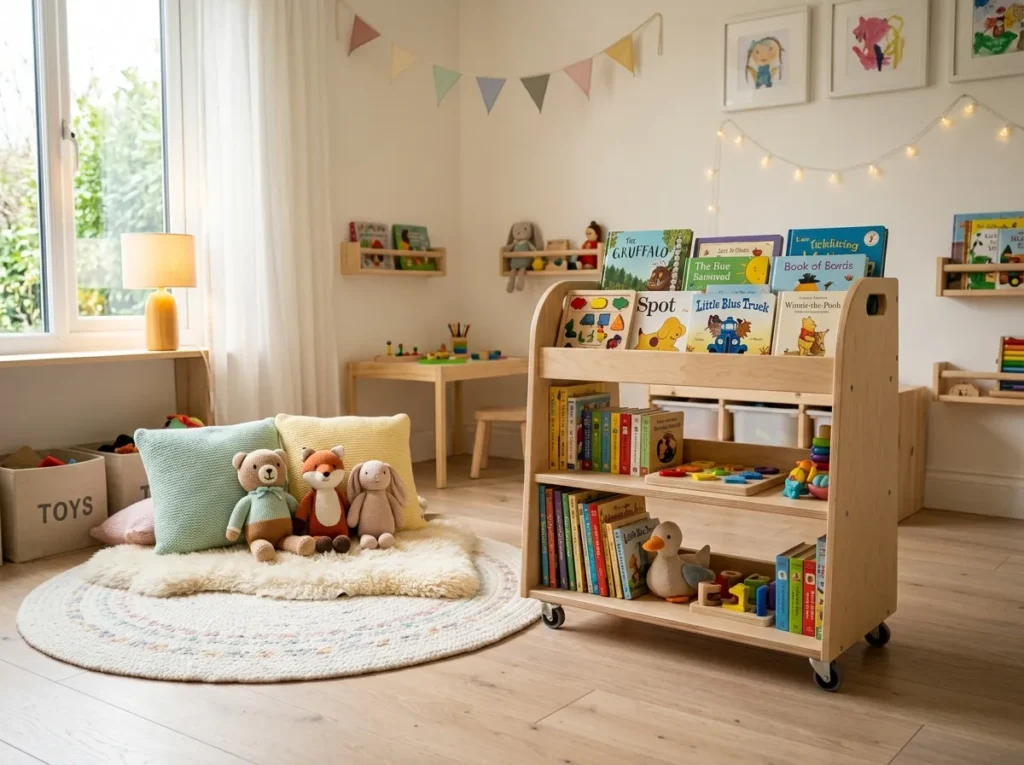
A low rolling cart can create a flexible storage station for books, puzzles, and favorite toys while keeping everything at a child’s height. For Toys Storage Ideas, choose a cart with two or three open levels and sturdy wheels that glide smoothly across the floor. Place books upright on the top shelf, puzzles in the middle, and small toys in a basket below. This creates a portable activity station that can move beside a reading rug or play table. In my experience, mobile carts are useful because children can bring their favorite activities closer without scattering supplies throughout the room.
Flexible Toys Storage Ideas can make a shared play space easier to reset when different activities happen throughout the day. A rolling cart can move beside a reading chair during quiet time, then return to a designated wall afterward. Choose a compact width so the cart does not block walkways or become difficult to maneuver. Add a small basket for loose pieces that might otherwise fall between shelves. Natural wood or soft white finishes keep the piece visually light, while colorful books and toys provide playful accents. Once the activity ends, everything can roll back into one organized zone.
Open Toy Cubbies
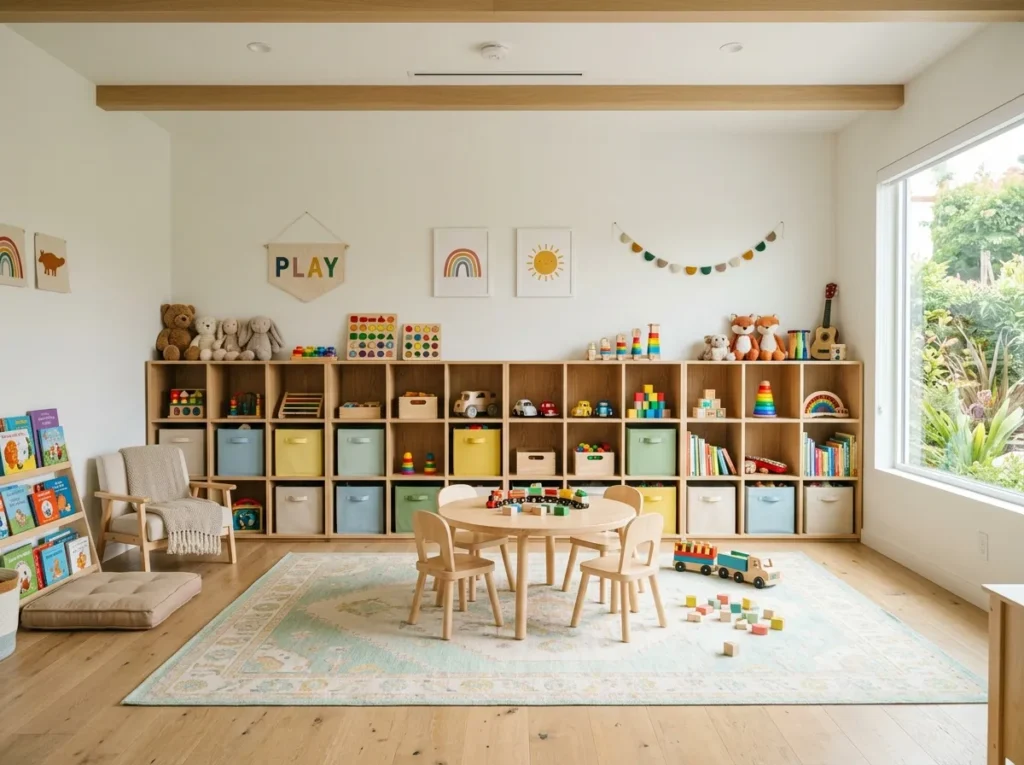
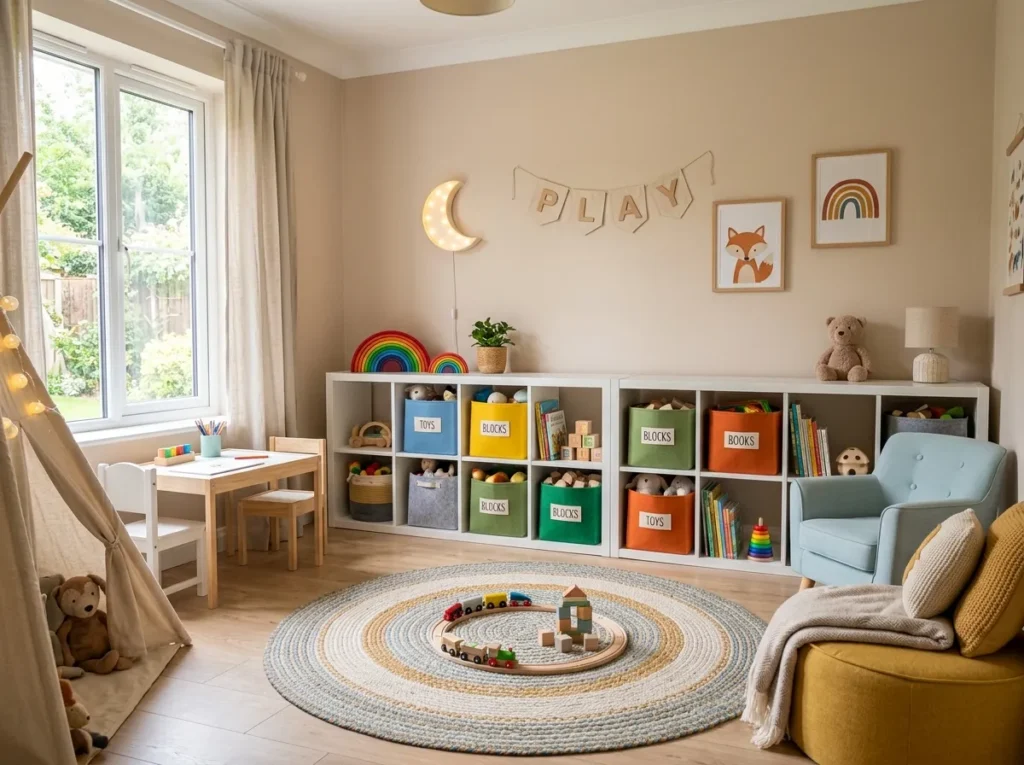
Open cubbies are a classic solution because they make both choosing and returning toys remarkably simple. Among practical Toys Storage Ideas, a low cubby unit can organize blocks, cars, stuffed animals, puzzles, and games while keeping everything within a child’s reach. Use a mix of open compartments and fabric bins so attractive toys can be displayed while smaller pieces stay contained. Keep heavier items on lower levels and secure the unit properly to the wall. The result is a clear storage zone that reduces floor clutter without making the room feel closed off or overly furnished.
The most effective Toys Storage Ideas create a visual system children can understand without constant reminders. Assign each cubby a simple category and avoid packing too many different toy types into one compartment. Picture labels can help younger children identify where items belong, while older children can use written labels. Leave a little empty space for new toys so the system remains useful as interests change. A low, open design also lets children browse independently and return items after play. With consistent categories and accessible placement, the room can stay organized while still feeling colorful, creative, and inviting.
Toy Rotation Baskets
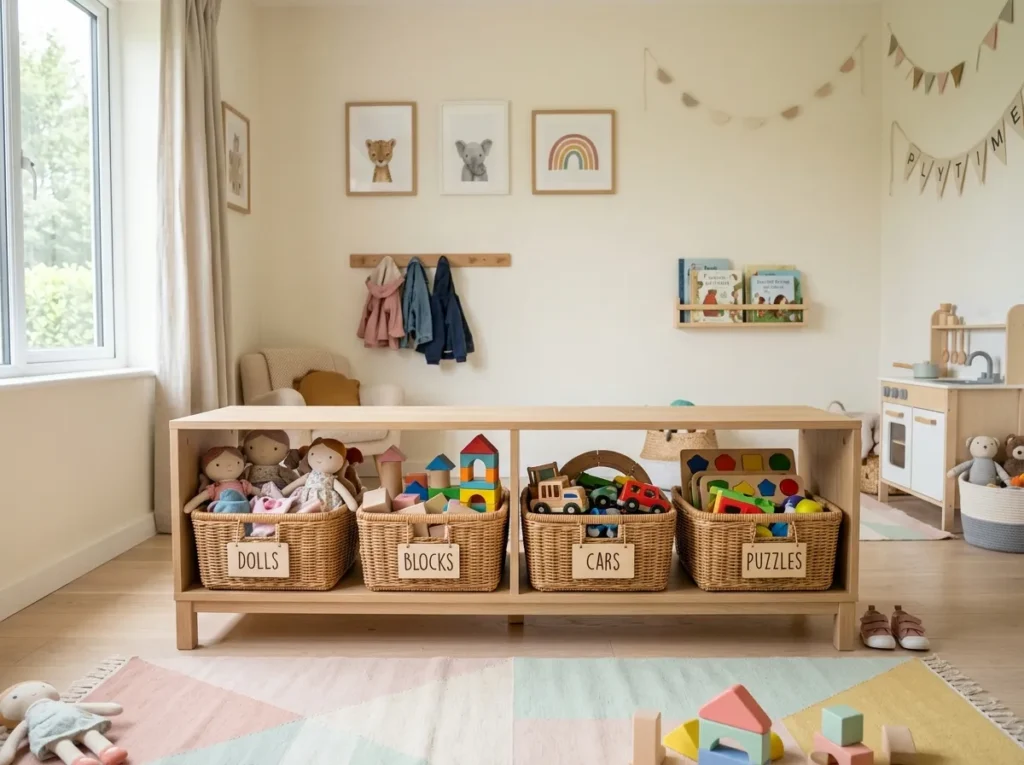
Sometimes the easiest way to improve Toys Storage Ideas is to store fewer toys in the main play area. Use several attractive baskets to create a simple rotation system, keeping only a selection of activities available at one time. One basket might hold building toys, another puzzles, and another pretend-play accessories. Store the remaining collections in a closet or cabinet and switch them periodically. This approach reduces visual clutter while giving children fresh activities to explore. I’ve noticed that rotating toys can make a familiar playroom feel new without buying anything extra.
Effective Toys Storage Ideas should support how children actually play, not simply create more containers. A rotation system works best when baskets are clearly labeled and easy for an adult to swap quickly. Choose sturdy woven or fabric baskets that can hold different toy shapes without becoming difficult to lift. Keep the current selection at child height and store backup collections somewhere less accessible. When fewer toys are visible, cleanup usually becomes easier because each category has a clear home. The room also gains more open floor space, creating a calmer environment for imaginative play, reading, and movement.
Window Seat Storage
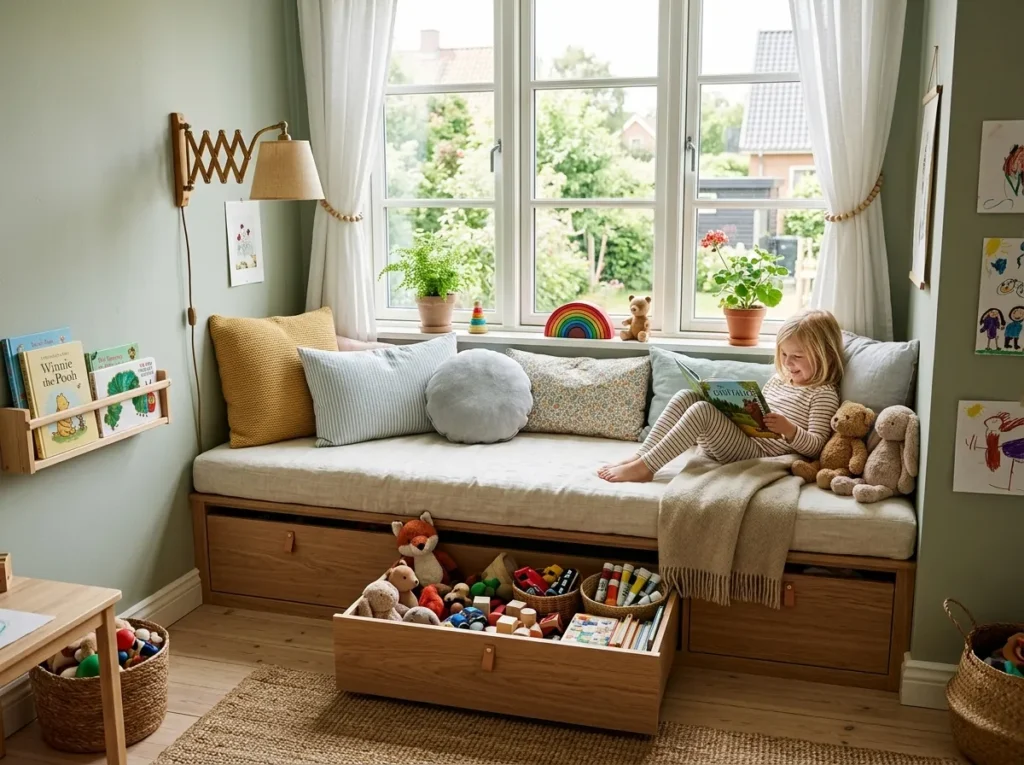
An unused window area can become a beautiful multifunctional zone with a cushioned seat and hidden compartments underneath. For Toys Storage Ideas, deep drawers below the bench can hold stuffed animals, larger games, dress-up supplies, or craft materials while the top remains available for reading and relaxing. Choose a washable cushion and durable drawer hardware for everyday family use. Soft neutral colors can make the corner feel peaceful, while a few colorful pillows keep it playful. This arrangement works especially well in smaller rooms because it combines seating, storage, and a dedicated activity space.
The most useful Toys Storage Ideas often make existing architectural features work harder. A window seat provides a natural boundary for the play area while hiding toys that would otherwise occupy shelves or baskets. Use separate drawers for different categories so cleanup remains straightforward. Keep heavier toys low and make sure drawers have safe stops if young children will use them independently. Add a small reading lamp or nearby basket for books to complete the corner. In my experience, storage benches are especially effective because they make organization feel like part of the room’s design rather than an afterthought.
Labeled Floor Bins
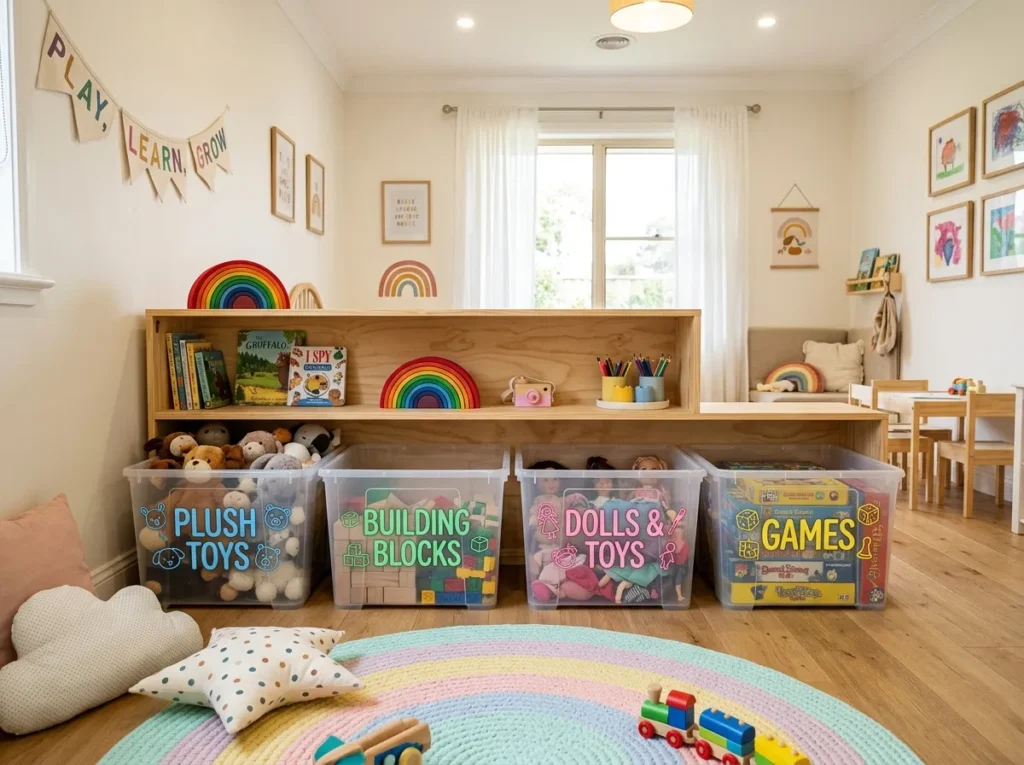
Large floor bins are ideal when the playroom contains toys that are too bulky or numerous for small drawers. Practical Toys Storage Ideas can use deep bins for stuffed animals, large blocks, plush play sets, or oversized vehicles while keeping each category separate. Choose sturdy containers with wide openings so children can easily place toys inside without carefully arranging every piece. Picture labels make the system more intuitive for younger kids. Position the bins along one wall or beneath shelving to keep the center of the room open. A consistent color palette prevents the storage from looking visually chaotic.
The key to successful Toys Storage Ideas is balancing capacity with accessibility. Deep bins are useful, but avoid making them so large that children cannot reach the bottom or easily return items. Use one bin for each major category and leave enough surrounding space for children to pull them forward safely. Soft-sided containers are helpful for plush toys, while durable plastic works well for heavier collections. I’ve noticed that wide openings encourage faster cleanup because children can simply drop toys inside. Once the bins are labeled and positioned consistently, the playroom becomes easier to reset after energetic afternoons.
Behind-Door Shelves
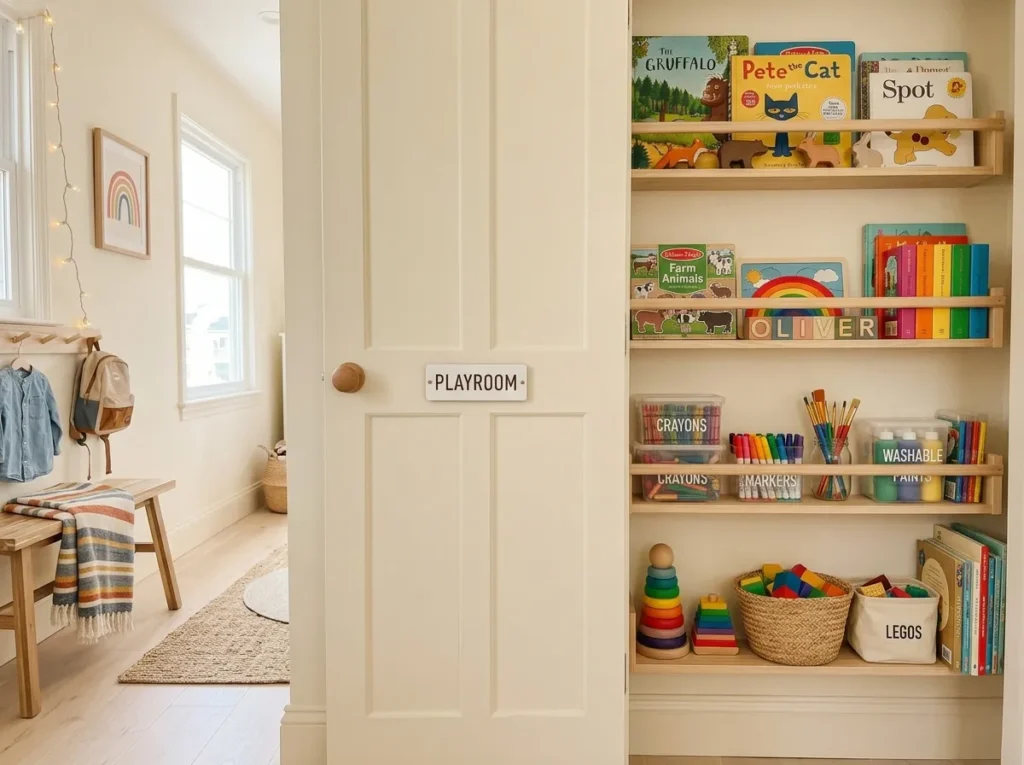
The wall behind a door is easy to overlook, yet it can provide valuable vertical storage in a small play space. Toys Storage Ideas using slim shelves here are ideal for puzzles, books, craft containers, figurines, and small activity sets. Choose shallow shelves so the door can open fully without hitting the storage. Keep lightweight items toward the upper levels and frequently used toys within comfortable reach. A simple white or natural wood finish can blend with the surrounding wall. This approach adds capacity while leaving the main floor completely available for playing, building, and moving around.
Smart Toys Storage Ideas should make use of forgotten areas without creating new obstacles. Before installing shelves behind a door, measure the door swing and available wall depth carefully. Use sturdy brackets and keep shelves narrow enough to avoid blocking handles or pathways. Small baskets can group loose pieces, while books and puzzles can stand upright for easy visibility. I’ve seen narrow vertical storage make a noticeable difference in compact rooms because it adds organization without visually filling the space. When the door closes, the storage disappears from view, leaving the room looking clean and uncluttered.
Pegboard Toy Wall
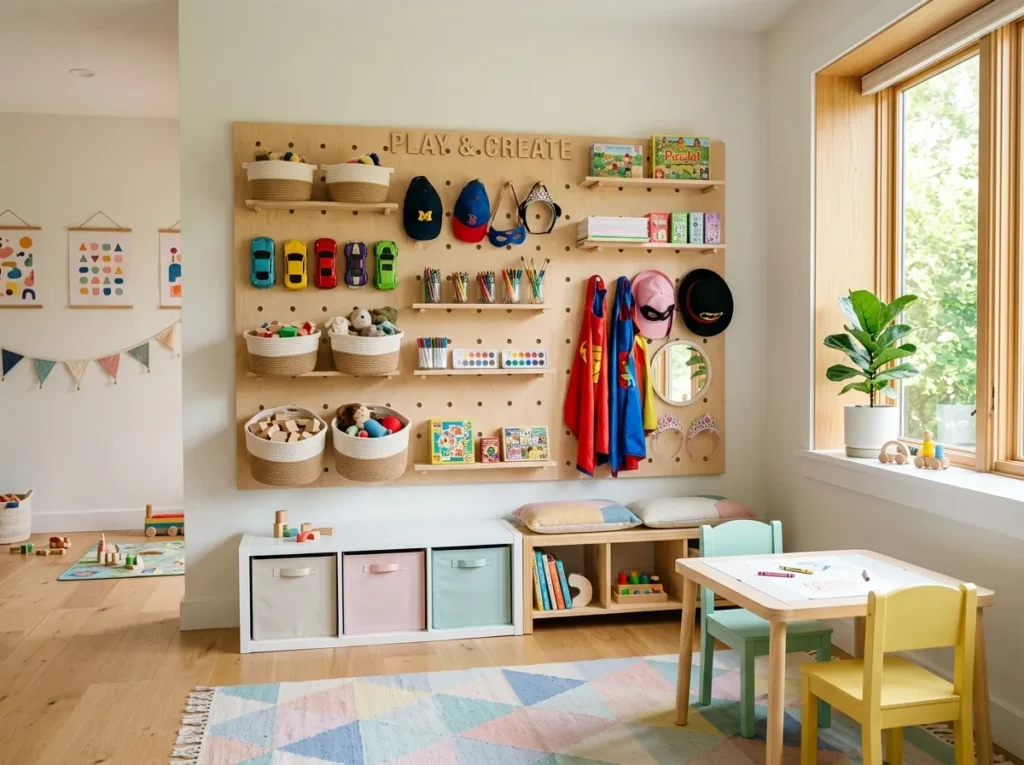
A pegboard can turn one blank wall into a flexible organization station that grows with changing interests. Among useful Toys Storage Ideas, this setup works especially well for small toys, craft supplies, dress-up accessories, cars, and activity materials. Add hooks, small baskets, narrow shelves, and containers in different positions to create custom zones. Keep everyday items within reach and place less-used supplies higher up. Choose natural wood for warmth or paint the board to match the room. The result is practical vertical storage that keeps the floor open while adding personality to the playroom.
Flexible toy organization becomes even more useful when children outgrow certain activities. A pegboard lets you move hooks and baskets instead of replacing the entire storage system. Use labeled containers for tiny pieces and keep frequently used supplies in open baskets for quick access. Secure the board properly to the wall and avoid placing heavy objects where children could pull them down. I’ve noticed that adjustable wall systems are especially helpful for growing families because the layout can change as storage needs change. This makes the room easier to organize without committing to permanent shelf arrangements.
Toy Display Shelves
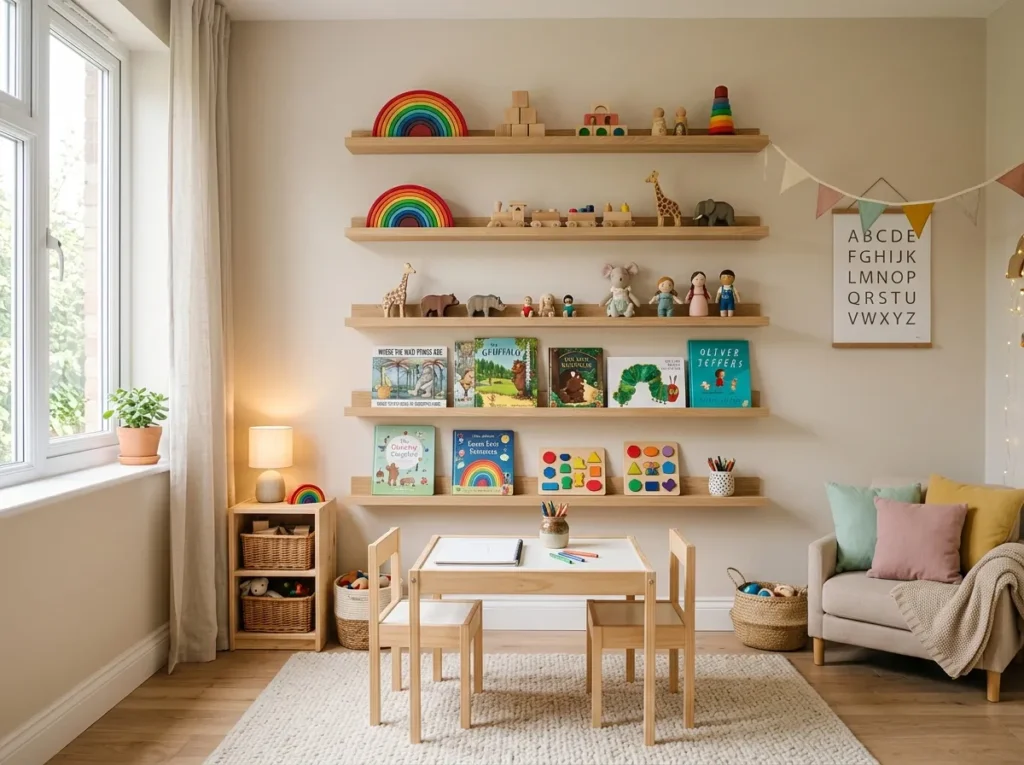
Beautiful toys do not always need to disappear into a bin; a few carefully chosen pieces can become part of the room’s decor. Toy display shelves are one of the simplest Toys Storage Ideas for showing wooden animals, miniature figures, favorite books, puzzles, or decorative play pieces. Install narrow shelves at safe heights and leave enough space between items so the display feels intentional. Rotate the collection occasionally to keep the room fresh. A neutral wall behind colorful toys creates a clean backdrop, while natural wood shelves add warmth and make the play space feel thoughtfully designed.
Display-focused Toys Storage Ideas work best when the shelves hold a limited selection rather than every favorite object at once. Choose durable shelves with secure mounting and avoid placing fragile or heavy items within easy reach of very young children. Keep the lowest shelf for sturdy toys that children can use independently, while decorative pieces can sit higher. This arrangement creates visual interest without overwhelming the room. It also gives children a chance to see their favorite toys as part of their environment. When fewer items are displayed, each piece stands out while the rest remain neatly stored elsewhere.
Rolling Storage Ottoman
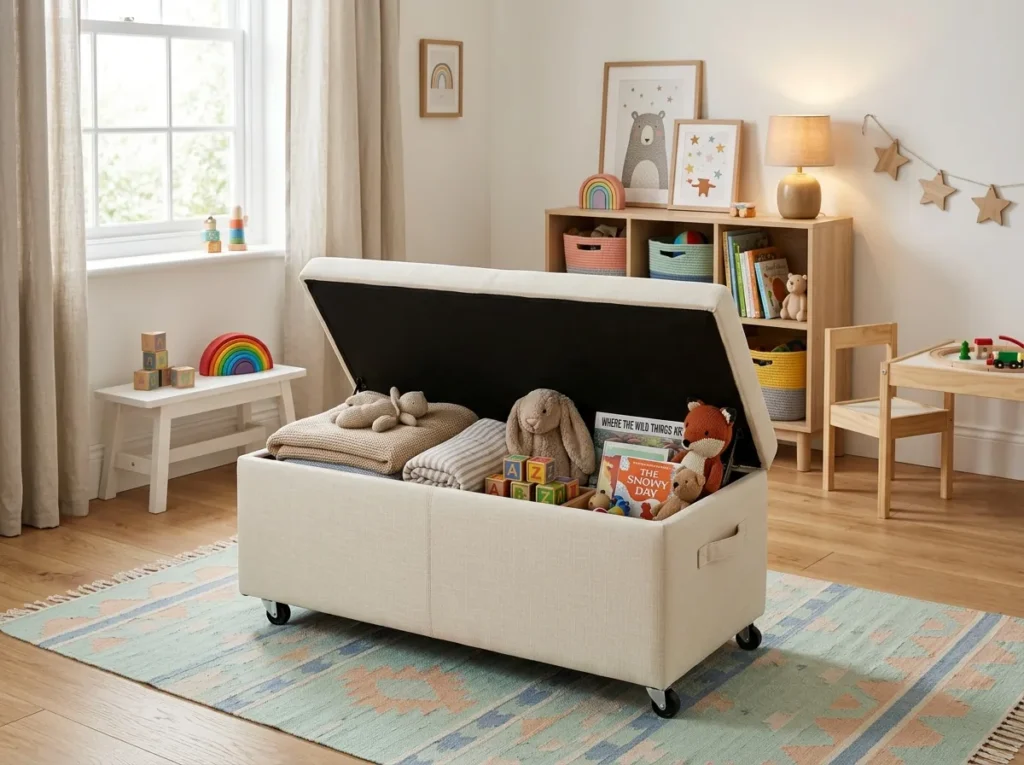
A rolling storage ottoman can solve several playroom problems with one compact piece of furniture. For Toys Storage Ideas, choose an upholstered ottoman with a roomy interior for stuffed animals, blankets, dress-up clothes, or larger toys. Casters make it easy to move beside a reading corner or out of the way when children need more floor space. A hinged lid keeps the contents hidden, while soft upholstery gives the room a comfortable place to sit. Choose a washable, durable fabric if the ottoman will be used frequently. This combination of storage and seating is especially useful in smaller rooms.
The most practical toy organization often comes from furniture that serves more than one purpose. A rolling ottoman provides hidden capacity without requiring another shelf or cabinet, helping the room maintain a cleaner visual balance. Keep the interior divided with smaller fabric baskets if loose toys tend to become mixed together. Check that the casters lock securely and that the lid is safe for the children using it. I’ve seen multifunctional pieces make compact playrooms feel much more spacious because they reduce the number of separate furniture items. When play ends, everything can be tucked away quickly, leaving an inviting open floor.
Conclusion
Creating a more organized home doesn’t mean getting rid of every toy. These toys storage ideas show how thoughtful storage solutions can reduce clutter, simplify cleanup, and make play spaces more enjoyable for everyone. Whether you choose labeled bins, shelving units, baskets, or hidden storage furniture, even small improvements can have a lasting impact. Save this post on Pinterest so you can revisit your favorite ideas later, try a few solutions that fit your space, and share this article with other parents who could use a little organization inspiration. A calmer, tidier play area may be just one storage upgrade away.