20 Effortless Blanket Storage Ideas For A Clean And Beautiful Space
Introduction
Are blankets taking over your sofa, bed, or favorite chair? Blanket Storage Ideas can help you reclaim your space while making every room feel warmer, tidier, and more inviting.
From woven baskets and storage ottomans to built-in cabinets and clever furniture solutions, this collection explores creative ways to store blankets beautifully. Whether you live in a small flat or a spacious family home, you’ll find practical ideas that suit different layouts, budgets, and decorating styles. The right storage solution keeps blankets accessible without creating visual clutter. In my experience, choosing storage near the place where blankets are used makes tidying much easier. Explore these inspiring setups and discover simple ways to create a cleaner, more comfortable home
Working with limited space? Discover these Small Bedroom Storage Ideas to keep your room organized
Footboard Storage Bench
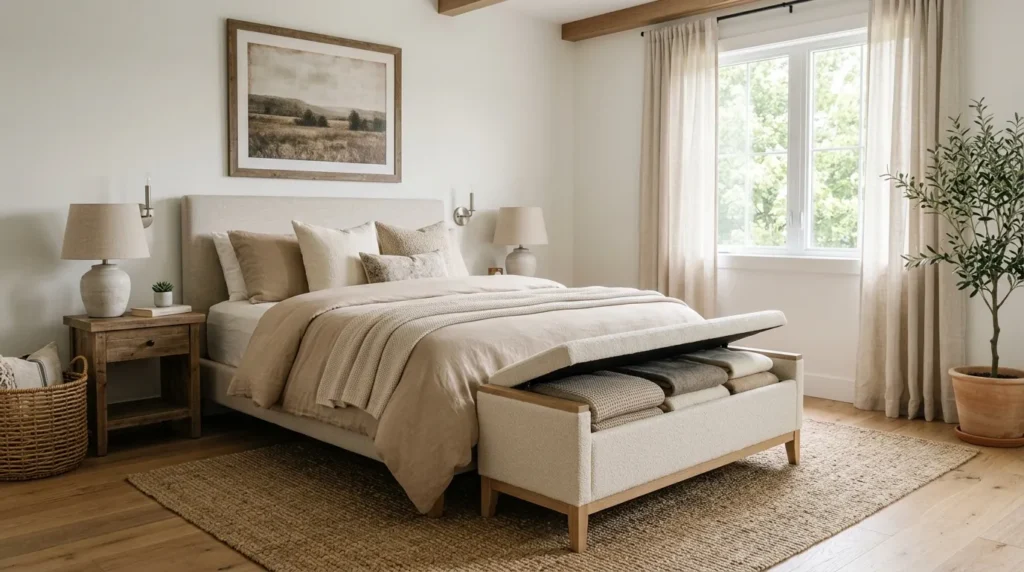
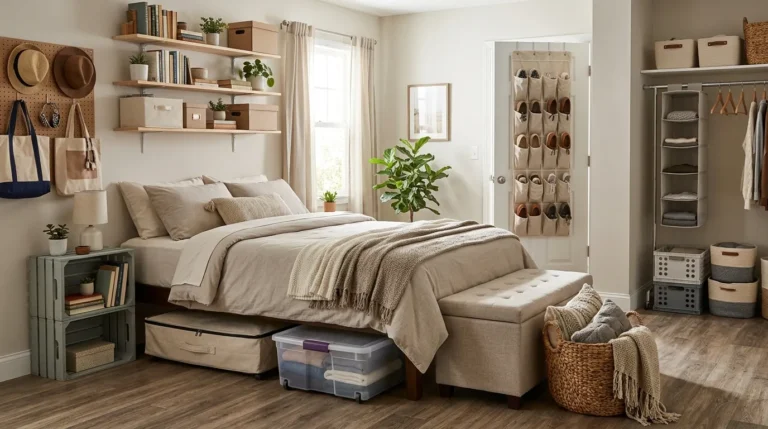
A beautiful blanket can quickly become bulky clutter when it has nowhere to go. A dedicated storage bench gives those cosy layers a home while keeping the room polished and welcoming. Place a low bench at the foot of the bed, then fold blankets into compact stacks or soft rolls inside. This arrangement works particularly well in bedrooms where wardrobes are already full. Choose a bench with a lift-up lid or open cubbies, depending on whether you prefer hidden or visible storage. The result is a practical piece of furniture that quietly keeps seasonal textiles organized and close at hand.
A storage bench also adds useful seating, making it a smart choice for rooms where every piece of furniture needs to work harder. Look for upholstery that complements your bedding, such as cream, oatmeal, muted grey, or soft beige, and choose baskets inside for smaller throws. In my experience, keeping the most frequently used blanket on top makes bedtime routines much easier. For a cleaner appearance, fold blankets to similar widths before placing them inside. This creates visual consistency and prevents the bench from becoming an overcrowded catch-all for cushions, throws, and other bedroom accessories.
Woven Basket Corner
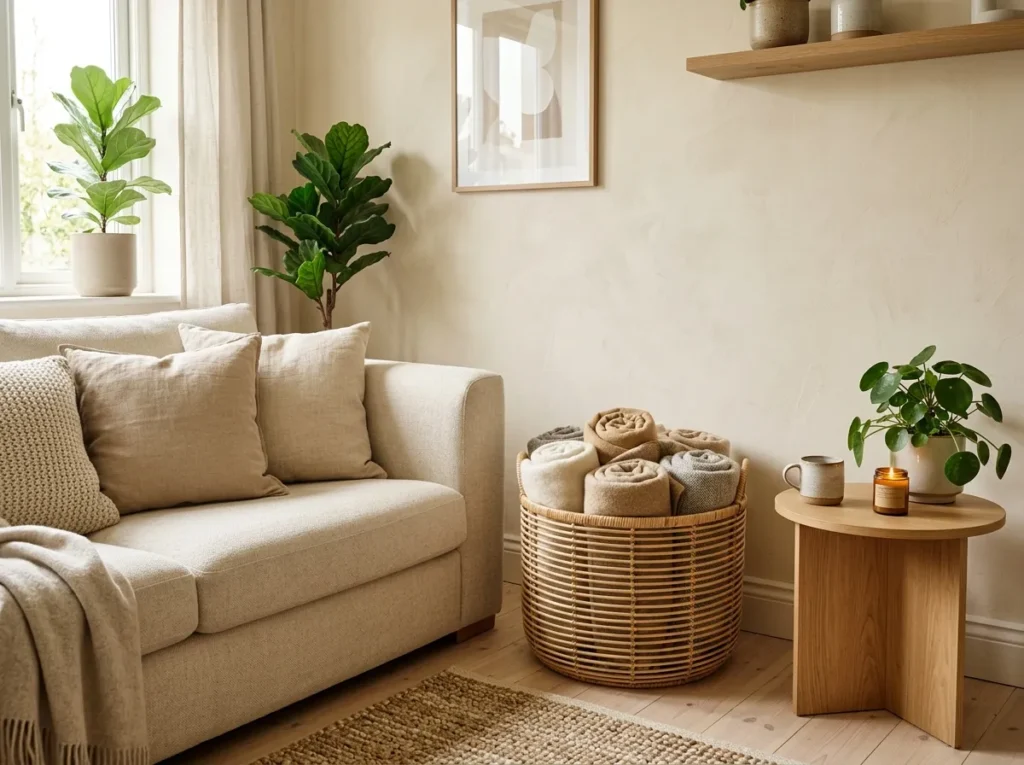
An empty corner can become surprisingly useful with one generously sized woven basket. Instead of leaving blankets draped across the sofa, roll or fold them loosely and place them upright inside the basket. This keeps your seating area looking intentional while making a cosy throw easy to grab. Natural seagrass, rattan, or cotton baskets work beautifully with neutral interiors because their texture adds warmth without overwhelming the room. Position the basket beside a sofa, reading chair, or fireplace where blankets are most often needed.
For a polished arrangement, avoid stuffing the basket until blankets spill over the rim. Leave a little breathing room so the contents look inviting rather than messy. I’ve noticed that a basket with a wide opening is especially convenient because you can quickly return a blanket after use. Choose a sturdy base if you plan to store heavier quilts. You can also place two smaller baskets together when one large container feels too bulky. This simple setup keeps soft furnishings accessible while adding a decorative layer to the room.
Open Cube Shelving
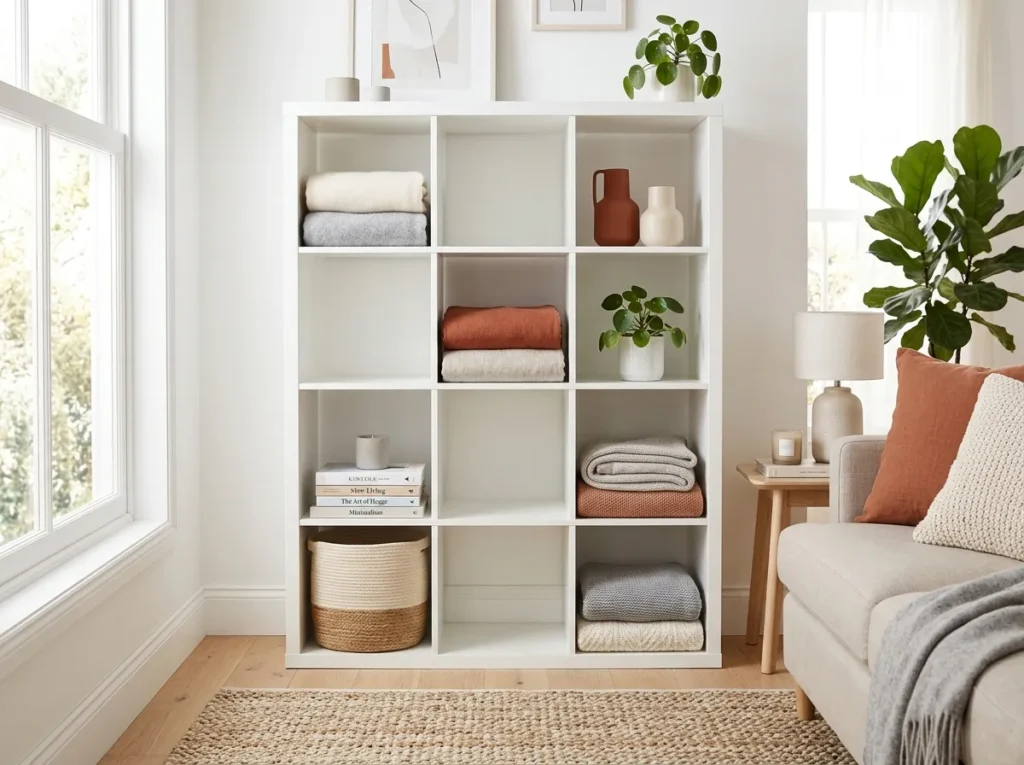
Open cube shelving makes bulky blankets part of the room’s décor instead of hiding them away. Fold each blanket into a similar size and place one or two stacks inside individual compartments. You can reserve lower cubes for heavier bedding while keeping lightweight throws at eye level. This arrangement works well in living rooms, guest rooms, and family spaces where blankets need to remain accessible. Choose a shelving finish that matches existing furniture, such as white, natural wood, or warm oak, to make the entire setup feel cohesive.
The key is to balance useful storage with breathing room. Avoid filling every cube with textiles; leave several compartments open for books, baskets, plants, or decorative objects. Rolling patterned throws can create an attractive contrast against neatly folded solid blankets. In my experience, limiting each compartment to a small number of pieces makes open shelving much easier to maintain. When everything has a designated place, putting blankets away takes only a moment. The finished arrangement feels organised, decorative, and practical without making the room look overly styled.
Under-Sofa Drawers
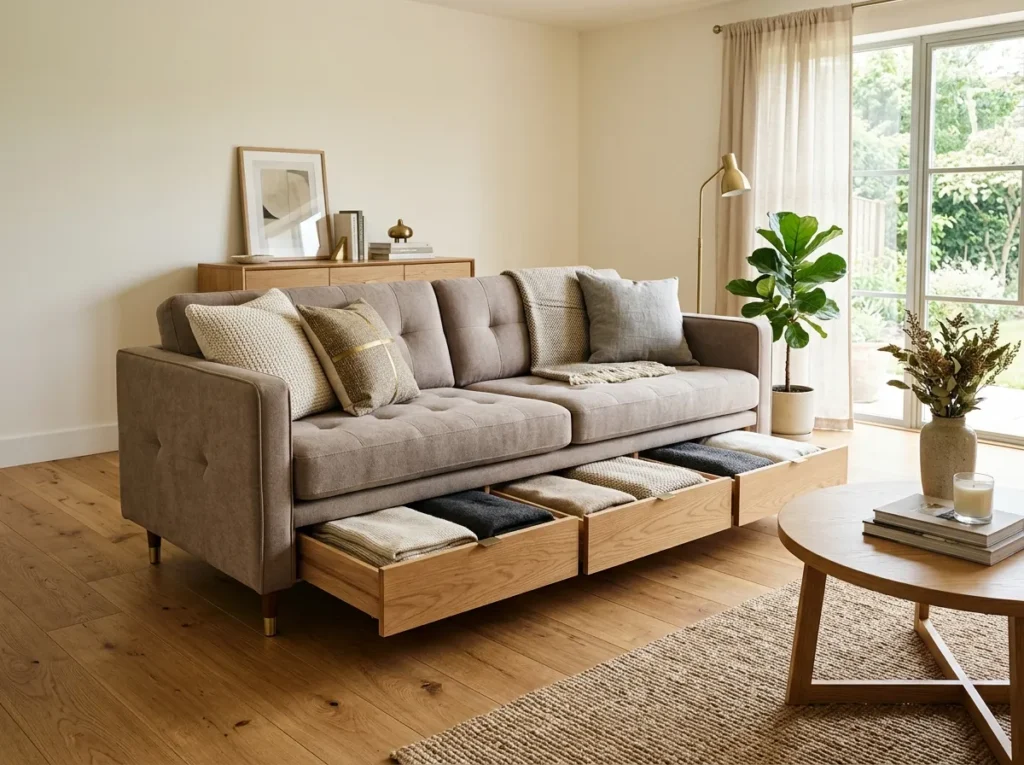
The space beneath your sofa could be hiding the perfect place for extra blankets. Under-sofa drawers use otherwise wasted room while keeping bulky textiles out of sight. Fold blankets into compact rectangles before placing them inside, and separate lightweight throws from thicker winter bedding. This solution is particularly helpful in smaller homes where every storage area matters. Choose a sofa with built-in compartments or use low-profile rolling boxes that slide underneath existing furniture. The result is a cleaner seating area without adding another cabinet, basket, or bulky storage unit.
Before choosing containers, measure the clearance beneath your sofa carefully. The storage boxes should slide smoothly without scraping the floor or catching on the furniture frame. Use labelled sections if you store blankets for different seasons or family members. In my experience, shallow containers are easier to manage because they prevent excessive stacking. Keep everyday throws near the front and reserve deeper sections for occasional bedding. This arrangement maintains a minimalist appearance while making blankets quick to retrieve whenever the room feels chilly or guests need additional comfort.
Ladder Blanket Rack
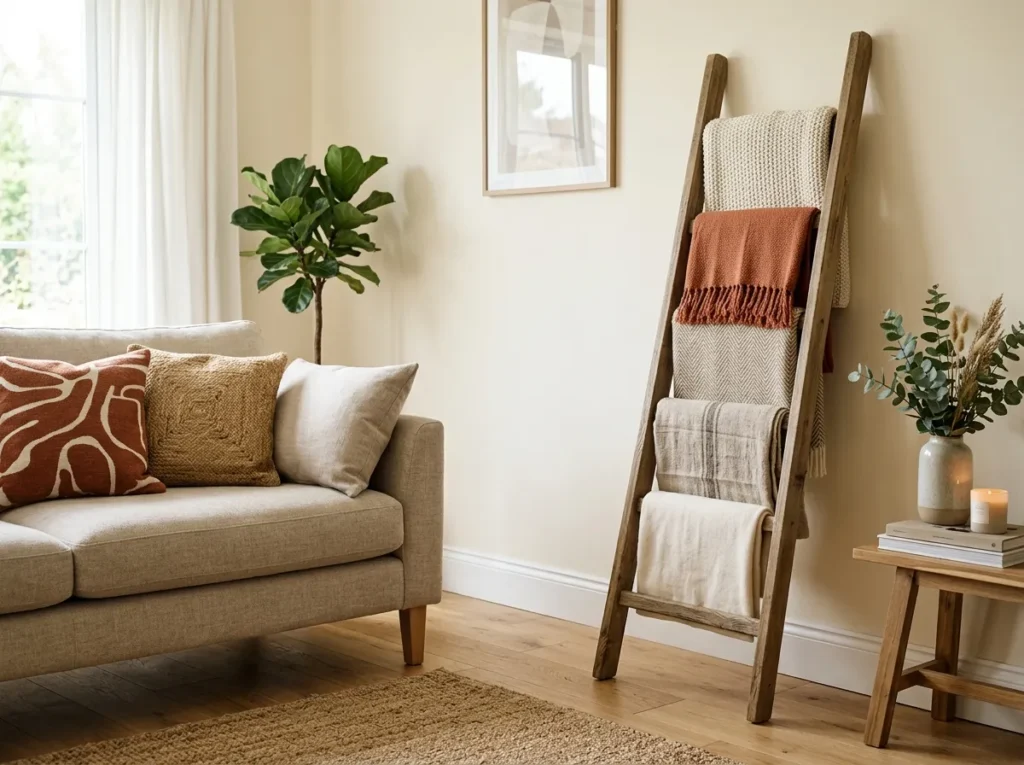
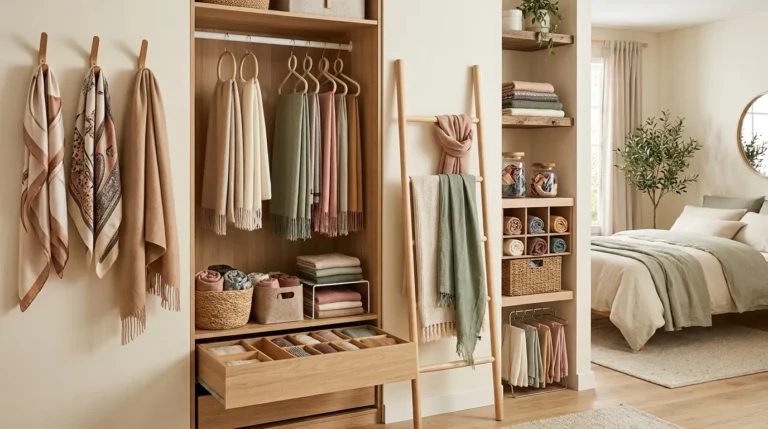
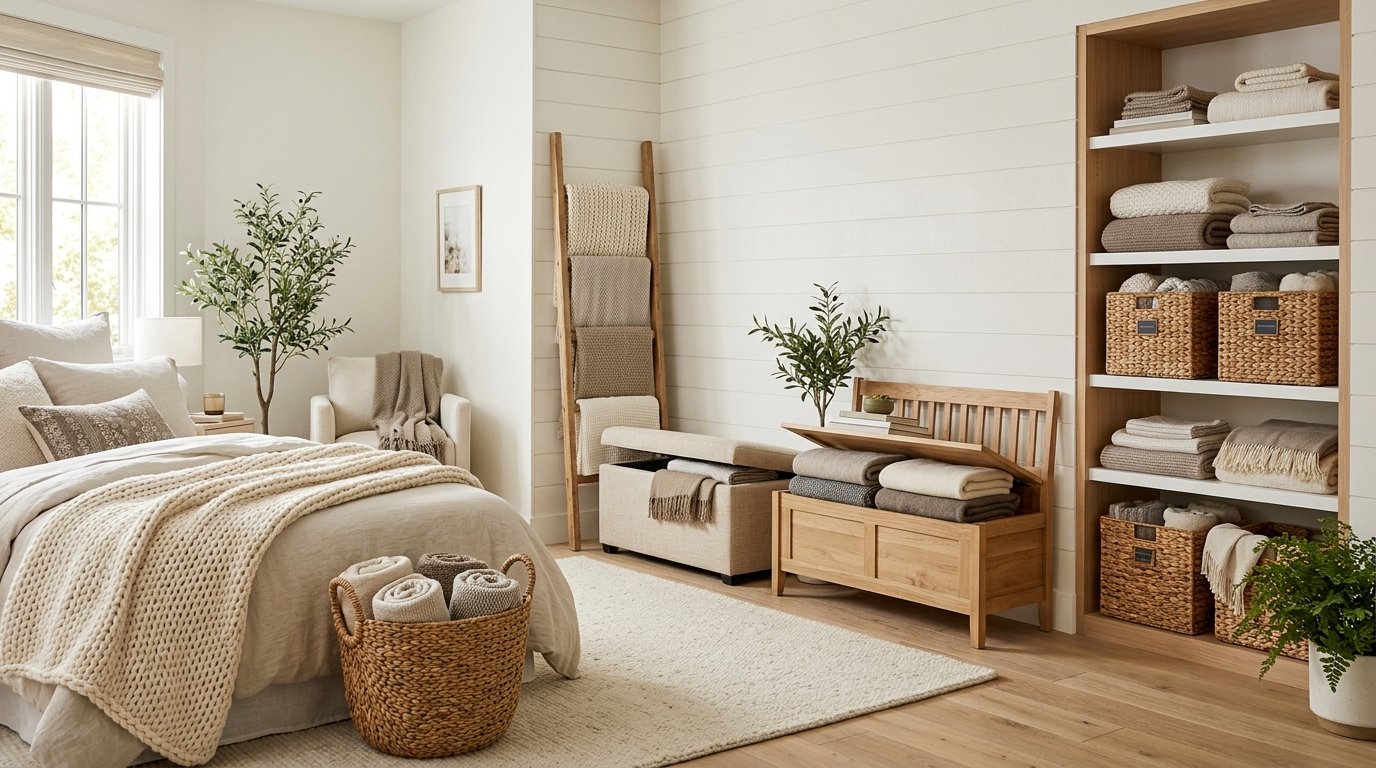
A ladder blanket rack offers a simple way to store throws while turning them into part of your room’s visual design. Lean a sturdy decorative ladder against an appropriate wall and drape blankets across separate rungs. This keeps textiles accessible and adds height, texture, and warmth beside a sofa or reading chair. Choose wooden finishes for rustic interiors or painted designs for modern spaces. The setup works especially well when you own attractive patterned blankets that deserve to be displayed rather than hidden inside a cupboard.
Keep the ladder stable and position it away from busy walkways or areas where it could be knocked over. Use only a few blankets so each piece remains visible and the arrangement does not appear crowded. Alternate colours and textures to create a balanced display, placing heavier blankets on lower rungs. If you have children or pets, consider a securely mounted rack instead of a freely leaning ladder. A carefully arranged display provides convenient access while giving the room a relaxed, layered appearance.
Built-In Window Seat
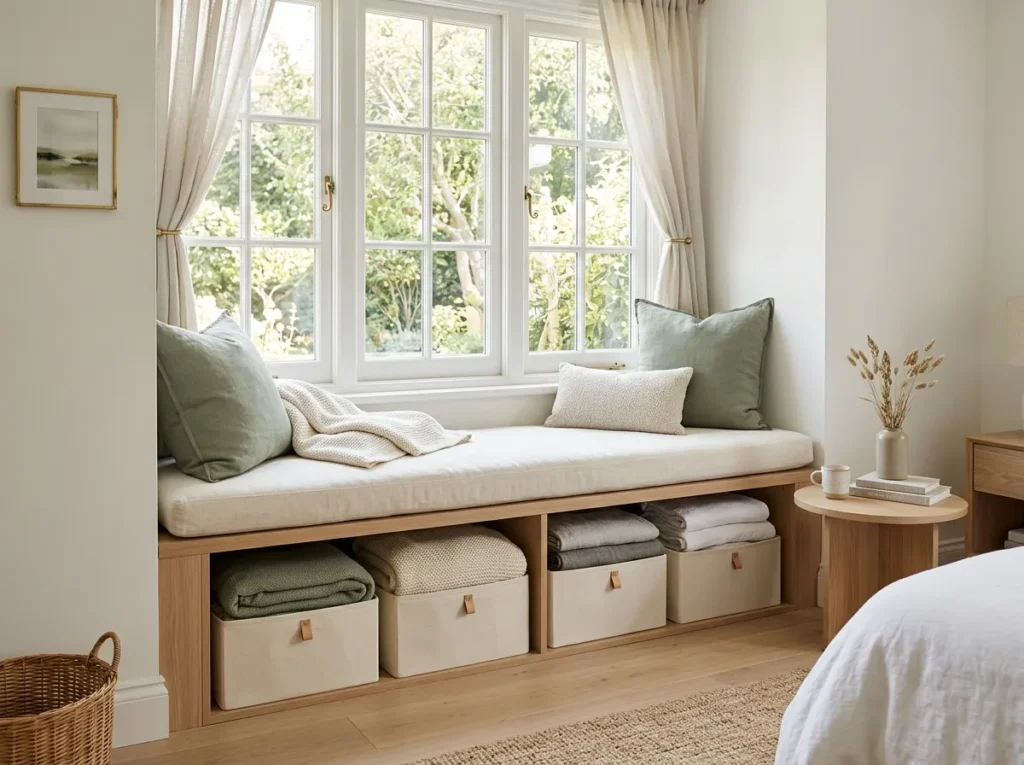
A window seat with hidden compartments can combine relaxation, decoration, and useful textile storage in one thoughtful design. Store folded blankets beneath the cushioned seat, keeping them close to a reading nook or bedroom window. This approach is especially effective in homes where awkward corners or unused window areas need a clear purpose. Choose lift-up panels or pull-out drawers based on how often you access the contents. Soft upholstery and coordinated cushions can make the seat feel like a comfortable focal point rather than simply a storage solution.
When planning this setup, consider ventilation, moisture, and the amount of space available inside the compartment. Use breathable fabric bags if blankets will remain stored for long periods, and avoid packing them too tightly. Keep everyday throws towards the front so they can be reached without removing everything else. I’ve seen this arrangement work particularly well in peaceful reading spaces because the blankets remain close but visually concealed. With matching fabrics and simple colours, the window seat can make the entire room feel more intentional and inviting.
Storage Ottoman
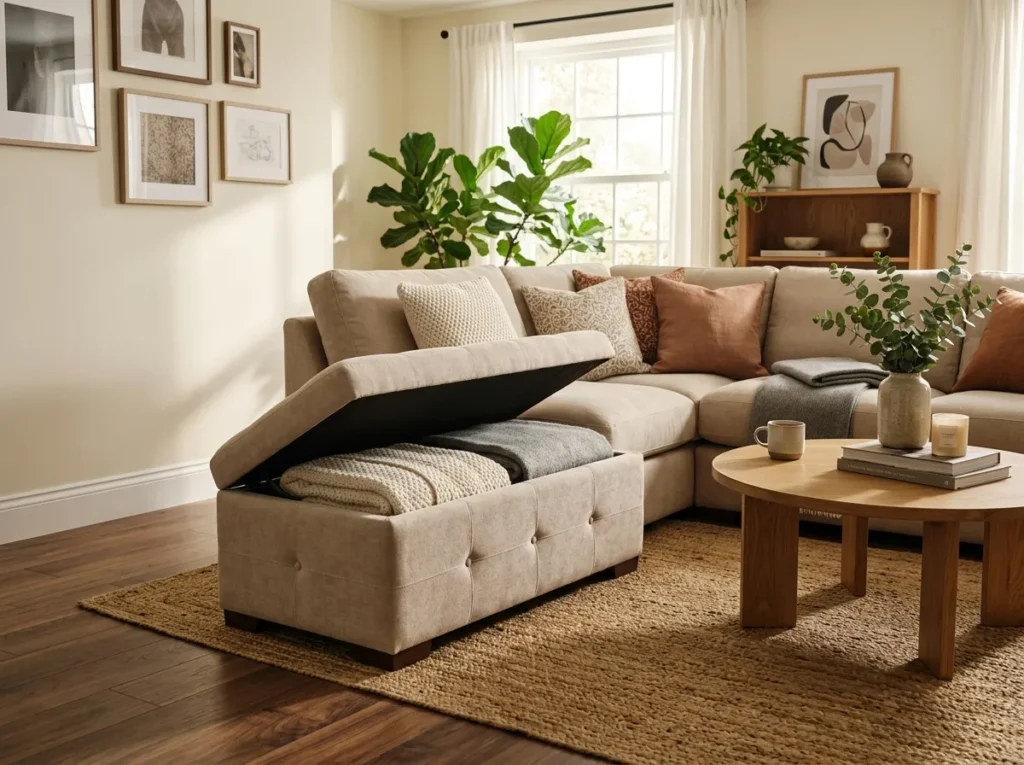
A storage ottoman can solve two common problems at once: limited storage and unused living room space. Place one near the sofa and use its hidden compartment for folded blankets, seasonal throws, or spare cushions. Because the ottoman can also serve as a footrest or occasional seat, it adds practical value without requiring another large furniture piece. Choose a shape that fits your room’s layout, such as a rectangular design for larger sofas or a compact round version for smaller spaces.
For a neat interior, fold blankets into similar sizes before placing them inside the ottoman. Avoid filling the compartment too tightly, as this can make the lid difficult to close and may damage delicate fabrics. Select upholstery that complements your sofa and curtains for a coordinated appearance. In my experience, neutral colours such as oatmeal, taupe, and charcoal blend easily with different decorating styles. Keep frequently used blankets near the top so retrieving them remains effortless during relaxing evenings or unexpected visits.
Decorative Storage Trunk
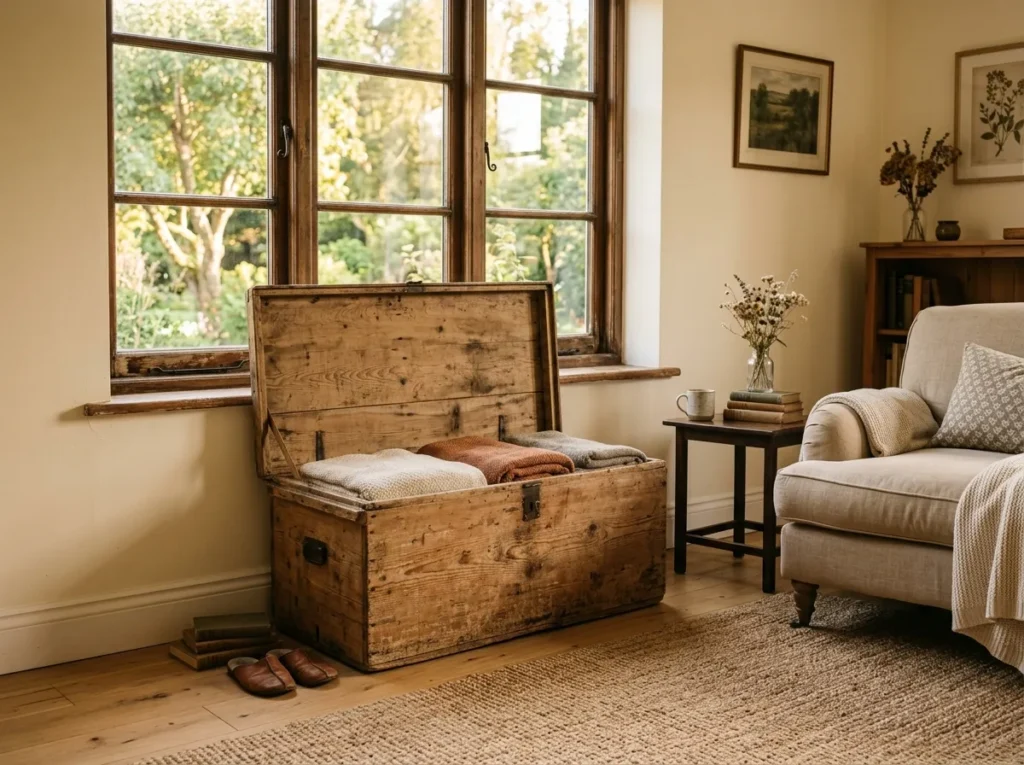
A decorative storage trunk is a practical option when you need room for thick blankets but want your furniture to feel visually interesting. Wooden trunks, vintage-style chests, and woven storage cases can hold larger textiles that may not fit inside ordinary baskets. Position one at the end of a bed, beneath a window, or against an empty living room wall. Its solid structure provides generous capacity while adding character through natural wood, metal hardware, or textured finishes.
Before storing blankets inside, make sure they are completely dry and clean to reduce the risk of unpleasant odours or moisture damage. Fold heavier quilts loosely rather than compressing them excessively, and avoid placing the trunk in a damp area. A hinged lid makes access simple, while a flat top can provide additional display space for books, candles, or decorative trays. Choose a trunk that suits your room’s proportions so it feels intentional rather than oversized. This option combines practical capacity with a timeless decorative presence.
Behind-Door Cabinet
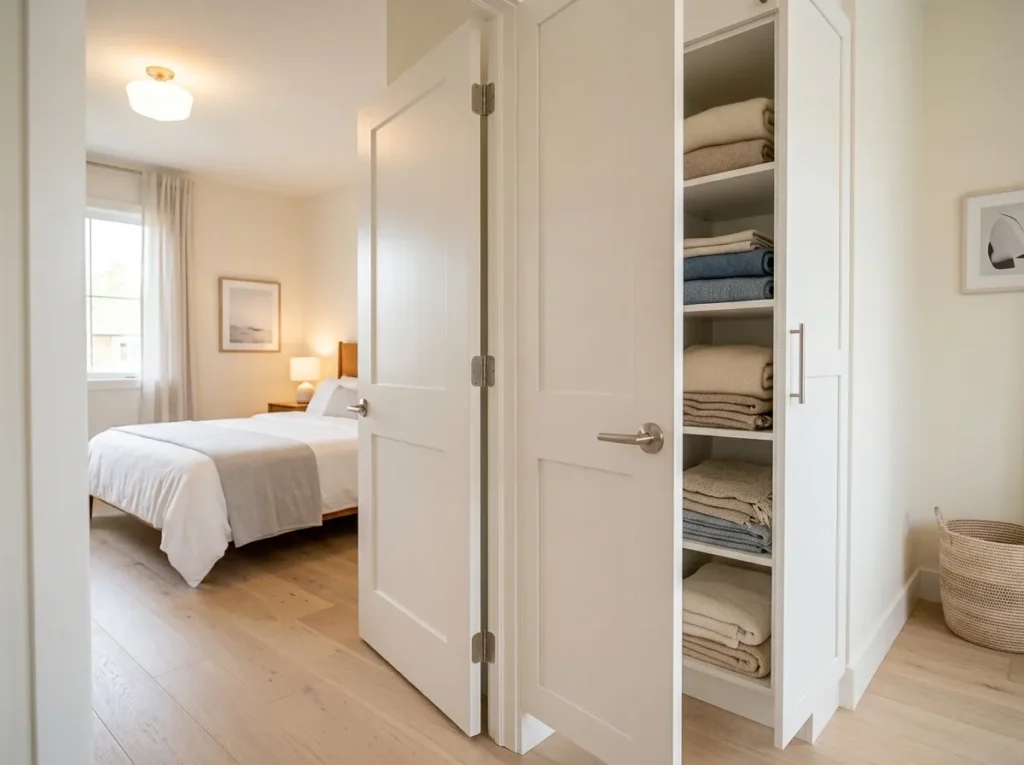
The space behind a door is often overlooked, yet it can accommodate a slim cabinet for blankets and other soft furnishings. A narrow storage unit keeps textiles hidden while preserving valuable floor space elsewhere in the room. Choose adjustable shelves so the interior can hold lightweight throws, thick quilts, and folded bedding without wasted gaps. This solution works particularly well in bedrooms, hallways, or utility areas where a full-sized cupboard would feel too large.
Measure the door swing and available wall depth before installing a cabinet. The unit should not obstruct handles, walkways, or nearby furniture when the door opens fully. Use shelf labels to separate everyday throws from seasonal blankets, and keep heavier pieces on lower levels for easier handling. A white or light-coloured cabinet can blend into the wall, creating a streamlined appearance. If you prefer a warmer style, choose natural wood finishes and simple handles. With thoughtful placement, concealed storage can improve both organisation and room flow.
Built-In Wardrobe Shelves
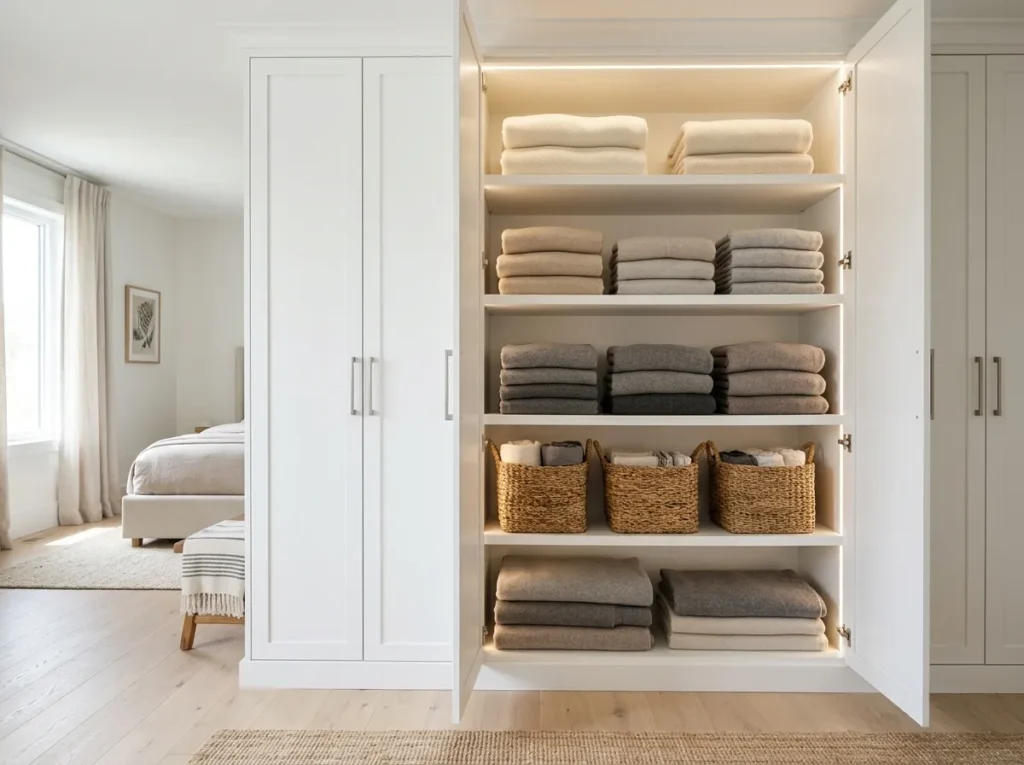
Built-in wardrobe shelves provide a dedicated place for blankets without introducing additional furniture into the bedroom. Arrange folded throws in separate sections, keeping lighter fabrics on upper shelves and heavier quilts lower down. This setup works especially well when planning a wardrobe renovation or updating an existing storage system. Adjustable shelving allows you to change the spacing as your collection grows. Choose neutral shelf finishes that blend with the wardrobe interior, creating a streamlined appearance while keeping blankets easy to locate.
For the best results, avoid pushing blankets too far into deep shelves, where they may become forgotten or difficult to retrieve. Fold each piece consistently and leave a small gap around the stack for easier handling. Storage baskets can separate seasonal items and protect delicate fabrics from dust. In my experience, placing frequently used throws at chest height makes daily routines more convenient. Keep the top shelves for occasional bedding, and review stored items periodically to prevent unnecessary accumulation. This system combines efficient capacity with a clean, organised bedroom design.
Rolling Utility Cart
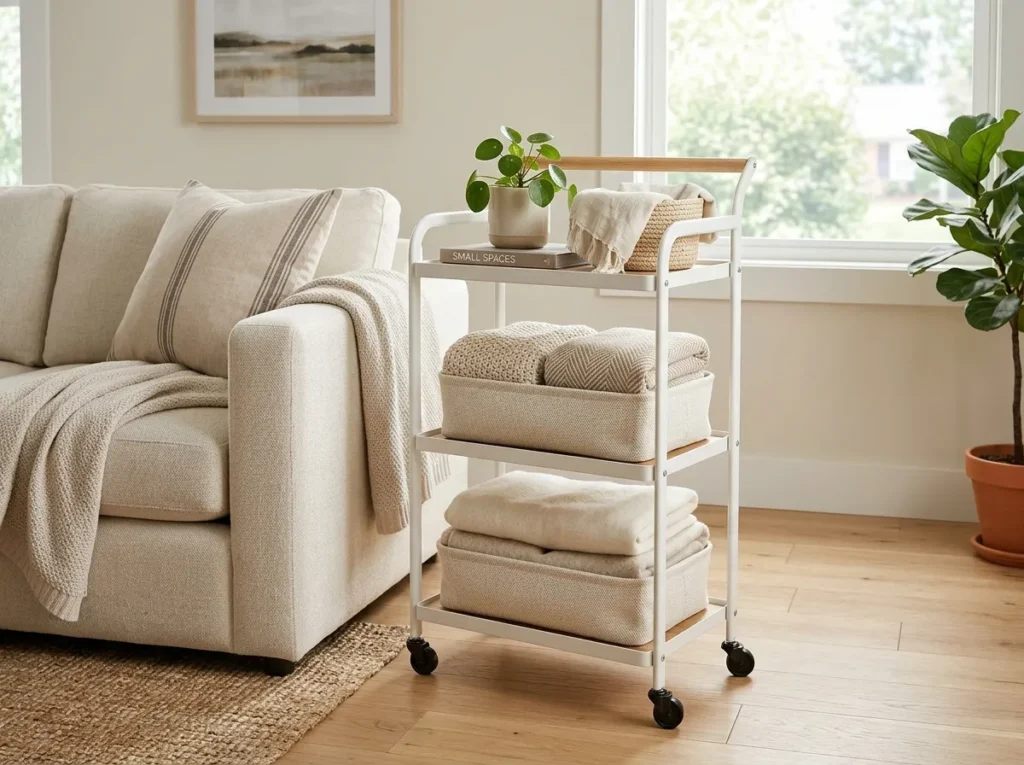
A rolling utility cart offers flexible storage for blankets when you need to move textiles between different rooms. Use one tier for everyday throws, another for guest blankets, and the lower level for larger folded pieces. Its narrow profile makes it suitable for spaces beside sofas, beds, or wardrobes where traditional cabinets may not fit. Choose a sturdy cart with smooth wheels and enough clearance between levels for easy access. Fabric baskets can help contain loose edges and create a more finished appearance.
Position the cart somewhere convenient but outside the main walking route. Lockable wheels are useful when you want the unit to remain stable while removing blankets. Avoid overloading the shelves, particularly if the cart has a lightweight frame or small wheels. You can also add labels to each basket so everyone knows where items belong. A neutral-coloured cart blends easily with different interiors, while wooden shelves introduce warmth. This mobile arrangement keeps blankets accessible and allows your storage needs to change with the room.
Blanket Storage Ladder
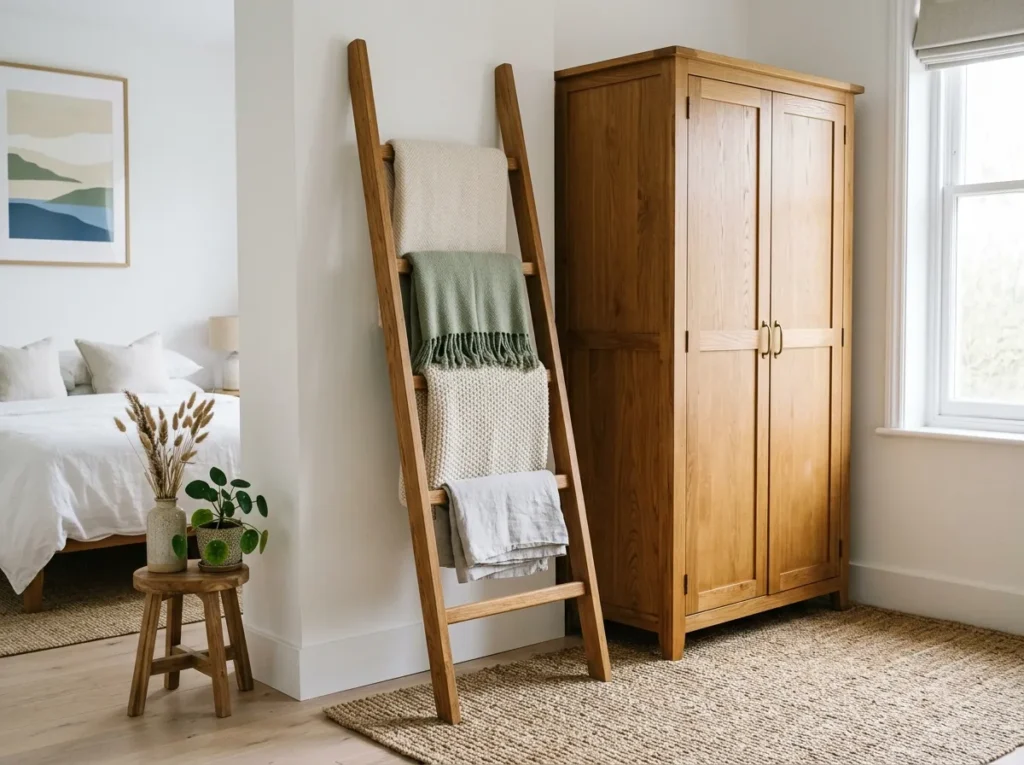
A freestanding blanket ladder provides attractive vertical storage without taking up much floor space. Drape lightweight blankets over its rungs, arranging colours and textures to complement nearby furniture. It can stand beside a bed, sofa, or wardrobe, making frequently used throws easy to reach. Wooden ladders suit rustic and Scandinavian interiors, while painted metal versions can complement contemporary rooms. This approach works best when you want storage to remain visible and contribute to the room’s overall styling.
Keep the ladder stable and position it against a suitable wall or in a low-traffic area. Avoid hanging too many heavy blankets, as excess weight may affect balance or strain the rungs. Use a consistent arrangement, placing thicker textiles lower and lighter throws higher for visual balance. I’ve noticed that limiting the display to three or four blankets prevents the setup from looking crowded. Choose fabrics that coordinate with cushions, rugs, or curtains to create a cohesive room. A carefully styled ladder combines accessibility with understated decoration.
Bedside Storage Basket
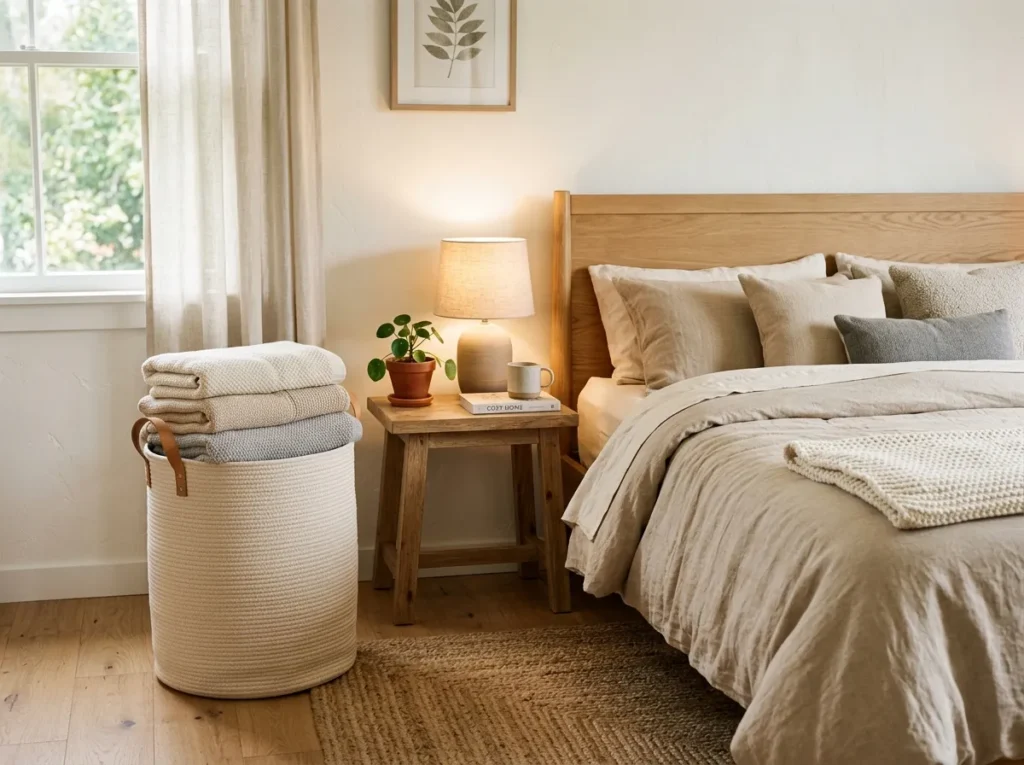
A bedside storage basket keeps additional blankets close when temperatures drop or you want an extra layer at night. Place a tall basket beside the bed, ensuring it does not block walking space or interfere with bedside furniture. Fold lightweight throws into compact stacks, or roll them loosely so they remain easy to remove. This solution suits bedrooms of different sizes because baskets are available in narrow, tall, and compact designs. Natural woven materials create warmth, while fabric baskets offer a softer and quieter appearance.
Choose a basket with a stable base and handles if you expect to move it frequently. Avoid storing damp blankets, as enclosed spaces need dry textiles to prevent unwanted smells and moisture buildup. Keep the most frequently used blanket near the top, with occasional pieces underneath. A basket that matches your bedding or flooring can become a subtle decorative feature. In my experience, placing storage where blankets are actually used makes tidying easier because returning an item requires almost no effort.
Wall-Mounted Blanket Hooks
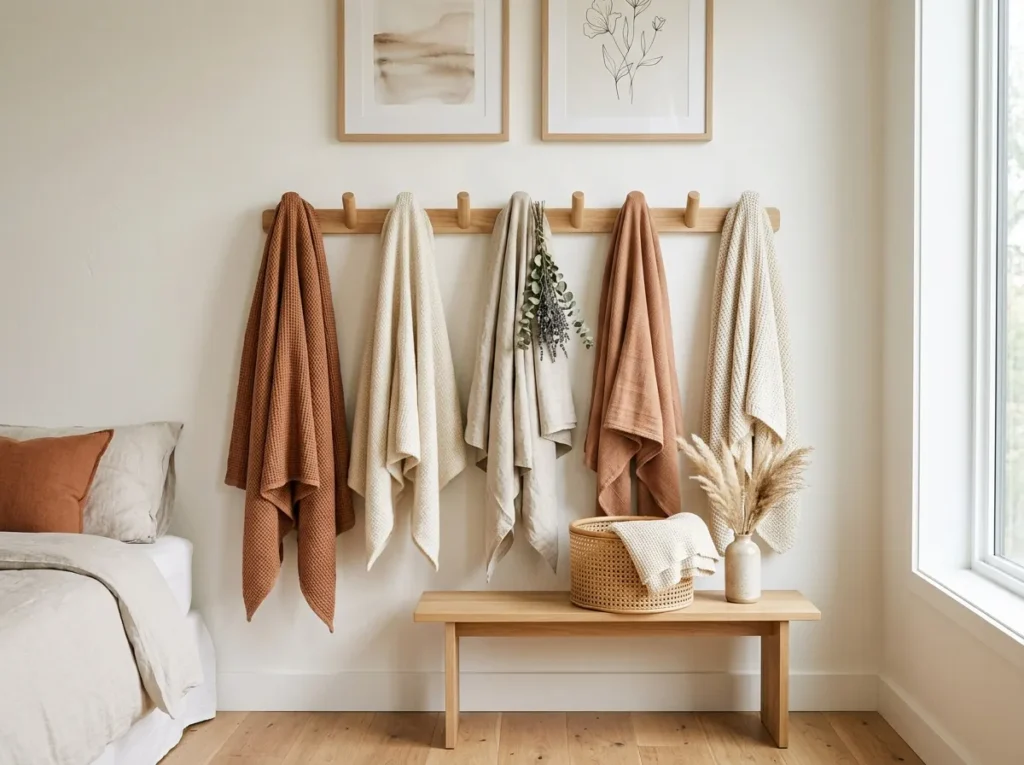
Wall-mounted hooks provide a simple storage solution for lightweight blankets and everyday throws. Install several sturdy hooks along an unused wall, beside a reading chair, or near the living room entrance. Hang blankets loosely or fold them over each hook to create a tidy, layered display. This approach works particularly well in compact rooms where baskets and cabinets would take up too much floor space. Choose wood, matte metal, or ceramic hooks that coordinate with your existing furniture and decorative details.
Before installation, check the wall type and use suitable fixings for the expected weight. Keep heavier quilts on stronger hooks and avoid overcrowding the arrangement. Limit each hook to one or two lightweight blankets so the display remains visually balanced. You can organise textiles by colour, season, or frequency of use. A row of matching hooks creates a structured look, while varied materials offer a more relaxed style. This method keeps blankets visible, accessible, and neatly integrated into the room’s design.
Rolling Blanket Cart
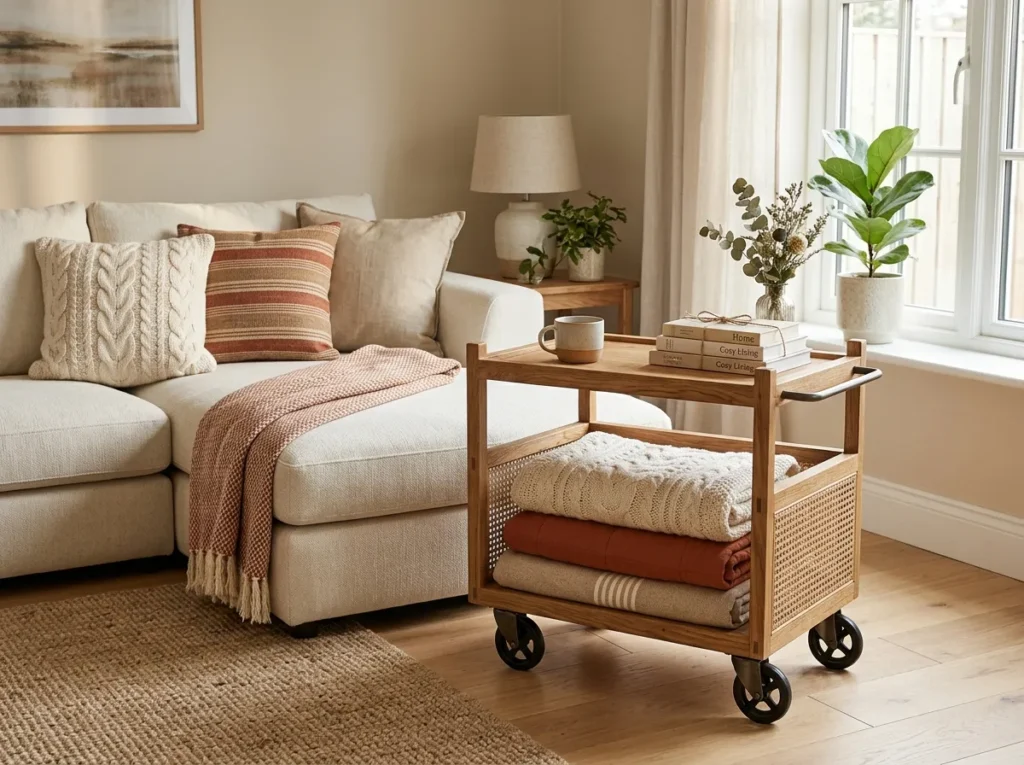
A rolling blanket cart offers convenient storage for homes where blankets are used in several different areas. Place one beside the sofa, reading chair, or television area, then move it whenever you need extra warmth elsewhere. Choose a cart with open shelves or divided compartments so folded blankets remain visible and organised. Wooden carts add warmth to traditional interiors, while metal designs suit modern or industrial spaces. Its mobility makes this option especially useful when you want storage that can adapt to changing routines.
Keep the cart positioned away from busy walkways to prevent accidental bumps. Use the upper shelf for lightweight throws and lower sections for thicker blankets, maintaining a balanced weight distribution. If the cart includes wheels with brakes, secure them when the unit is stationary. Avoid overloading each compartment, as tightly packed textiles become difficult to remove. A coordinated arrangement of neutral and seasonal colours can make the cart feel decorative rather than purely functional. This setup combines flexibility, accessibility, and practical everyday organisation.
Hidden Staircase Storage
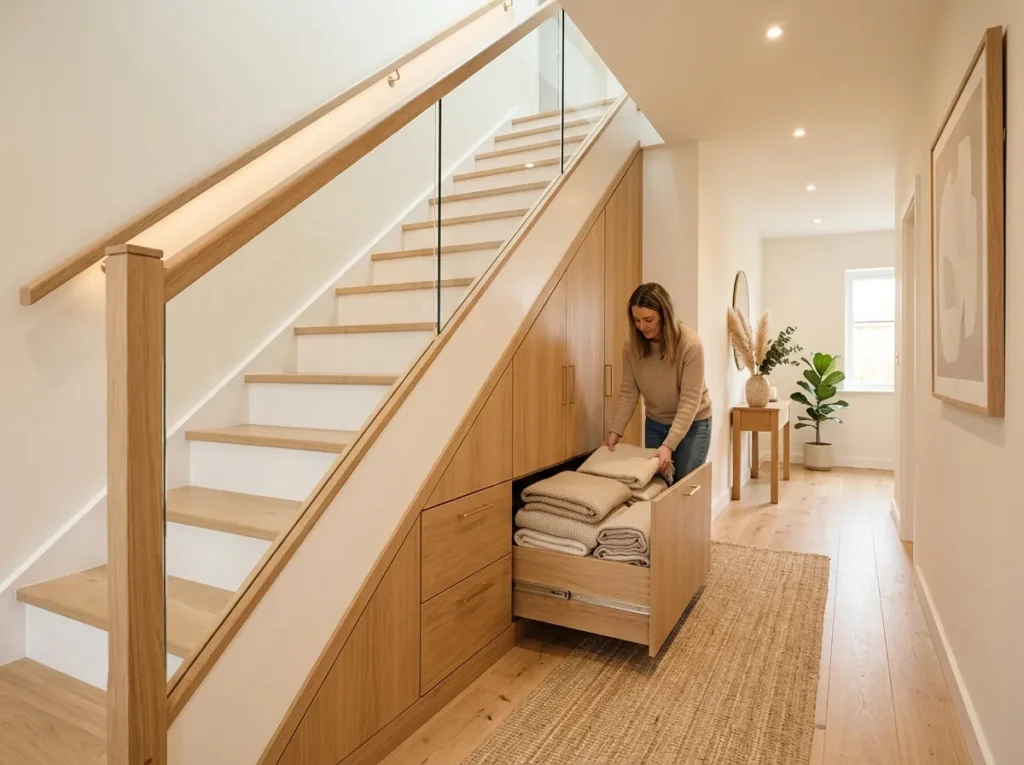
The space beneath a staircase can become valuable storage for blankets instead of collecting unused items and clutter. Built-in drawers or pull-out compartments can hold folded throws, guest bedding, and seasonal quilts while keeping everything concealed. This solution is particularly useful in homes with open-plan living areas, where visible clutter can affect the overall appearance. Use different drawer sizes to accommodate lightweight blankets and thicker bedding. A coordinated cabinet finish helps the storage blend naturally with the staircase and surrounding architecture.
Professional planning is important when converting awkward areas into built-in storage. Check available depth, ventilation, and access before installing drawers or cabinets. Use labels to separate blanket types and keep frequently used items in the easiest-to-reach compartments. In my experience, concealed storage works best when every section has a specific purpose. Avoid filling the space with unrelated household items, as this can make retrieval difficult. With thoughtful design, an overlooked architectural area can become a practical and attractive storage feature.
Decorative Blanket Chest
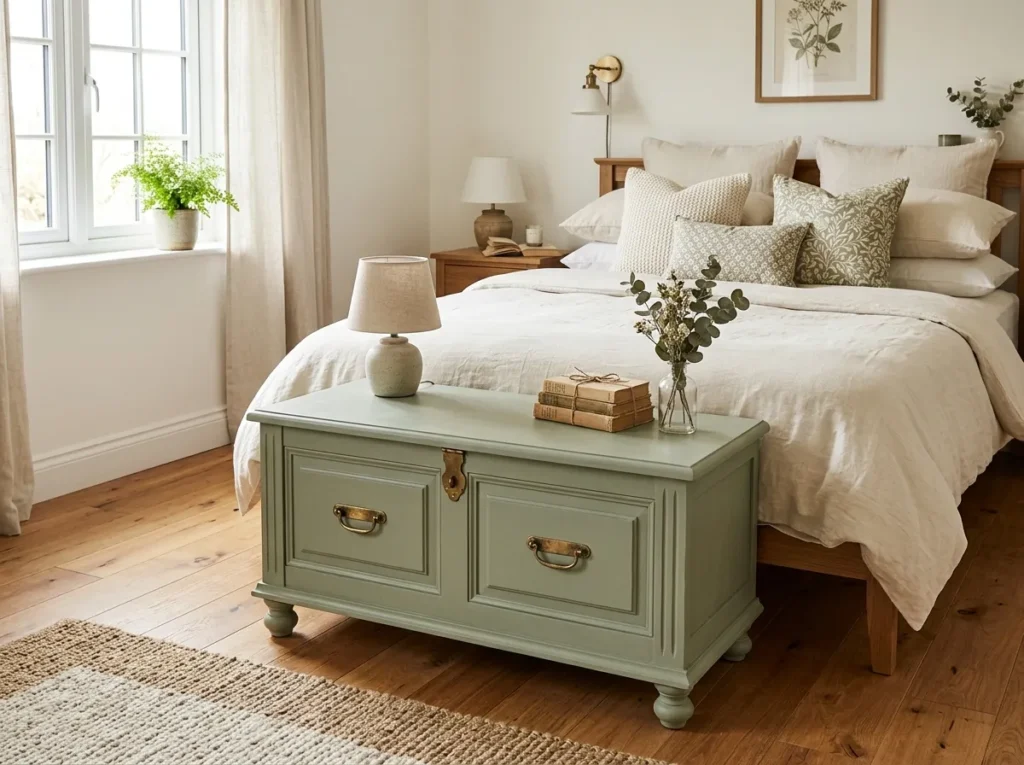
A decorative blanket chest offers generous storage while adding personality to a bedroom or guest room. Choose a wooden chest with a painted finish, natural grain, or subtle vintage details, then position it at the foot of the bed or against an unused wall. Store folded blankets inside, keeping thicker quilts at the bottom and lightweight throws above them. This approach works well when you want practical capacity without sacrificing the room’s decorative style. Select a chest size that leaves enough space for comfortable movement.
To keep the interior organised, separate blankets by season, material, or frequency of use. Make sure textiles are completely dry before storing them, especially when the chest has limited ventilation. A secure lid and smooth hardware improve everyday usability, while neutral or muted colours help the piece blend with existing décor. I’ve noticed that decorative storage works best when it serves one clear purpose. Use the chest primarily for blankets rather than miscellaneous items, allowing it to remain useful, attractive, and easy to maintain.
Basket Bench Storage
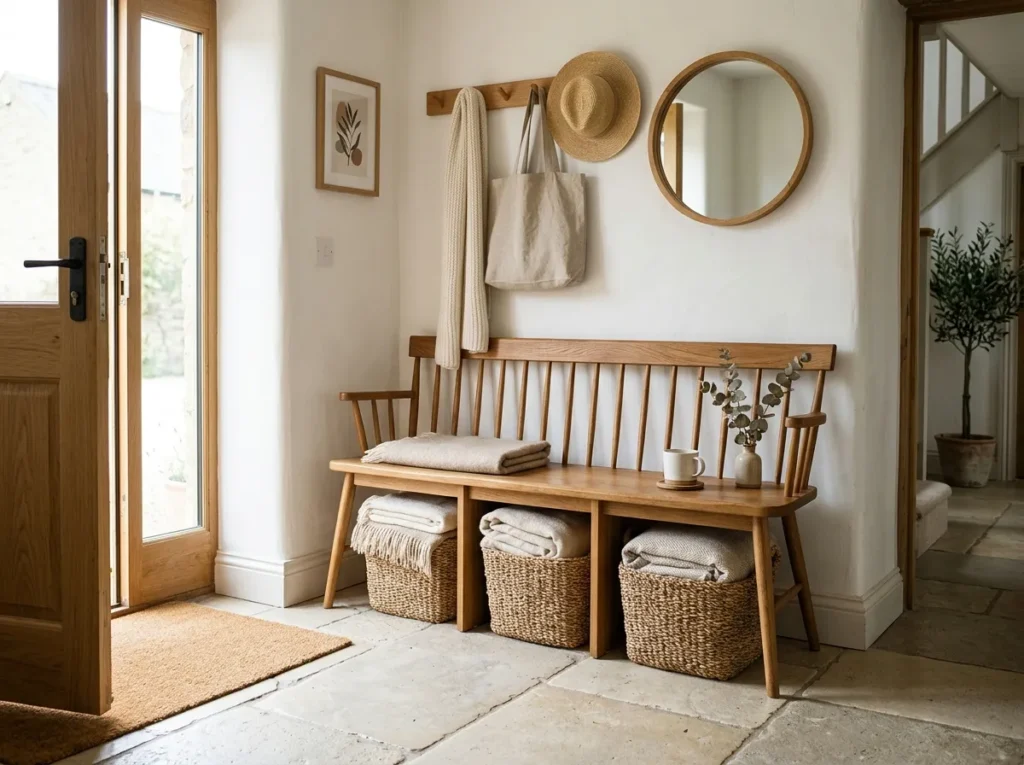
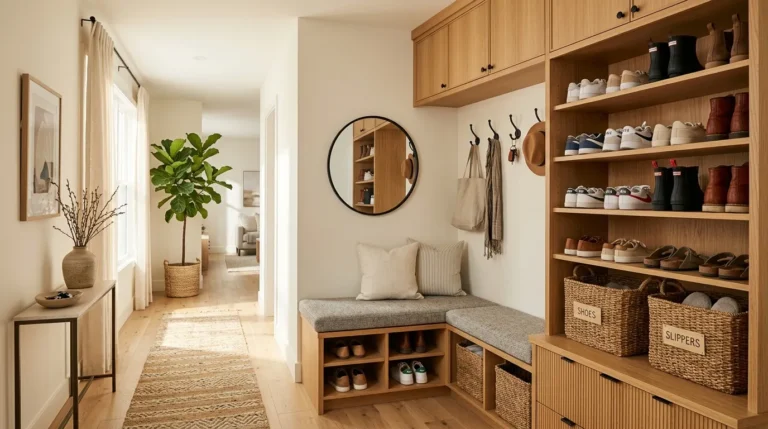
A basket bench creates useful storage while giving an empty wall or corner a clear purpose. Place woven baskets beneath the bench and fill them with folded blanket Storage Ideas, guest throws, or seasonal layers. The seating surface can hold cushions or provide a convenient place to sit while putting on shoes. This arrangement works especially well in multifunctional rooms where every piece of furniture needs to offer more than one benefit. Choose baskets that slide comfortably beneath the bench and complement the surrounding colours, materials, and textures.
For a more organised appearance, assign each basket a specific category instead of mixing every blanket together. Use larger containers for thick quilts and smaller baskets for lightweight throws. Keep frequently used pieces in the easiest-to-reach position, particularly if the bench is placed near a sofa or bedroom. Avoid overfilling the baskets, as tightly packed textiles can become difficult to retrieve. A wooden bench with neutral baskets creates a warm, uncluttered look while making everyday blanket storage simple and accessible.
Bedside Blanket Drawer
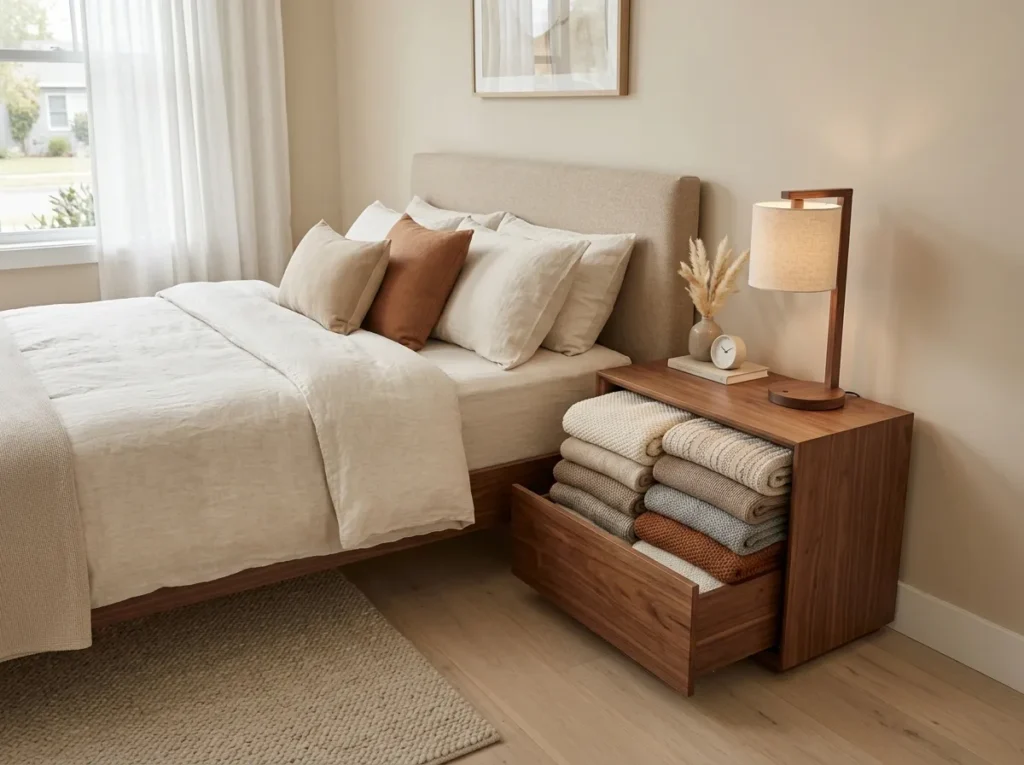
A deep bedside drawer can provide a discreet place for lightweight blankets Storage Ideas without requiring another storage unit. This option works particularly well in guest bedrooms, compact flats, or spaces where larger furniture would feel overwhelming. Fold one or two frequently used throws into compact shapes and place them inside the drawer. Choose a bedside table with enough internal depth and a smooth drawer mechanism. Keeping blankets close to the bed makes nighttime routines easier while preserving the room’s clean, uncluttered appearance.
Avoid storing too many blanket Storage Ideas in one drawer, as excessive pressure can make opening and closing difficult. Reserve the space for lightweight fabrics rather than bulky winter quilts. You can use a small fabric divider to separate different materials or colors, helping everything remain orderly. In my experience, dedicated drawers work best when they are kept for one purpose instead of becoming general storage. Match the bedside table’s finish with the bed frame or flooring to create a cohesive and balanced bedroom design.
Decorative Blanket Cabinet
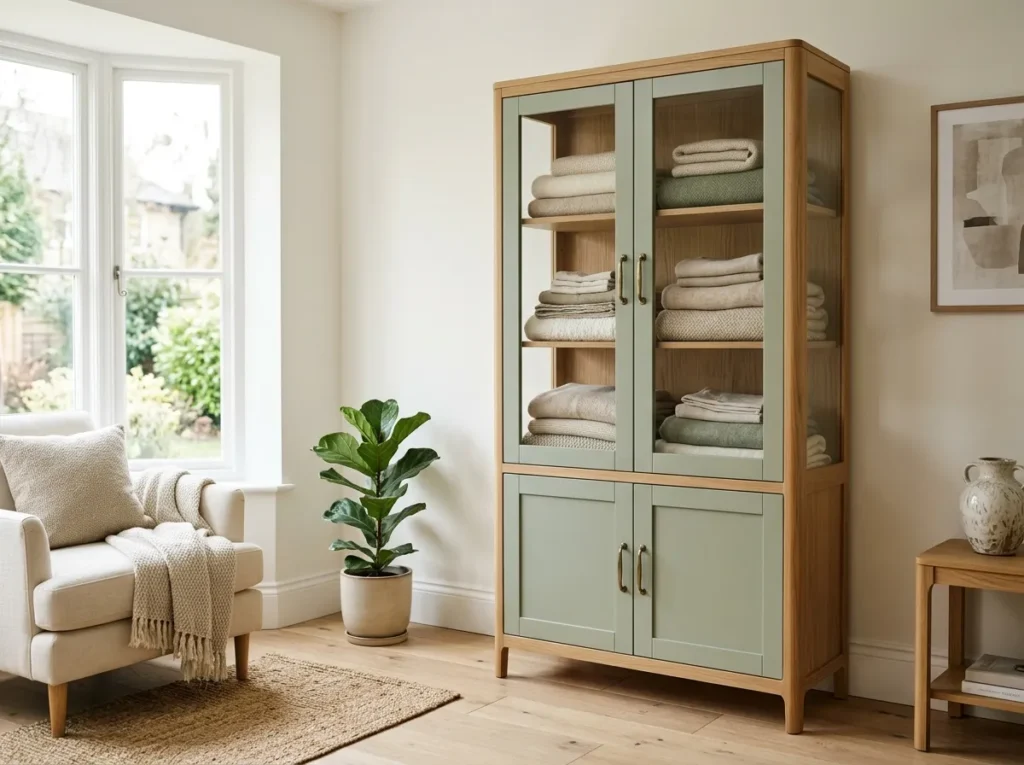
A decorative blanket cabinet provides enclosed blanket Storage Ideas while becoming an attractive part of your room’s furniture arrangement. Choose a tall cabinet with adjustable shelves so you can organize lightweight throws, thick quilts, and spare bedding efficiently. Glass-front doors allow selected textiles to remain visible, while solid doors create a more concealed appearance. Position the cabinet against an unused wall in a living room, guest room, or bedroom. A coordinated finish can make the unit feel like a deliberate design feature rather than an additional storage necessity.
Arrange blankets by size, color, or season to make the interior easy to maintain. Keep heavier pieces on lower shelves and place frequently used throws at a comfortable height. Ensure blankets are clean and completely dry before storing them inside an enclosed cabinet. Leave small gaps between stacks to prevent the shelves from appearing overcrowded. A cabinet in sage green, natural wood, or soft white can complement many decorating styles. This solution combines generous capacity, protection, and a polished visual finish.
A well-organized home doesn’t mean hiding everything away or sacrificing comfort. These Blanket Storage Ideas show how baskets, benches, cabinets, drawers, and decorative furniture can keep blankets tidy while enhancing your room’s style. Start with one solution that suits your available space and daily habits. I’ve noticed that small improvements, such as giving every throw a designated home, can make a room feel instantly calmer. Save this article on Pinterest for future inspiration, try your favorite setup, and share it with someone who loves a beautiful, organized home. Your cozier, clutter-free space can begin today!