17 Brilliant Basement Storage Ideas To End Clutter Fast
Introduction
Is your basement packed with forgotten boxes, seasonal decorations, and items that seem to have no proper home? You’re not alone. The right basement storage ideas can completely transform an overcrowded lower level into a clean, organized, and highly functional space that supports the rest of your home.
Whether you’re working with a finished basement, an unfinished storage area, or a multipurpose family space, smart organization can help you reclaim valuable square footage. In this guide, you’ll discover practical solutions that make it easier to store everyday essentials, keep clutter under control, and create a space that feels intentional rather than overwhelming. In my experience, basements often become catch-all areas because they offer so much room, but with the right systems in place, they can quickly become one of the most organized and useful parts of the home. Get ready to find inspiration, maximize every inch, and create a basement that works beautifully for your lifestyle.
More Storage Inspiration
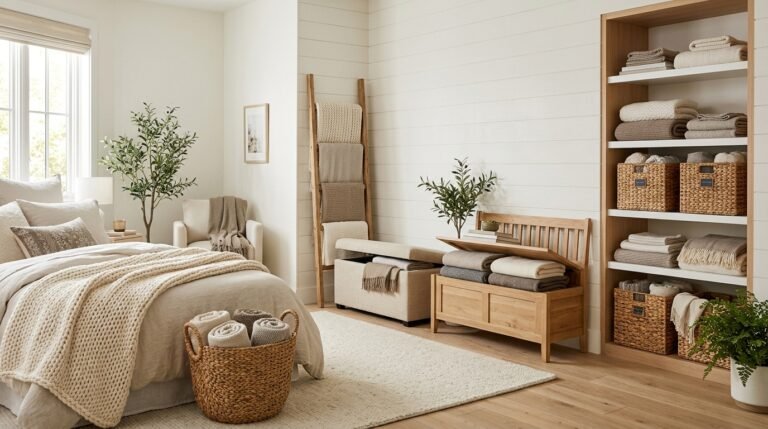
Once your basement is organized, why not tackle the clutter in another room? These bedroom storage ideas reveal clever ways to make the most of small spaces while keeping your room stylish and beautifully organized.
Under-Stair Drawers
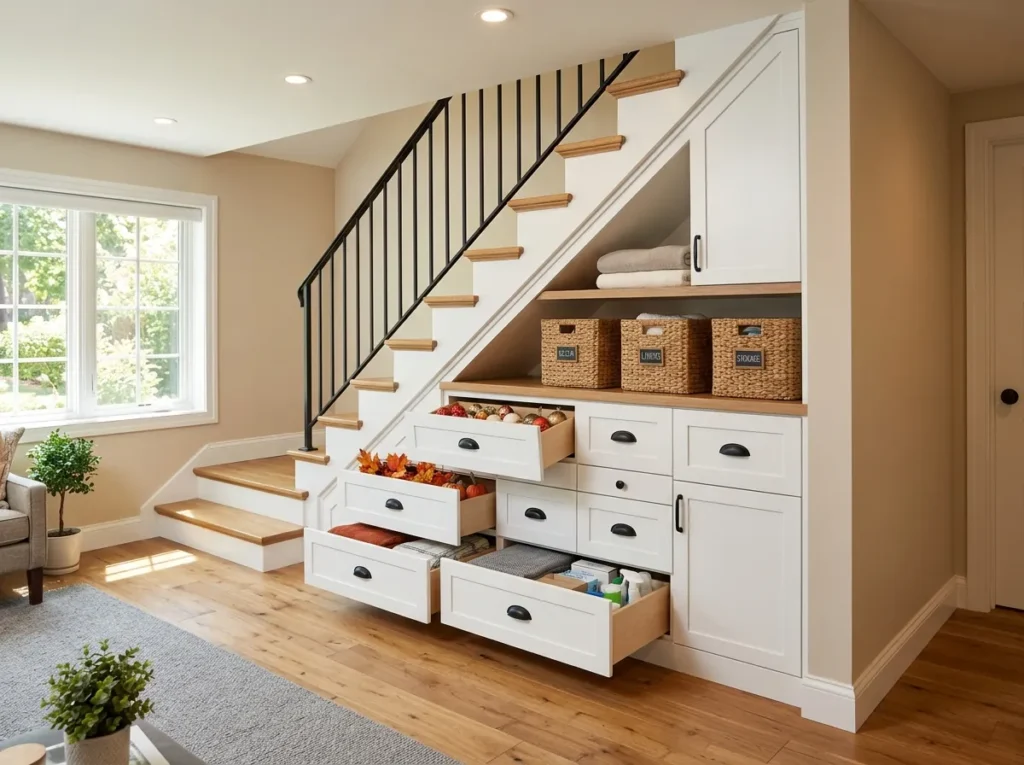
Turn the space beneath your stairs into useful storage instead of letting it become a forgotten clutter zone. Basement Storage Ideas work especially well here because angled walls naturally create small compartments for items that do not need daily access. Build shallow drawers, hinged doors, or open cubbies into the unused area, depending on the room layout. Store seasonal decorations, tools, sports gear, or spare household supplies inside. In my experience, matching the doors to nearby walls makes built-in storage almost disappear, leaving the basement looking cleaner while every awkward inch gains a practical purpose.
A custom under-stair setup can make a basement feel dramatically more organized without taking away valuable living space. Choose smooth drawer fronts, simple handles, and a finish that complements your flooring and wall color. Basement Storage Ideas like this are especially helpful when you need several small compartments instead of one oversized cabinet. Keep frequently used items near the easiest-to-reach openings and reserve deeper sections for seasonal belongings. Add a small motion-sensor light inside each compartment if the area is naturally dark. The result is tidy, accessible storage that feels intentionally designed rather than added later.
Floor-To-Ceiling Cabinets
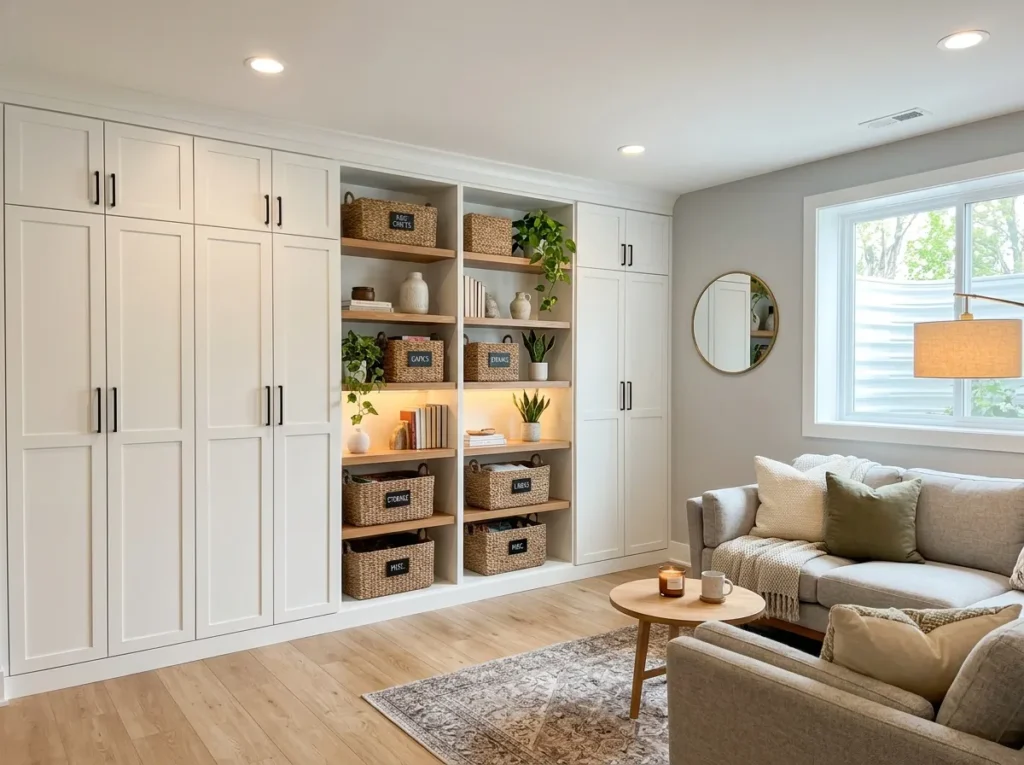
A wall of tall cabinets can instantly turn scattered basement belongings into a clean, organized backdrop. Basement Storage Ideas become much more effective when vertical space is used from floor to ceiling, especially in rooms with limited floor area. Choose closed cabinets for visually messy supplies and a few open shelves for baskets, books, or attractive decor. Use adjustable shelving so changing storage needs do not require a complete redesign. In my experience, labeling interior bins saves even more time because you can find seasonal clothing, cleaning supplies, or hobby equipment without opening every cabinet.
Keep the cabinet finish simple so the storage wall supports the room instead of overwhelming it. Basement Storage Ideas using tall cabinetry can also help define separate zones for laundry, hobbies, workouts, or general household storage. Place heavier containers on lower shelves and lighter items higher up for easier handling. If the basement has concrete flooring, add a narrow raised platform or moisture-resistant base beneath vulnerable cabinetry. Soft LED lighting under upper shelves can brighten dark corners and make the entire wall feel more welcoming. A consistent cabinet design gives even a busy basement a surprisingly polished appearance.
Basement Mudroom
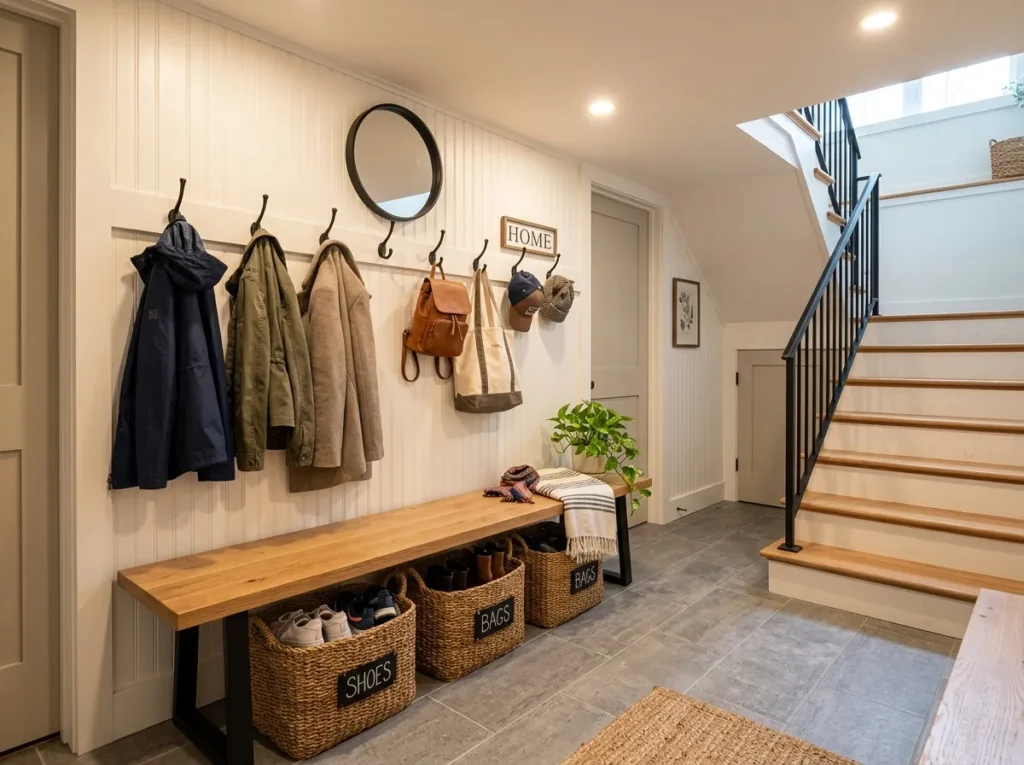
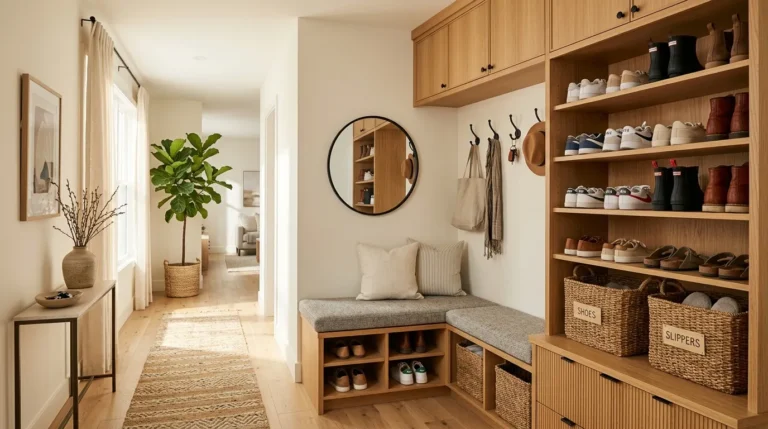
Give every pair of shoes, coat, and bag a designated landing spot with a compact entry zone near the basement stairs. Basement Storage Ideas are especially useful here because basements often become informal drop zones for items coming in from garages, gardens, or outdoor activities. Install wall hooks above a sturdy bench, then add baskets underneath for shoes, hats, gloves, and reusable bags. Choose durable finishes that can handle muddy footwear and everyday wear. I’ve noticed that storage works better when the most frequently used items are visible and reachable, rather than hidden behind doors that nobody wants to open.
A small mudroom-style station can make the transition between the outdoors and the rest of the house feel much more controlled. Basement Storage Ideas like this create a visual boundary for clutter while giving each household member an obvious place to put belongings. Use washable cushions, moisture-resistant flooring, and labeled baskets to keep maintenance simple. Add a narrow shelf above the hooks for keys or seasonal accessories, but avoid overcrowding the wall. A warm wood bench paired with neutral baskets can soften a utilitarian basement, turning an everyday storage corner into a useful and attractive part of the home.
Pegboard Tool Wall
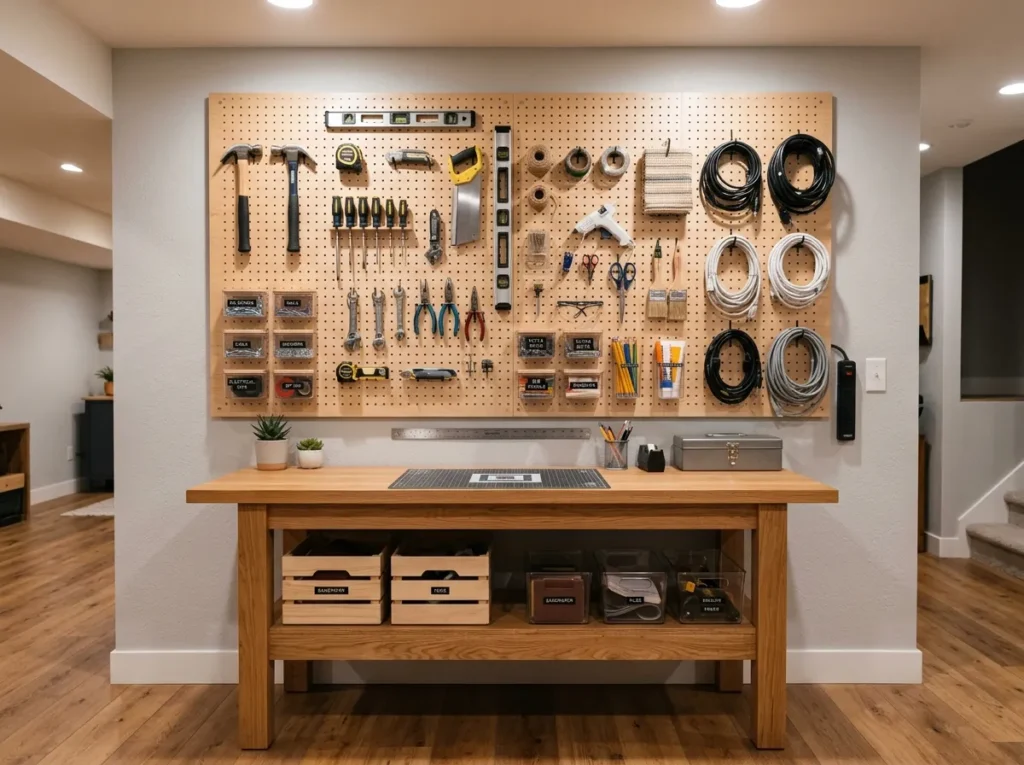
A pegboard can turn a forgotten basement wall into a highly functional organization station. Basement Storage Ideas like this are ideal for tools, craft supplies, gardening equipment, cables, and small household items that tend to disappear into crowded drawers. Mount a sturdy board above a workbench or along a utility wall, then arrange hooks and shelves according to the items you use most. In my experience, keeping frequently handled tools visible makes small projects much easier to start and finish. Use matching containers for screws, nails, and other tiny pieces to keep the entire wall looking controlled.
The biggest advantage is flexibility because the arrangement can change as your storage needs evolve. Instead of drilling permanent shelves into several locations, you can move hooks, baskets, and small shelves around the pegboard whenever necessary. Basement Storage Ideas should adapt to real household routines, especially in multipurpose rooms. Keep heavier tools on reinforced sections and lighter accessories higher up. Add a narrow work surface underneath for repairs or crafting, then use drawers below for less attractive supplies. With a consistent color palette and clear spacing, a practical tool wall can look surprisingly stylish while making the basement far easier to use.
Rolling Storage Carts
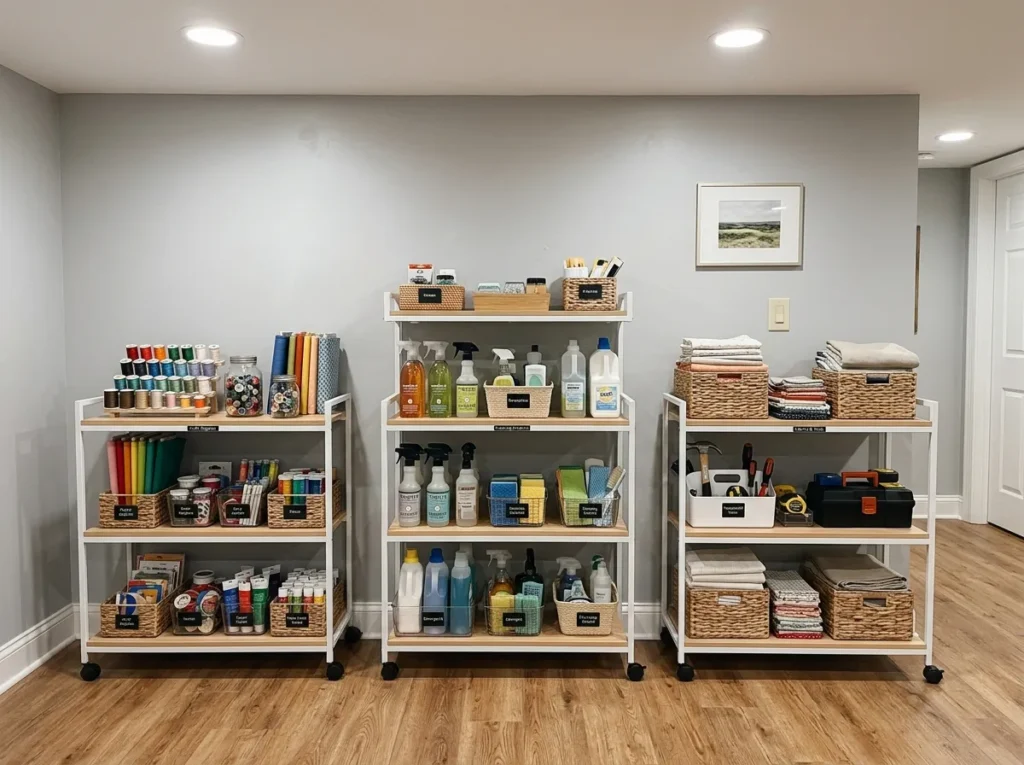
Rolling carts are a simple way to make flexible storage work harder in a busy basement. Choose narrow carts with several shelves and smooth locking wheels, then dedicate each one to a specific category such as crafts, cleaning supplies, laundry, or hobby equipment. Basement Storage Ideas become more practical when storage can move with the task, especially in rooms that serve multiple purposes. Keep the heaviest items on the bottom shelf and smaller containers above. I’ve noticed that mobile carts are particularly useful when one basement area regularly changes from a workspace into a family activity zone.
Choose carts with finishes that coordinate with the rest of the room so they feel like part of the design rather than temporary utility pieces. Metal frames work well in modern spaces, while wood shelves add warmth to more relaxed interiors. Basement Storage Ideas using rolling carts can also reduce unnecessary bending because commonly used supplies remain at comfortable heights. Add labeled baskets to prevent small items from becoming mixed together. When guests arrive or the room needs more open floor space, simply roll the carts against a wall. This small amount of flexibility can make a multipurpose basement feel considerably less crowded.
Closet Organizer System
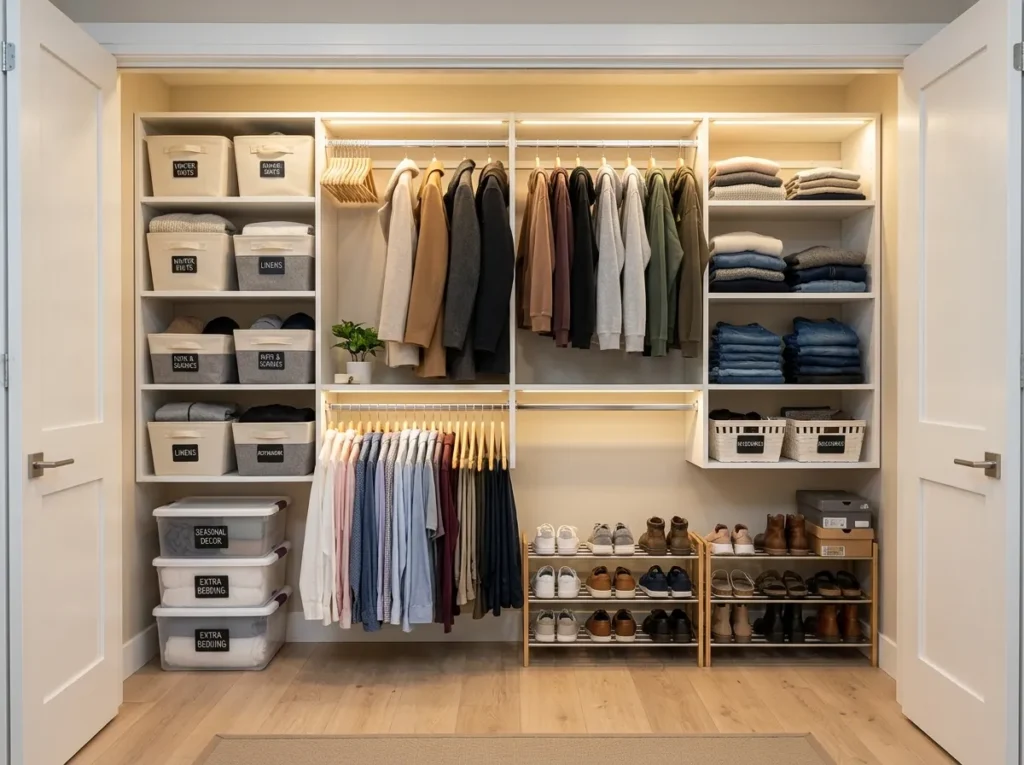
An existing basement closet can become far more useful with a simple modular organizer system. Basement Storage Ideas often fail when one large shelf is expected to handle every category, so divide the closet into clear zones instead. Add adjustable shelves for folded clothing, hanging rods for coats, cubbies for shoes, and labeled bins for seasonal belongings. Use the vertical space above eye level for items you rarely need. A modular system also makes it easier to adapt when your storage needs change. In my experience, clear categories make even a small closet feel larger because every item has an obvious destination.
Lighting can make a surprising difference inside a basement closet, particularly when the room has little natural daylight. Install motion-activated LED strips or a compact ceiling light so you can see every shelf clearly. Basement Storage Ideas should make finding things easier, not simply hide clutter behind doors. Keep everyday items between waist and shoulder height, while reserving upper shelves for decorations or seasonal supplies. Matching bins can create a calmer visual appearance, even when the closet contains many different belongings. Once organized, the closet becomes a dependable storage zone instead of another place where clutter disappears and gets forgotten.
Built-In Media Storage
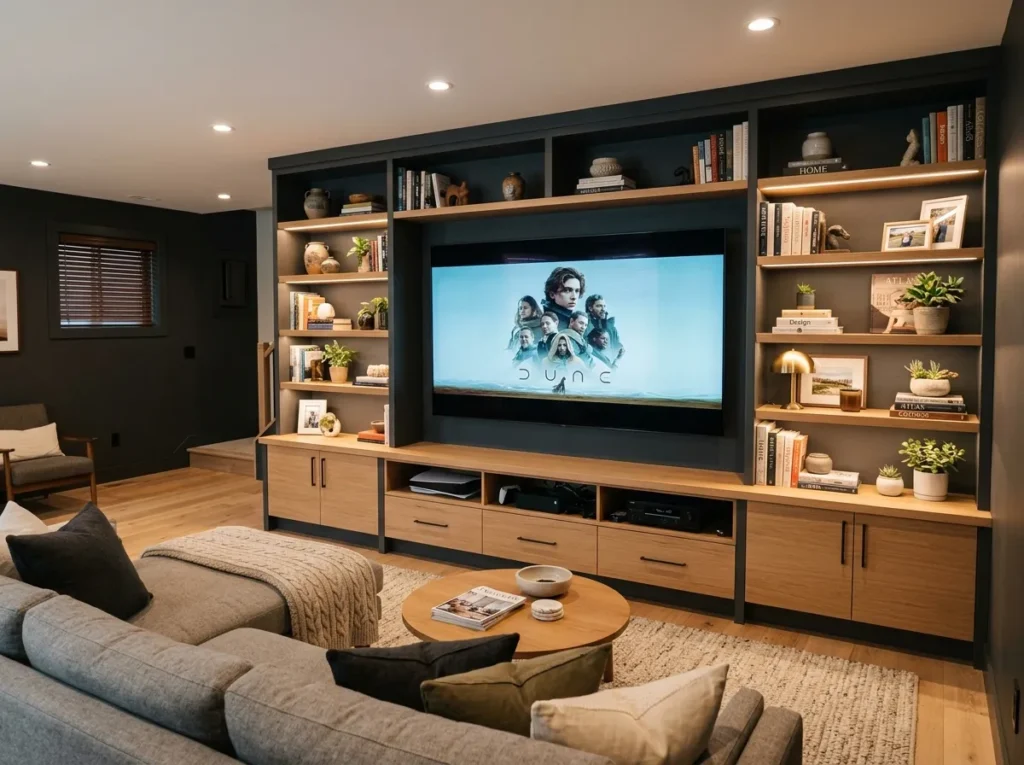
A built-in media wall can turn scattered entertainment equipment into a clean, organized feature that anchors the basement. Basement Storage Ideas for media rooms should combine concealed compartments with a few open shelves, giving you places for gaming consoles, controllers, movies, books, and decorative pieces. Closed drawers are ideal for cables and accessories that create visual clutter, while ventilated cabinets can protect electronics from dust. Choose cabinetry that matches the room’s flooring or furniture for a cohesive appearance. The goal is to make storage feel like part of the architecture rather than another collection of furniture.
Think beyond the television itself when planning this type of storage. Basement Storage Ideas work best when every piece of equipment has a logical home, so include cable management, ventilation, and adjustable shelves from the beginning. Keep frequently used controllers and games in accessible drawers, while less-used equipment can occupy higher cabinets. Warm LED lighting inside open shelves adds a subtle glow without making the room feel overly bright. A balanced combination of closed storage and carefully styled shelves can make the entire media area feel calmer, more spacious, and much easier to maintain after movie nights or gaming sessions.
Under-Stairs Shelving
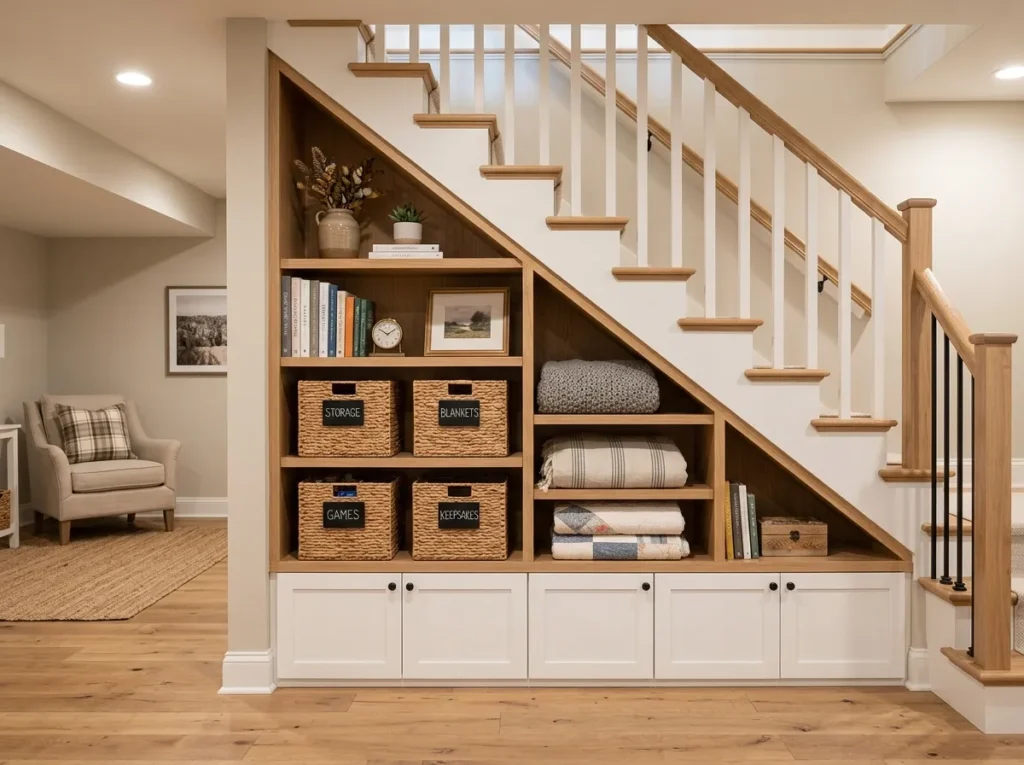
The empty area beneath a basement staircase can become one of the most useful storage zones in the entire room. Basement Storage Ideas like open shelving make this awkward space practical without making the basement feel smaller. Install shelves at different heights to follow the staircase angle, then use baskets for smaller belongings and open sections for books, blankets, or attractive decor. Keep frequently used items on the lower shelves and reserve higher spaces for seasonal pieces. In my experience, matching the shelving finish to nearby furniture makes built-in storage look intentional rather than like an afterthought.
Open shelving works particularly well when you want quick access without repeatedly opening cabinet doors. Basement Storage Ideas should balance convenience with visual calm, so use matching baskets to contain smaller or less attractive belongings. Leave some shelves partially empty instead of filling every available inch, giving the arrangement room to breathe. Add warm LED strip lighting underneath selected shelves if the staircase creates shadows. The finished installation can make a previously awkward corner feel purposeful while providing a useful home for household supplies, reading materials, games, and soft furnishings that would otherwise end up scattered around the basement.
Labeled Storage Bins
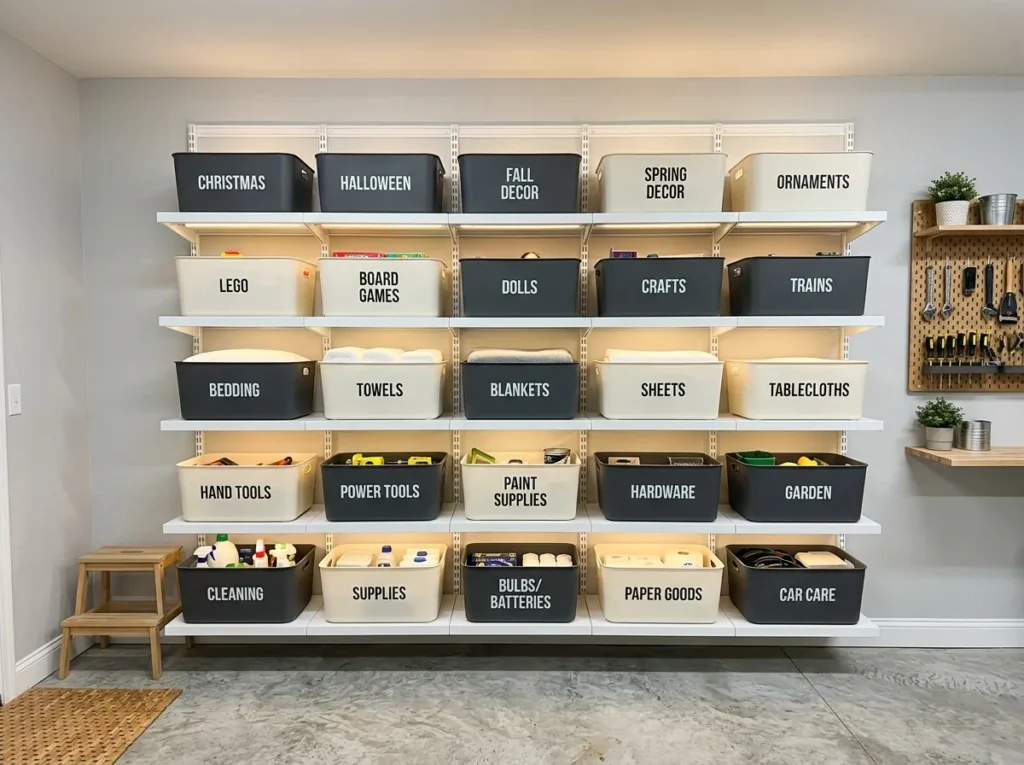
Uniform storage bins can make even a crowded basement shelving unit look instantly more controlled. Choose durable plastic or fabric containers in one coordinated color, then add clear labels for categories such as holiday decorations, toys, linens, paperwork, or tools. Basement Storage Ideas become much easier to maintain when you can identify a container without opening it first. Use larger bins for lightweight bulky items and smaller containers for loose accessories. I’ve noticed that consistent labels are especially helpful in family homes because everyone can quickly see where something belongs instead of creating new piles around the room.
Arrange the bins by frequency of use, keeping everyday belongings at comfortable reach and seasonal items higher up or farther back. Basement Storage Ideas should reduce the time spent searching, so avoid vague labels such as “miscellaneous” whenever possible. Instead, create specific categories that reflect how your household actually uses the space. Leave a little empty capacity in each container so future additions do not create overflow. Matching bins also create a calmer visual line across open shelves, making the basement feel more finished while quietly containing the small pieces of clutter that tend to accumulate over time.
Laundry Folding Station
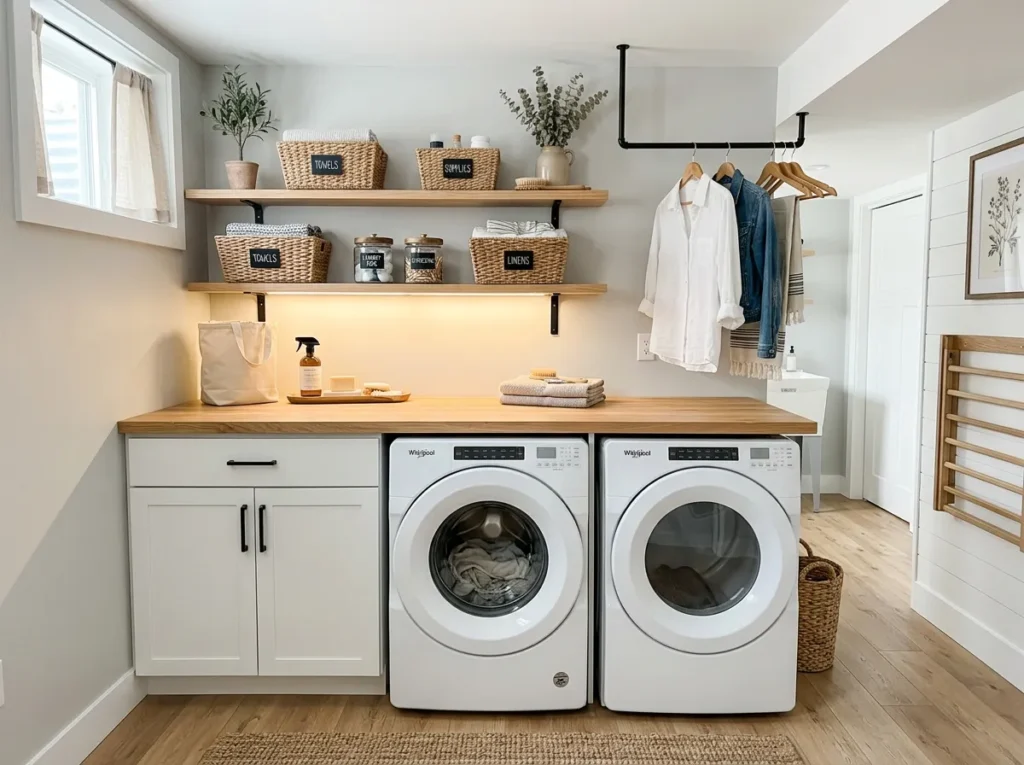
A dedicated folding counter can make a basement laundry area dramatically easier to manage. Basement Storage Ideas for laundry spaces should create a clear workflow, with washing, drying, folding, and storing arranged close together. Install a sturdy countertop above front-loading machines, then add cabinets or shelves nearby for detergents, towels, cleaning cloths, and laundry baskets. Keep frequently used products within comfortable reach and store backup supplies higher up. A durable wood, laminate, or quartz surface can provide a generous folding area while also making the laundry corner look more like a thoughtfully designed room.
Use the surrounding walls to add even more organization without crowding the floor. Basement Storage Ideas can include a slim hanging rail for clothes that need air-drying, hooks for reusable bags, and labeled baskets for each household member. Choose moisture-resistant materials because basement laundry rooms can experience humidity. Keep cleaning products secured and separate from clothing or linens. In my experience, giving every stage of laundry its own small zone prevents clean clothes from sitting in piles while you search for space. A well-planned folding station turns an ordinary utility area into a smooth, efficient part of the home.
Ceiling Storage Racks
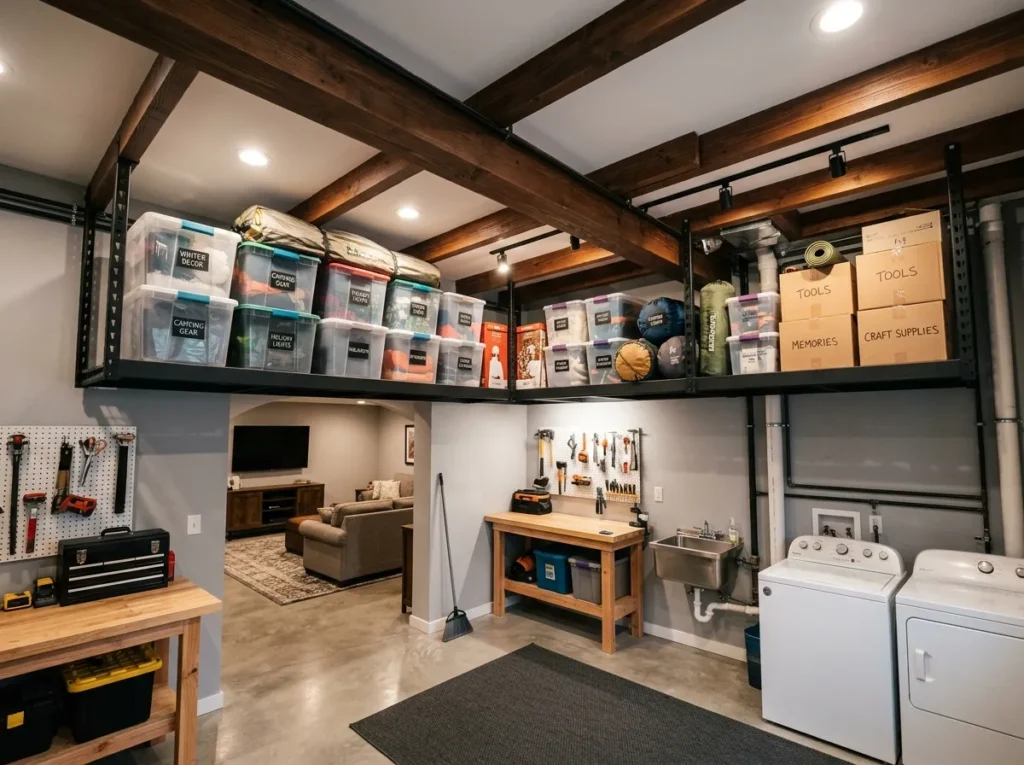
Look upward when the basement floor is already crowded, because ceiling space can provide valuable room for belongings you rarely need. Ceiling-mounted racks can hold lightweight seasonal decorations, camping equipment, empty luggage, and other infrequently used items. Basement Storage Ideas like this are especially useful in unfinished utility areas where exposed beams and open ceilings already provide mounting opportunities. Use sturdy, properly installed racks and keep heavy or frequently handled objects at ground level. Clearly labeled containers make retrieval easier, while consistent bins create a cleaner appearance when the storage is visible from below.
Safety and accessibility should come first when using overhead storage in a basement. Basement Storage Ideas involving ceiling racks should leave adequate clearance for people, doors, lighting fixtures, ductwork, and other equipment. Avoid storing anything excessively heavy above occupied areas, and make sure the mounting system is appropriate for the ceiling structure. Reserve the racks for items you only need occasionally, such as holiday decorations or spare luggage. By moving low-priority belongings upward, you can free valuable floor space for living, hobbies, or laundry while keeping the basement noticeably more open and functional.
Open Utility Shelves
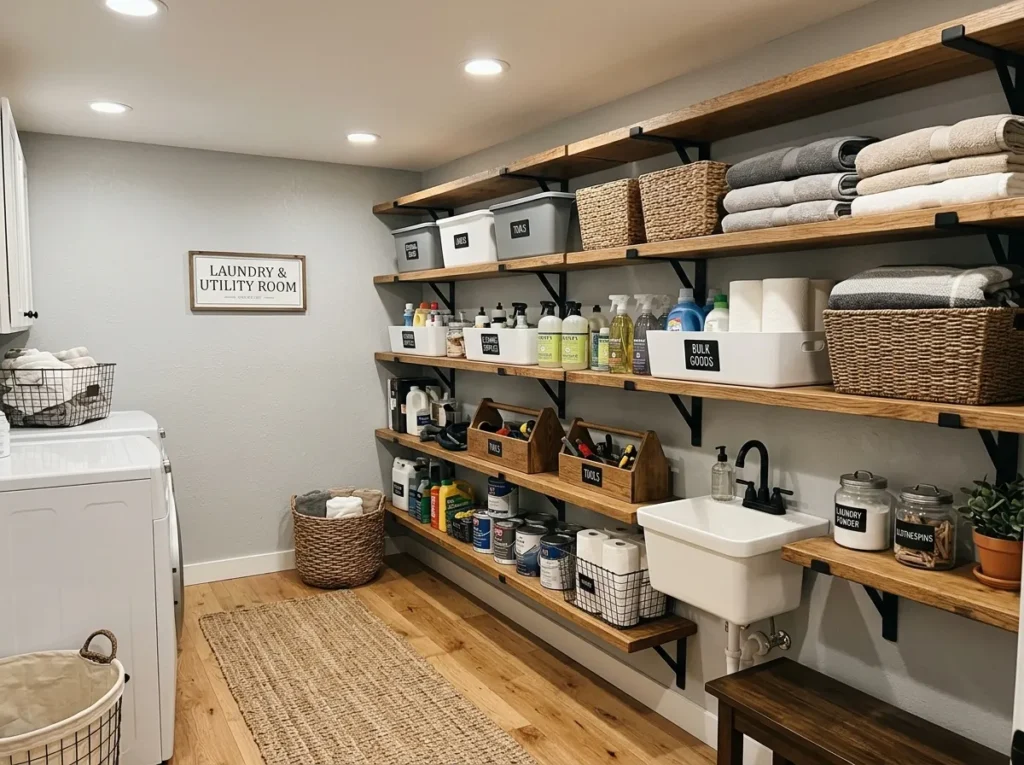
Open shelving can make a basement storage area feel accessible instead of closed off and difficult to navigate. Basement Storage Ideas using sturdy shelves are particularly helpful for household supplies, linens, cleaning products, tools, and containers that you reach for regularly. Choose shelves deep enough for your largest items but not so deep that belongings disappear at the back. Use matching baskets to group smaller pieces and leave some open space between categories. In my experience, open shelves work best when frequently used items stay at eye level and less-used supplies occupy the upper sections.
A consistent shelf arrangement can also create a surprisingly attractive feature in an otherwise practical basement. Basement Storage Ideas should combine easy access with visual order, so avoid packing every shelf completely full. Use neutral baskets, simple labels, and a limited color palette to keep the wall looking calm. Reserve the lowest shelves for heavier containers and items that are safe to lift from floor level. If the basement has humidity concerns, choose moisture-resistant materials and keep stored goods away from damp walls. The result is an efficient storage system that makes finding household essentials quicker and keeps clutter from spreading.
Hidden Laundry Cabinets
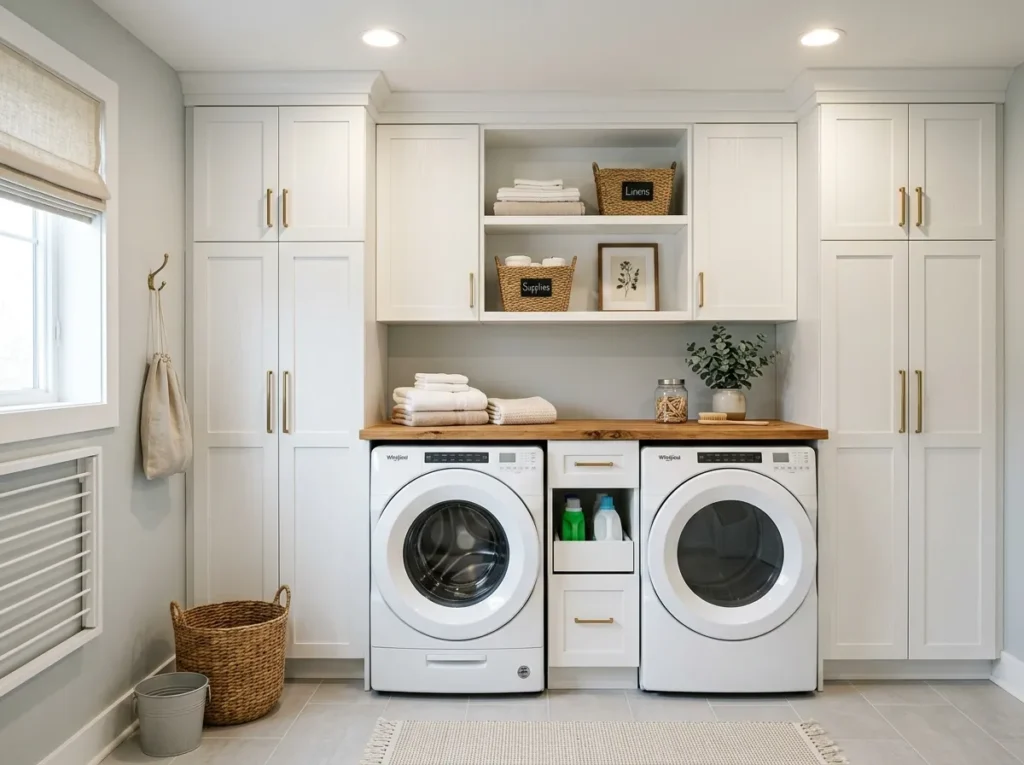
Closed cabinets can transform a busy basement laundry area by hiding the everyday products that tend to accumulate around the machines. Basement Storage Ideas for laundry rooms should include dedicated compartments for detergents, stain removers, towels, cleaning cloths, and spare linens. Floor-to-ceiling cabinets make excellent use of vertical space while keeping the room visually quiet. Choose moisture-resistant materials and easy-clean finishes because laundry areas can become humid and messy. Keep frequently used supplies near the washer and dryer, while storing backup products on higher shelves where they remain accessible but out of the way.
For a cohesive finish, coordinate cabinet colors with the countertop, flooring, and nearby walls. Basement Storage Ideas can make a utility room feel more like a finished part of the home when practical storage is integrated into the overall design. Add pull-out baskets for dirty laundry or narrow drawers for small supplies if space allows. I’ve noticed that concealed storage is especially helpful when a basement laundry room is visible from a hallway or living area. Once the doors close, bottles, baskets, and spare products disappear, leaving a cleaner room that feels easier to maintain.
Hobby Supply Wall
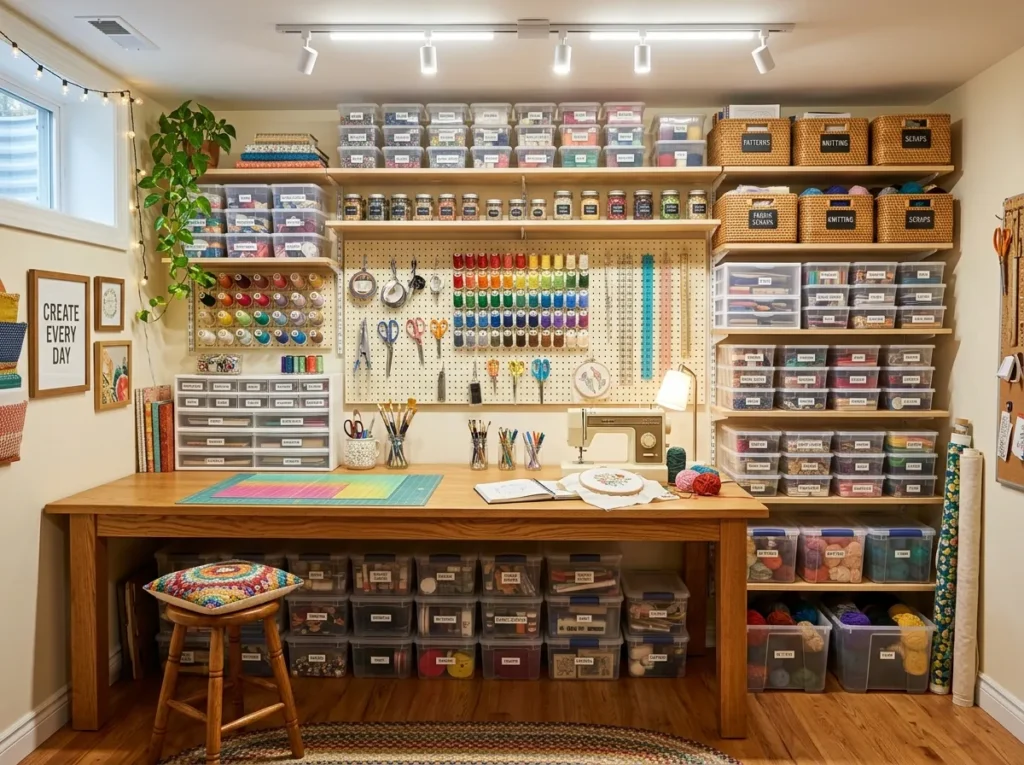
A dedicated hobby wall can turn a cluttered basement corner into an inspiring workspace that encourages creativity. Basement Storage Ideas for craft rooms should prioritize visibility because supplies are easier to use when you can see what you already own. Combine shallow shelves, clear containers, labeled drawers, and pegboard hooks to organize yarn, paints, fabric, tools, paper, or other materials. Keep your main work surface clear by storing frequently used items within arm’s reach. In my experience, grouping supplies by project or material type makes creative sessions smoother because less time is spent searching.
Use a mixture of open and closed storage to balance inspiration with visual calm. Basement Storage Ideas become easier to maintain when colorful supplies have defined boundaries, such as matching bins or clear drawer units. Reserve the most accessible shelves for materials you use weekly and place seasonal or specialty supplies higher up. A wide worktable underneath can provide space for crafting, sewing, wrapping gifts, or other projects. Add focused task lighting and a comfortable chair to make the area inviting. With thoughtful organization, even a compact basement corner can become a productive creative zone.
Sports Gear Locker
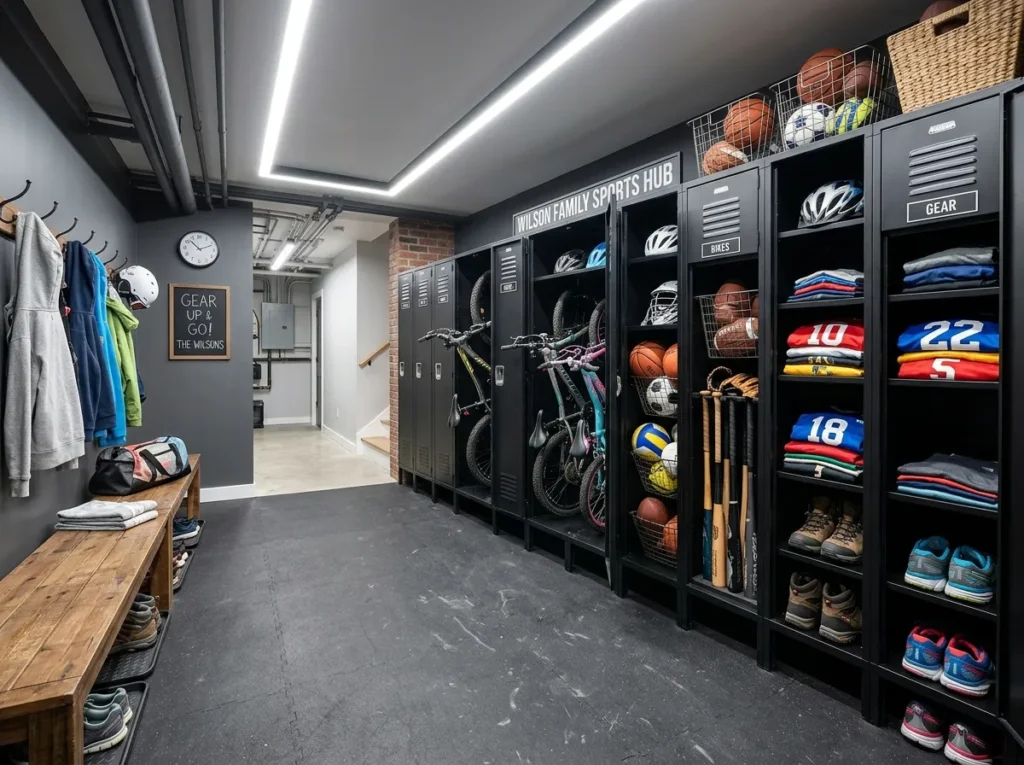
A dedicated sports locker can bring order to the equipment that usually ends up scattered across basement floors and corners. Basement Storage Ideas for active households should provide separate places for balls, helmets, shoes, bats, bags, and protective gear. Tall lockers work well because they use vertical space while keeping different categories contained. Add hooks inside the doors for jerseys and bags, then use lower compartments for heavier equipment. Durable flooring beneath the storage area can handle muddy shoes and wet gear. The goal is to create one predictable launch point for everything needed before practice or outdoor activities.
Choose open ventilation where possible, especially for shoes, helmets, and equipment that may be damp after use. Basement Storage Ideas should make cleanup simple, so give each family member a dedicated hook, basket, or locker section. A wooden bench can provide a convenient place to sit while putting on shoes and also create hidden storage underneath. Use durable labels that can withstand regular handling and keep the most frequently used gear at comfortable heights. Once everything has a home, the basement floor stays clearer, equipment is easier to find, and leaving for activities becomes much less rushed.
Pull-Out Pantry Drawers
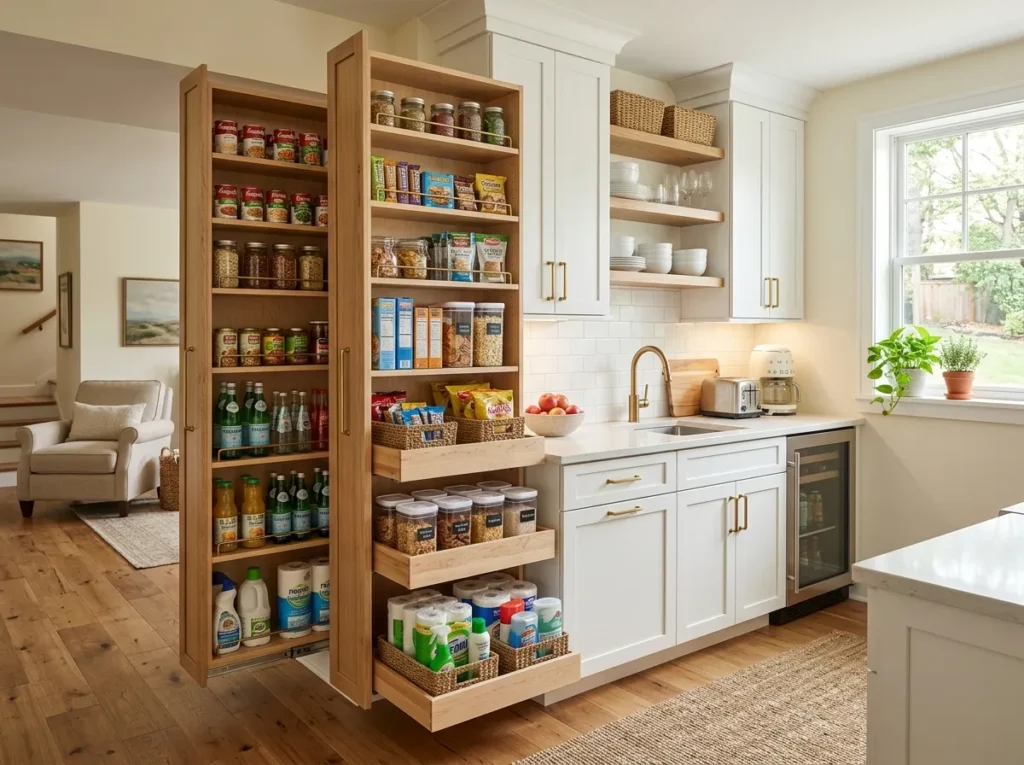
Deep cabinets can quickly become cluttered, but pull-out drawers make every inch much easier to access. Basement Storage Ideas like these work especially well in a basement kitchenette, bar area, or secondary pantry where snacks, drinks, canned goods, and household supplies need organized homes. Install sturdy sliding drawers inside tall cabinets, then group similar items together by category. Keep frequently used products at comfortable heights and reserve upper sections for backups. In my experience, pull-out storage is especially helpful when cabinet depth makes ordinary shelves difficult to reach, because nothing gets forgotten at the very back.
Use clear containers or simple labels to make each drawer even easier to navigate. Basement Storage Ideas should save time as well as space, and pull-out compartments make it possible to see most of your supplies with one smooth movement. Choose heavy-duty drawer hardware if you plan to store bottles or canned goods, and avoid overloading each section. A narrow pull-out beside larger cabinets can also hold spices, cleaning supplies, or baking ingredients. Once everything has a designated drawer, the basement kitchenette feels less crowded and daily restocking becomes a much simpler task.
Window Seat Storage
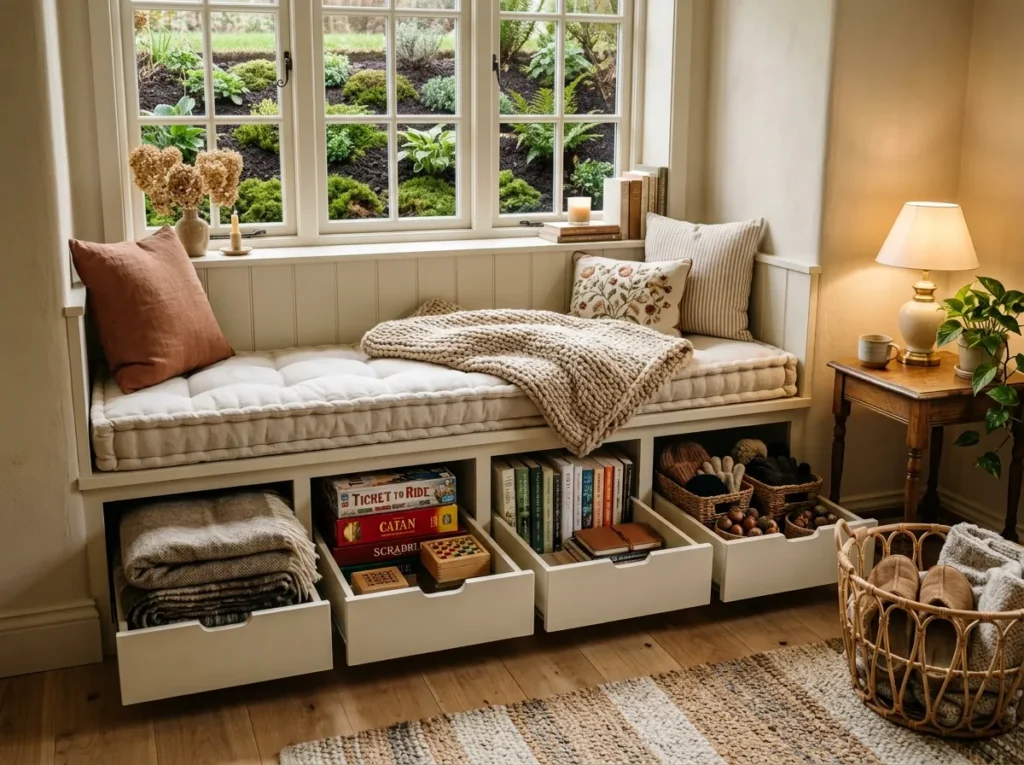
A window seat can turn an otherwise overlooked basement wall into a comfortable place to relax while providing valuable hidden storage underneath. Basement Storage Ideas like this are perfect for blankets, board games, books, seasonal cushions, and other soft belongings that need to stay nearby but out of sight. Build drawers or lift-up compartments beneath a sturdy seat, then finish the area with a durable cushion in a neutral fabric. Choose materials that coordinate with the rest of the room so the storage feels like part of the architecture rather than an added cabinet.
The space beneath a basement window is often too low for conventional furniture, making built-in seating a smart way to use it. Basement Storage Ideas become especially effective when one feature serves several purposes, and a window seat can provide seating, organization, and a visual focal point at once. Use deep drawers for larger items and smaller baskets for books, toys, or accessories. Add a reading lamp and a few cushions to make the area inviting without overcrowding it. I’ve seen this approach work particularly well in family basements because it keeps everyday clutter hidden while creating a cozy spot everyone can enjoy.
Conclusion
A well-organized basement can do much more than store extra belongings. It can make your entire home feel less cluttered, improve daily routines, and help you find what you need without frustration. The best basement storage ideas combine functionality, accessibility, and smart use of available space, allowing you to make the most of every corner.
As you explore the ideas in this article, focus on the solutions that fit your space, storage needs, and lifestyle. Even a few small improvements can create a noticeable difference. I’ve seen how thoughtful organization can transform an overwhelming basement into a space that feels clean, useful, and easy to maintain. Save this post on Pinterest for future inspiration, try your favorite ideas, and share it with friends or family who are looking to create a more organized home.